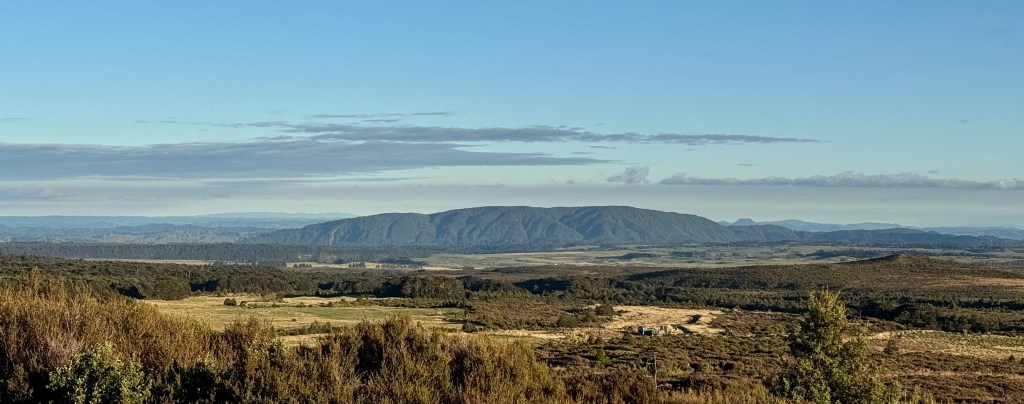
I know it’s been a minute since we’ve posted any updates but we’re back! Think back and try to imagine it’s February and we are still in New Zealand.
February was a busy month with family. Tracy’s daughter and son-in-law visited in early February for 10 days, and my sister and brother-in-law came in for a couple of weeks in mid-February. Both groups prioritized touring the South Island so that’s what we did!
During the course of their stay, we visited Christchurch, Queenstown and Dunedin. While there is some overlap between the two itineraries, much of it is unique. I will report the sites and events for both visits and let the pictures tell the story.
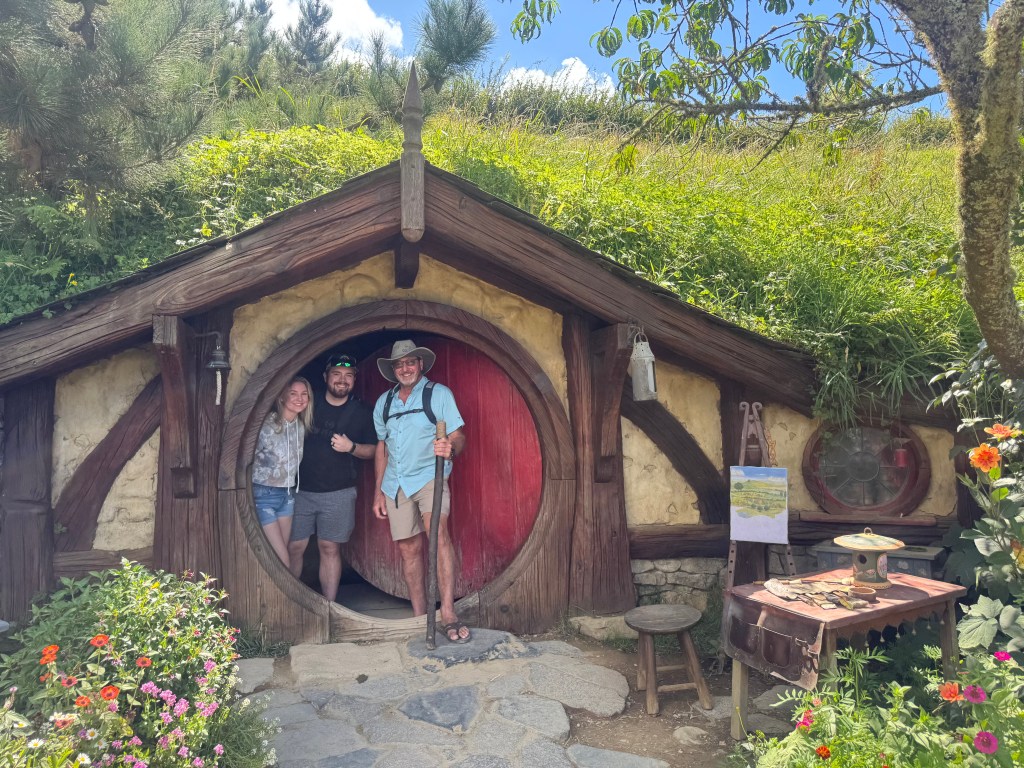
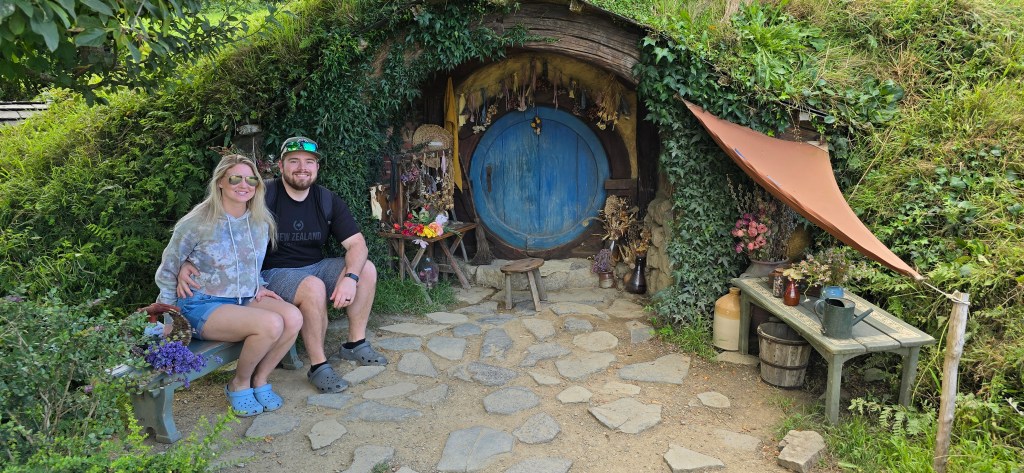
Marina and Dakota arrived in Auckland the end of January. We spent a couple of days seeing some sites around Parnell, Auckland before heading to the South Island. Of course they wanted to see Hobbiton and Tracy arranged the tour and and joined them as it was his first visit.
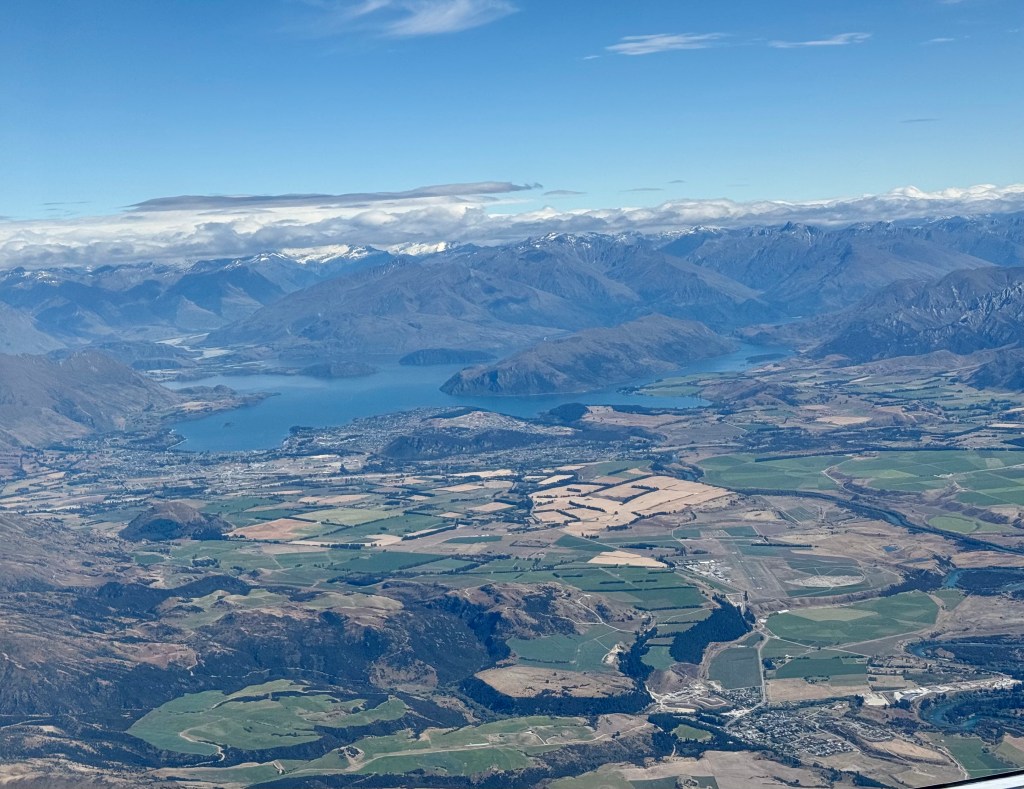
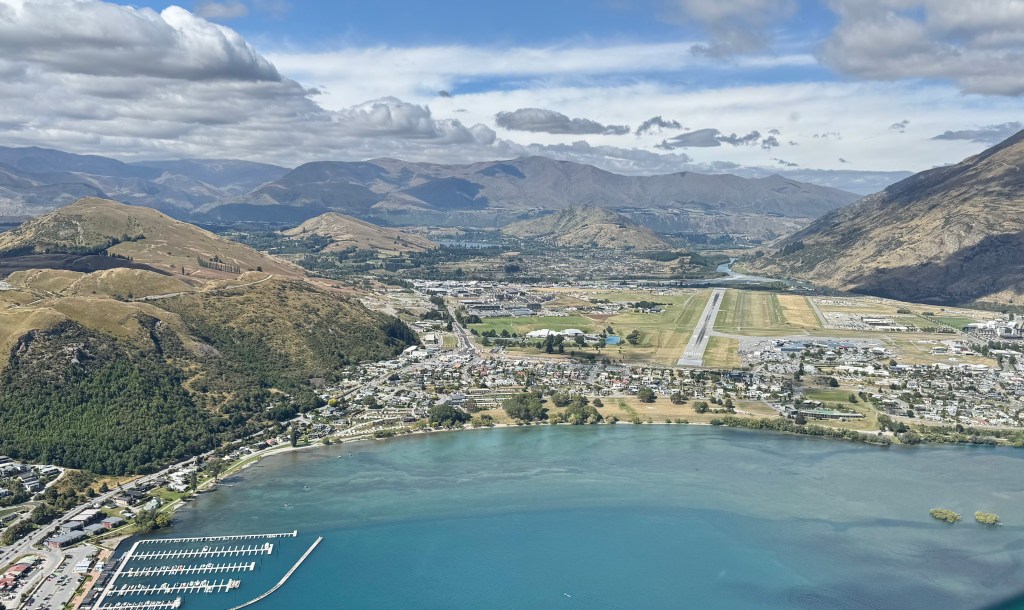
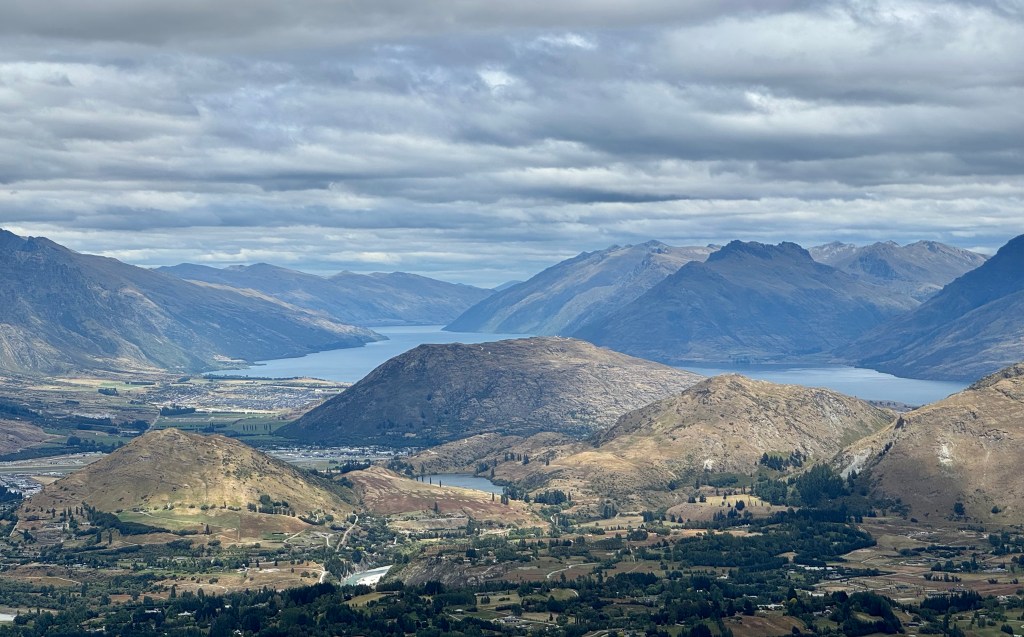
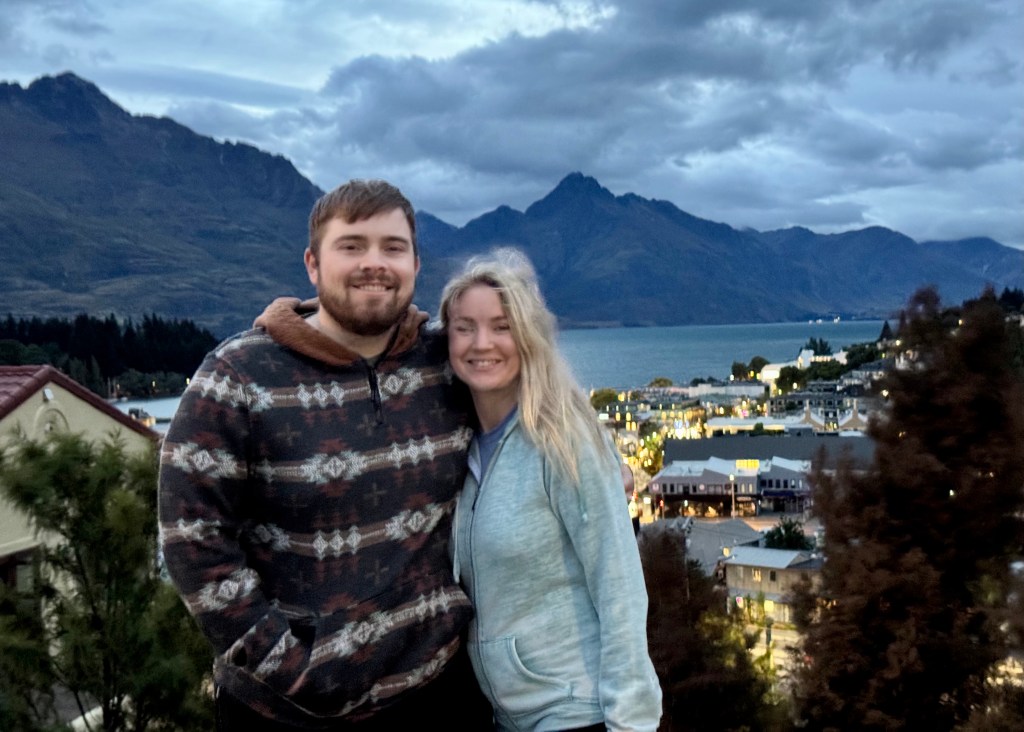
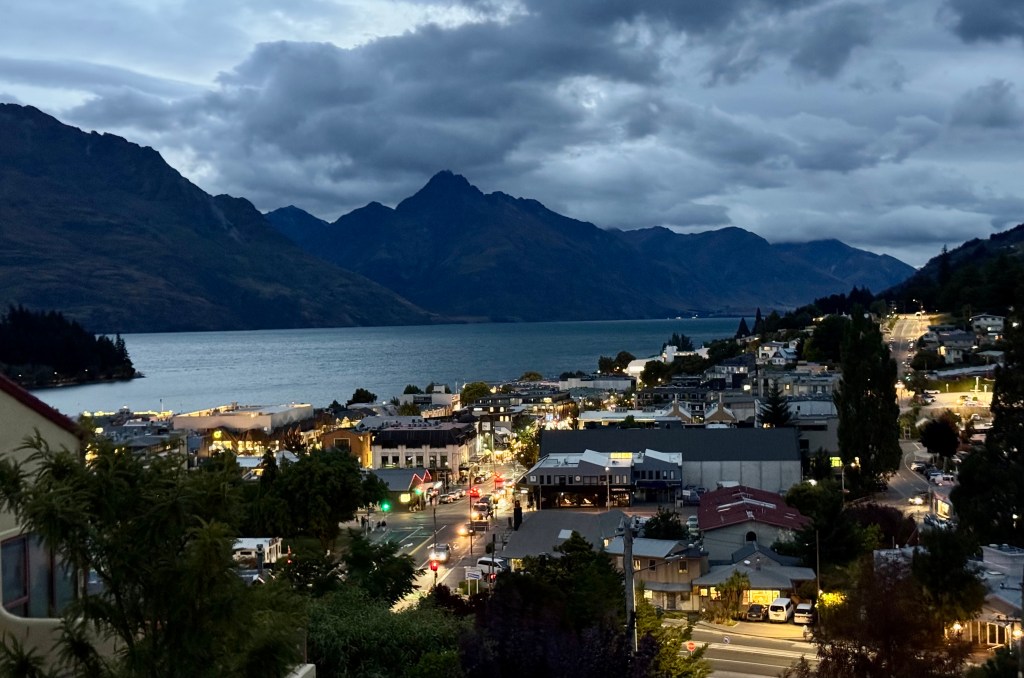
Our first stop on the South Island was Queenstown. The flight from Auckland was amazing and gave us our first views of the Island. It was much more dramatic than the North Island with Fjords and mountains all around. It was also cooler in temperature and fortunately we looked ahead at the forecast and packed appropriately.
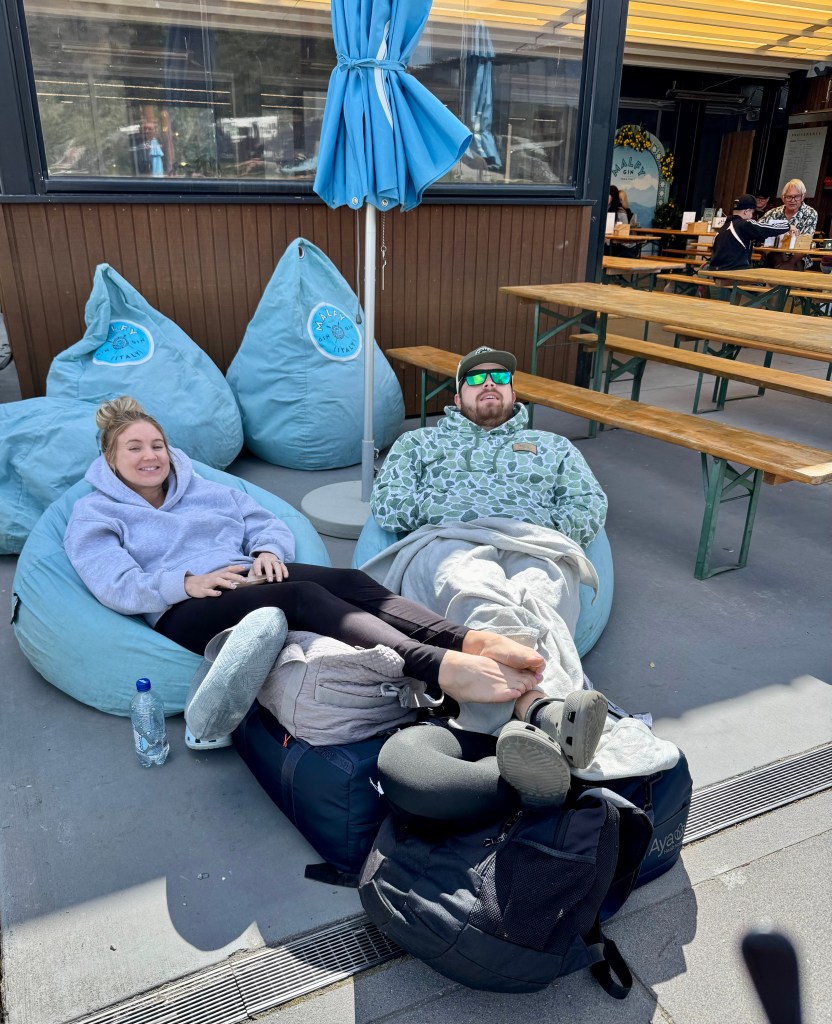
Queenstown, New Zealand, often called the “Adventure Capital of the World,” was founded on a 1860s gold rush, shifting from a pastoral sheep station to a bustling mining town. It was named for being “fit for Queen Victoria” and has since evolved into a year-round tourist destination known for its stunning lakeside scenery, skiing, and extreme sports like bungee jumping.
Fun Facts
- The Remarkables: This is one of only two mountain ranges in the world to run directly north to south.
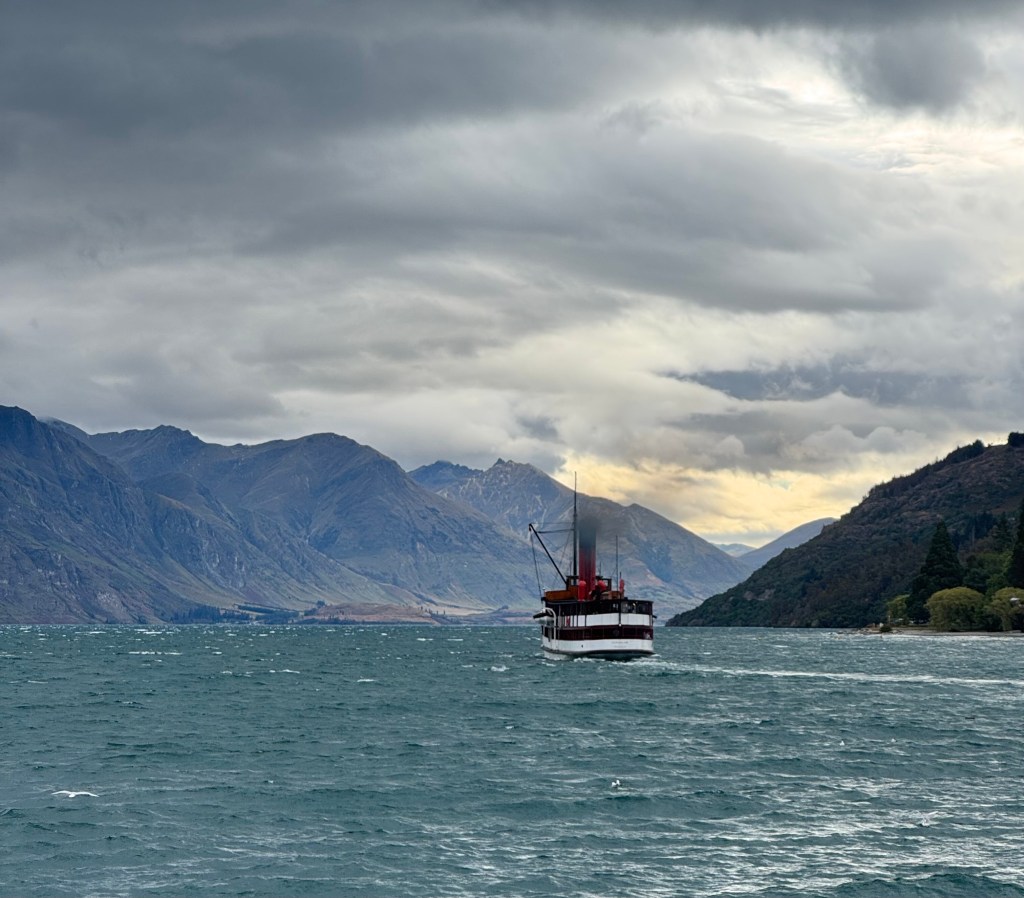
- TSS Earnslaw: The town’s historic steamship was launched in 1912, the same year as the Titanic.
- Population Surge: While around 28,000 residents live there, Queenstown welcomes over 3 million visitors annually.
- Lake Wakatipu: The lake is “S” shaped and so deep that the water level rises and falls about every 20 minutes due to a tidal effect (seiche).
- Famous Film Location: The surrounding areas were heavily used in The Lord of the Rings and The Hobbit movies.
On our first day we drove into Arrowtown for lunch and walked around this charming town. Arrowtown is a historic gold mining town in the Otago region of the South Island of New Zealand. We enjoyed visiting the local Art Fair and had a chance to refuel for lunch at the New Orleans Hotel. This historical hotel was established in 1866 offering a country pub and accommodations.
We ended our day with a trip to Coronet Peak for some fabulous views and dinner on the waterfront.
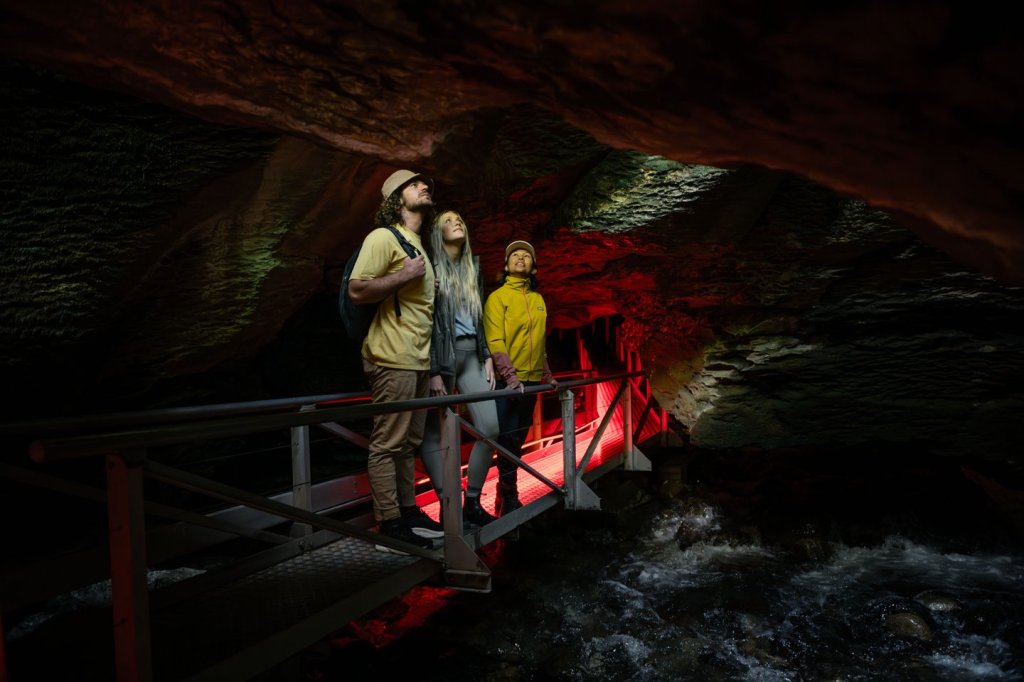
Our next outing was a trip to a Gloworm cave in Te Anau, a couple of hours from our Airbnb. Our adventure began with a scenic cruise across Lake Te Anau aboard a custom-built catamaran, taking us to the remote western shores.
We departed the boat at Cavern House, where we viewed displays that cover the caves’ geology and history before our adventure to the underground caves. These geologically young caves, just 12,000 years old, are still being shaped by the powerful river carving through them.
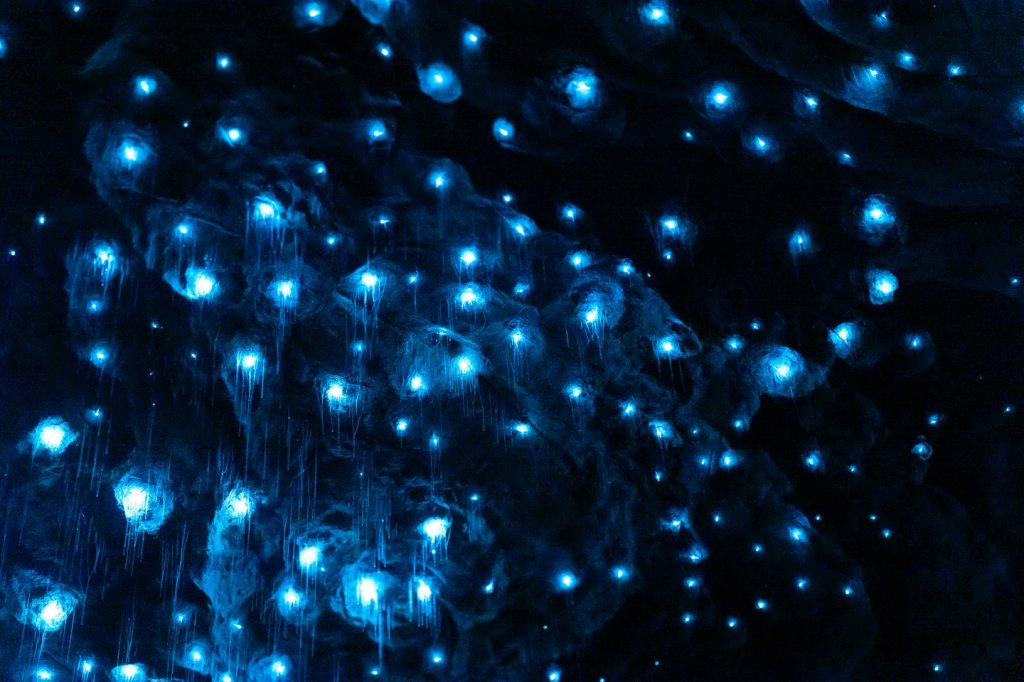
The last part of the tour was a guided journey into the enchanting Te Anau Glowworm Caves. In the dark we twisted through limestone passages, sculpted rock formations, swirling whirlpools, and an underground waterfall in a small boat.
It was a interesting and magical experience but unfortunately, we were not allowed to take any pictures. I was able to snag two photos from their website:
On our last day in Queenstown, we took a tour of Milford Sound. We decided to relax and take the coach bus and let the expert driver handle the winding roads.
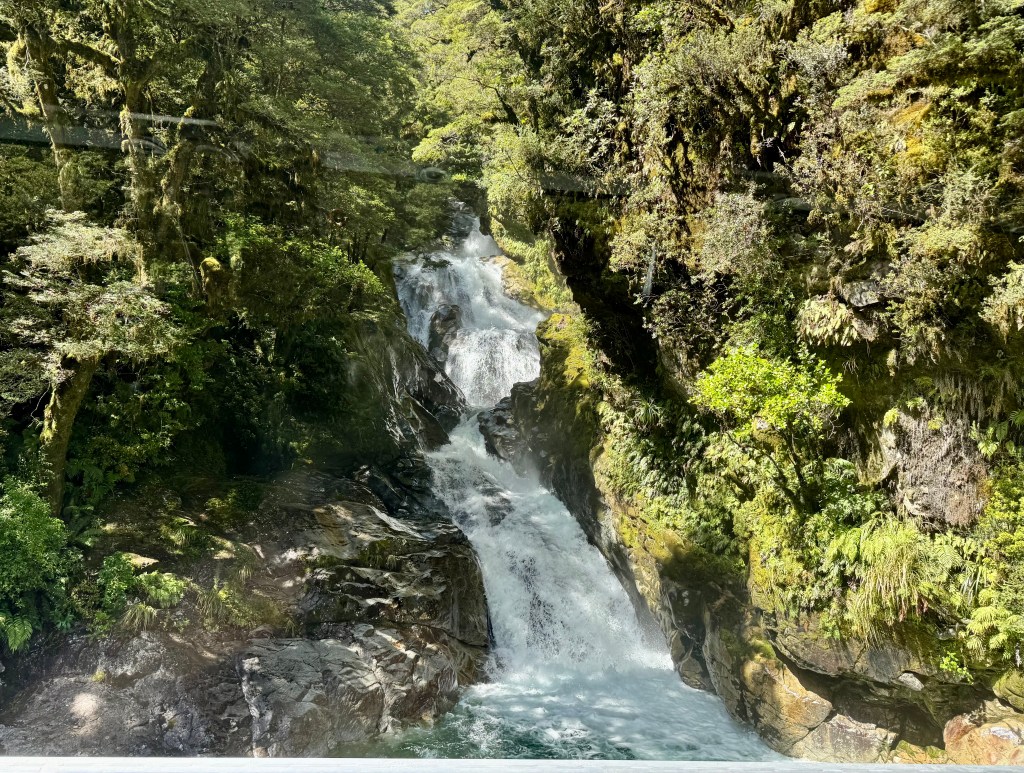
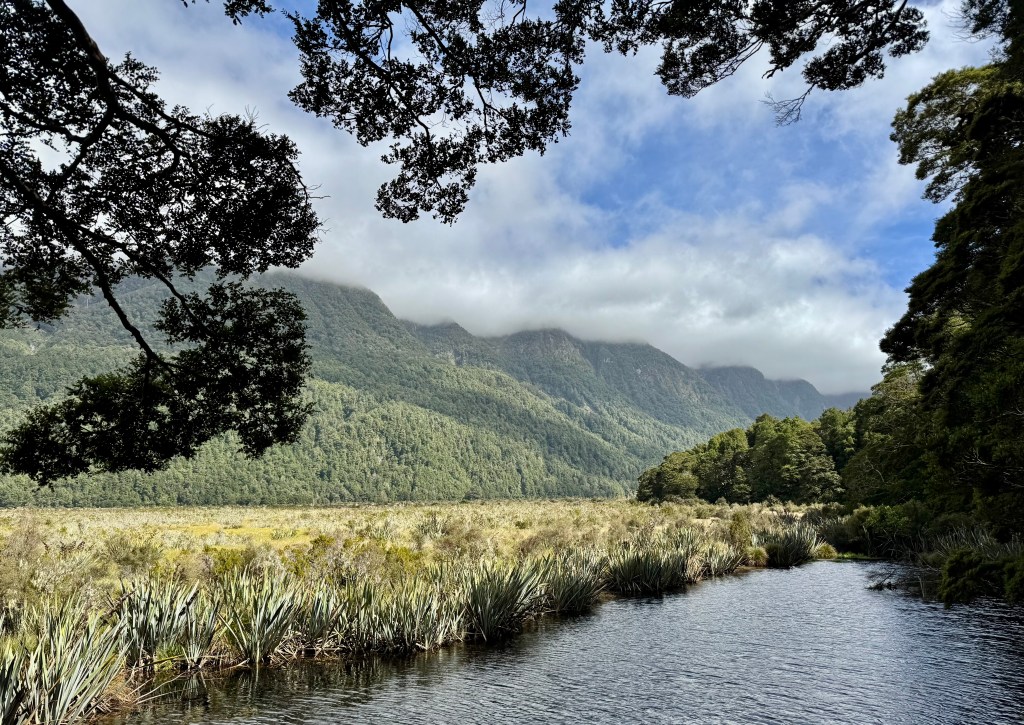
Milford Sound is tucked deep within Fiordland National Park in New Zealand’s South Island, It’s renowned for its towering cliffs, cascading waterfalls, and serene, mirror-like waters. Located a few hours from Queenstown or Te Anau, this remote fiord is one of the most iconic and awe-inspiring destinations in New Zealand.
Our bus driver shared that Milford Sound is often referred to as the “8th Wonder of the World”, a title famously bestowed by author Rudyard Kipling. The dramatic landscapes sculpted by glaciers over thousands of years and mist-shrouded peaks like Mitre Peak rise nearly 1,700 meters straight from the water were breathtaking.
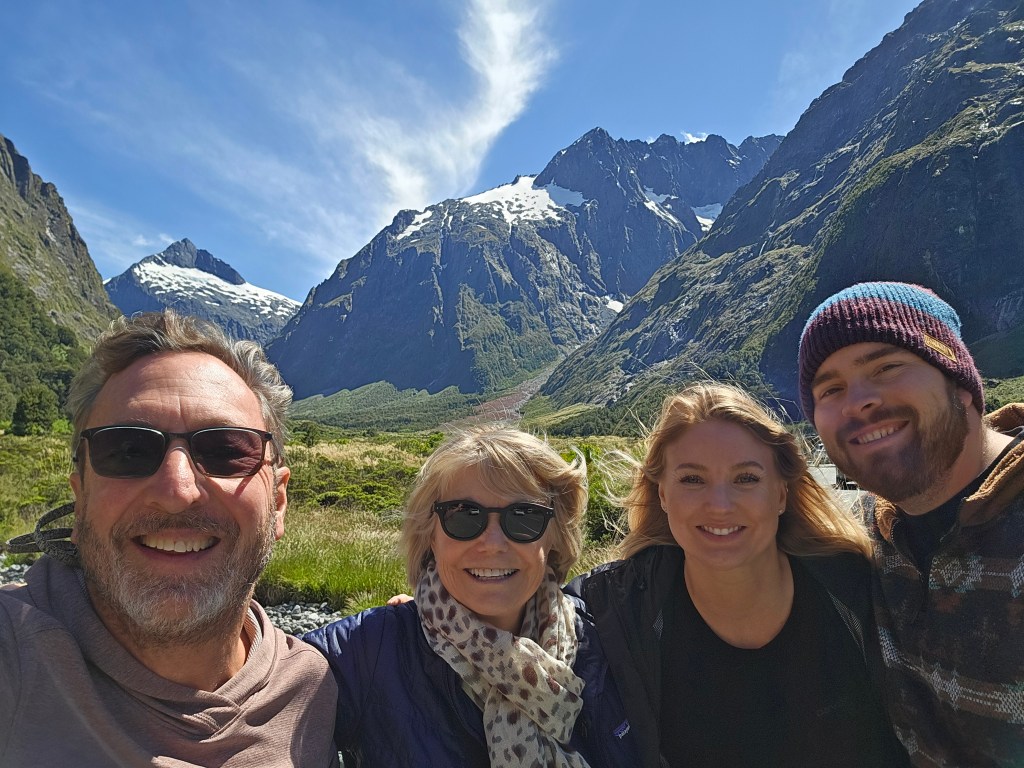
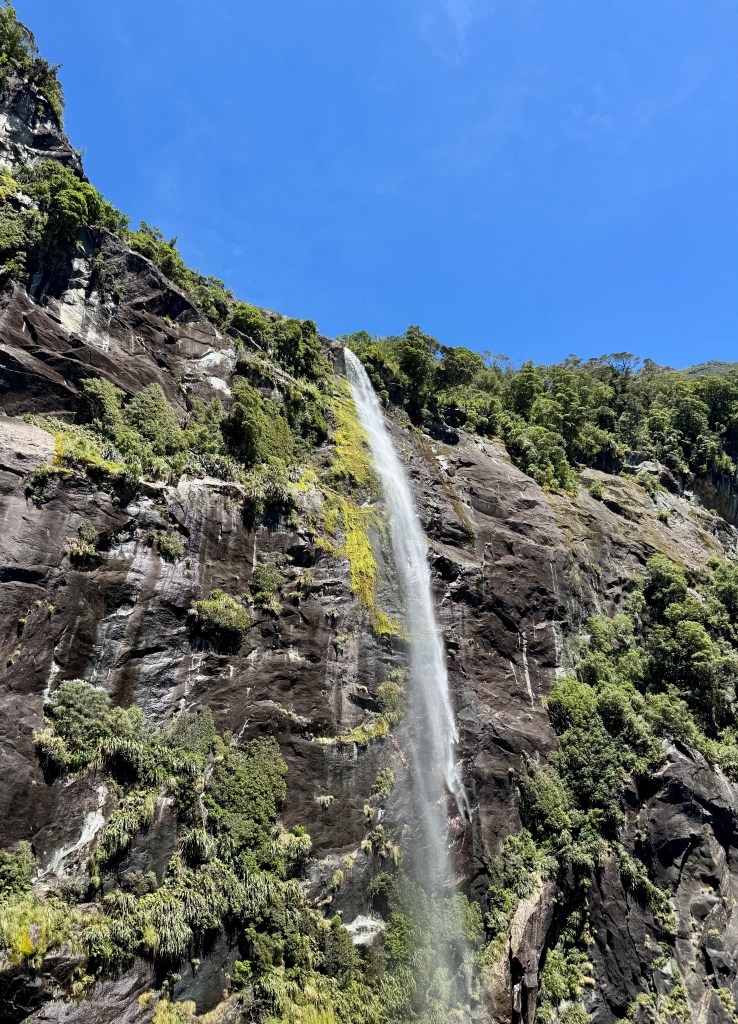
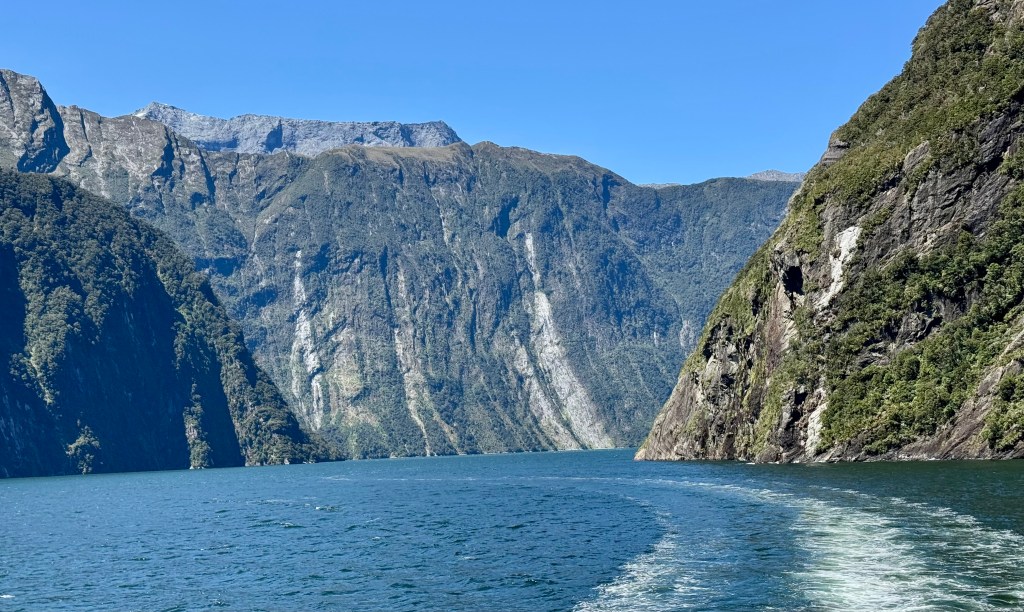
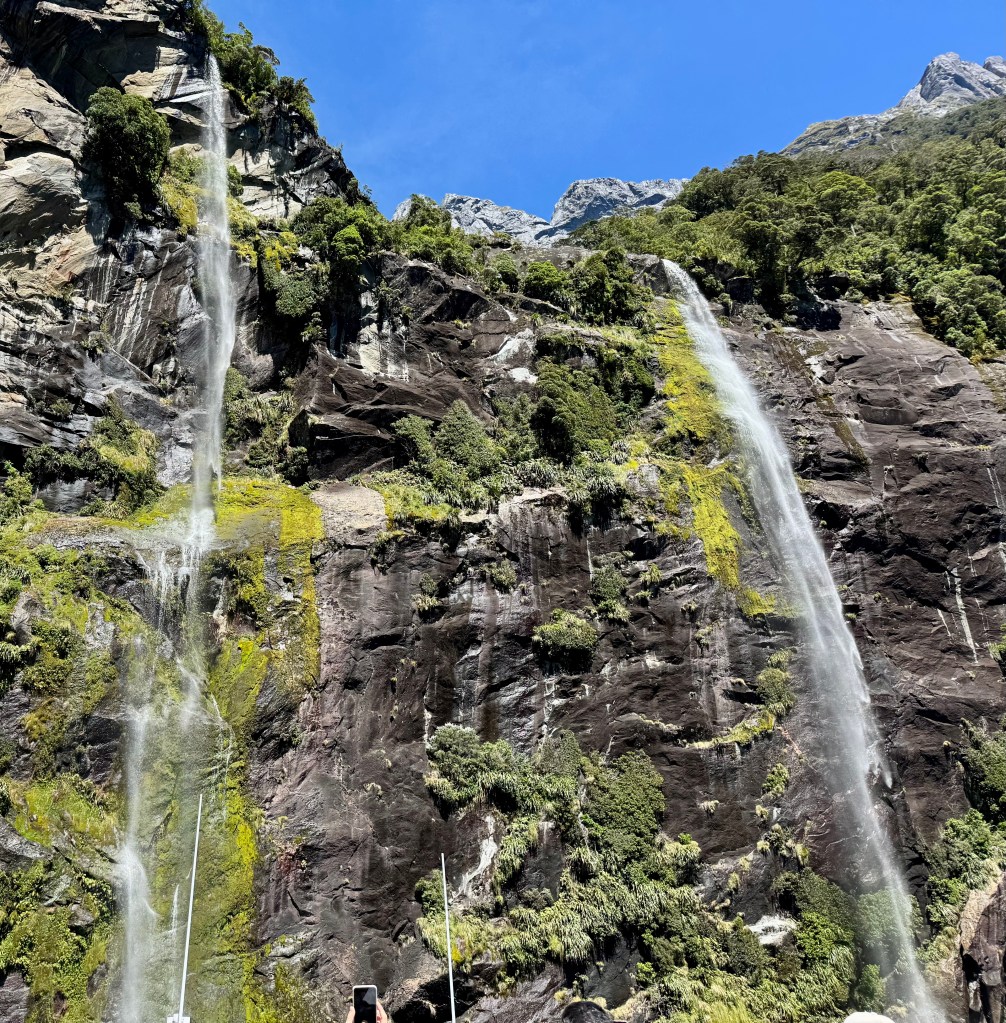
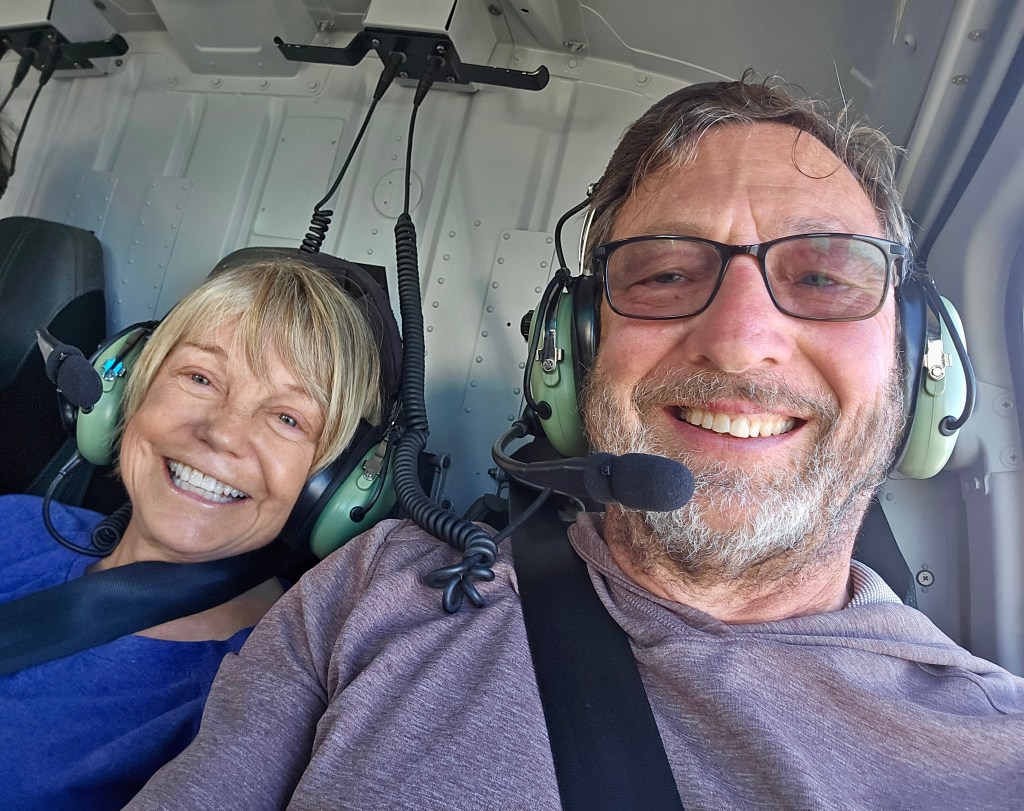
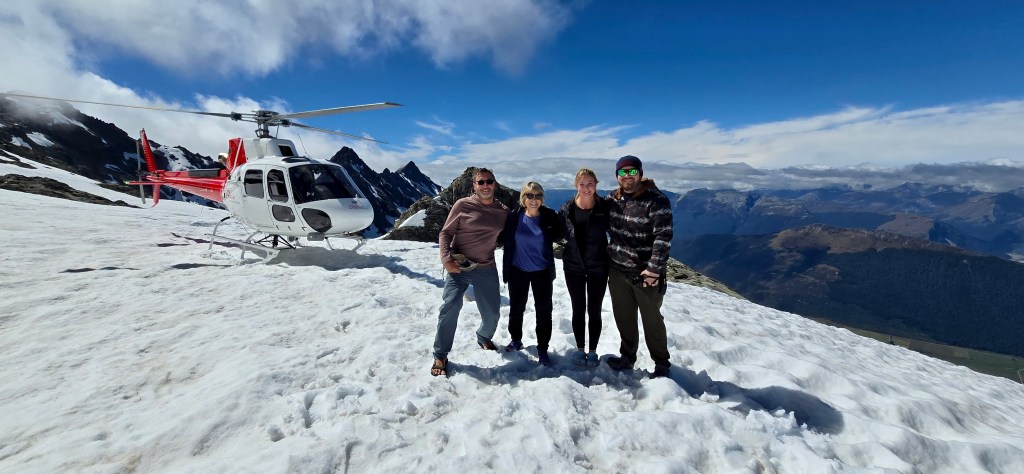
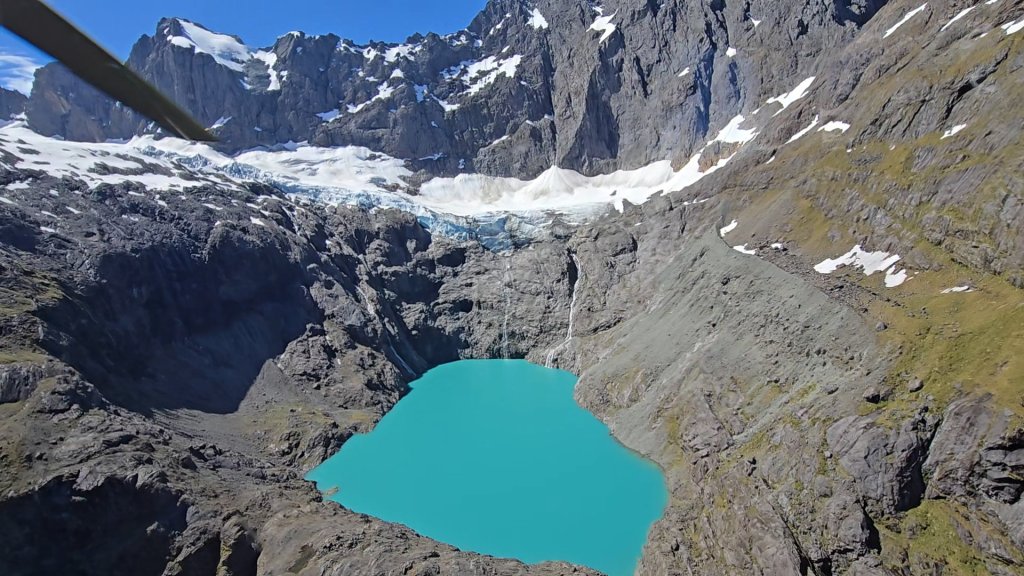
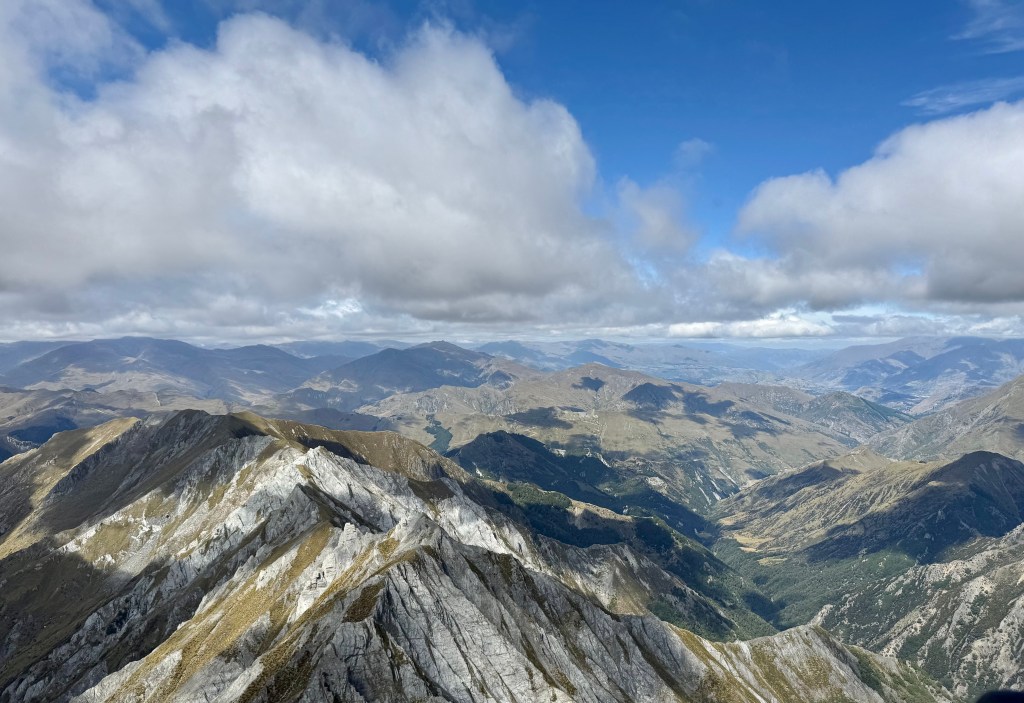
At the end of the tour, Tracy surprised us with a helicopter ride back to Queenstown. It turned out to be the highlight of the tour. It was a beautiful day, and our pilot Alfie was able to land on a glacier on one of the mountain tops where we were able to leave the helicopter and walk around a bit. It was truly an amazing day!
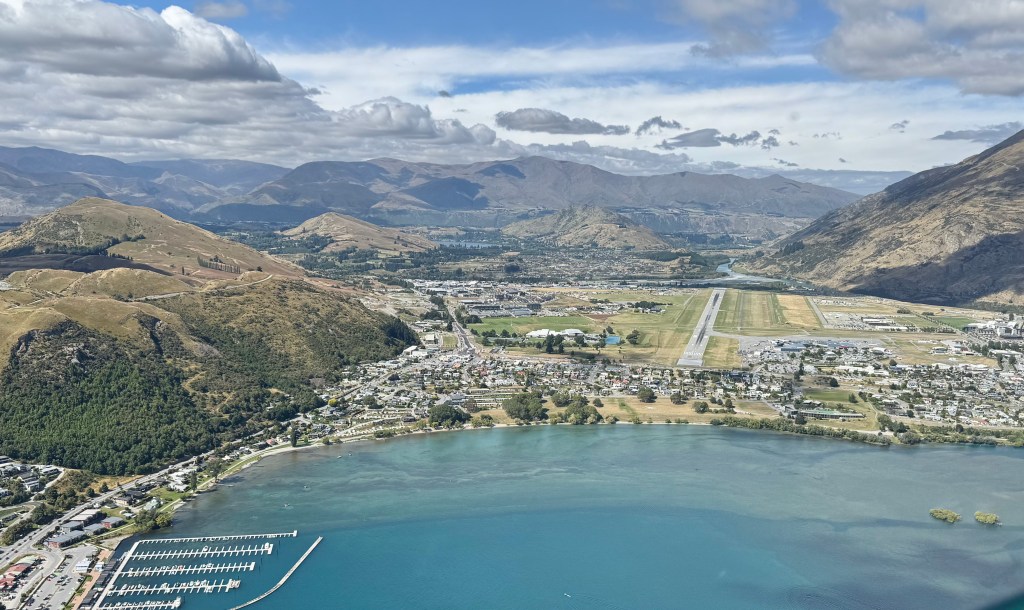
We were sad to leave Queenstown but excited to get to our next stop: Dunedin.
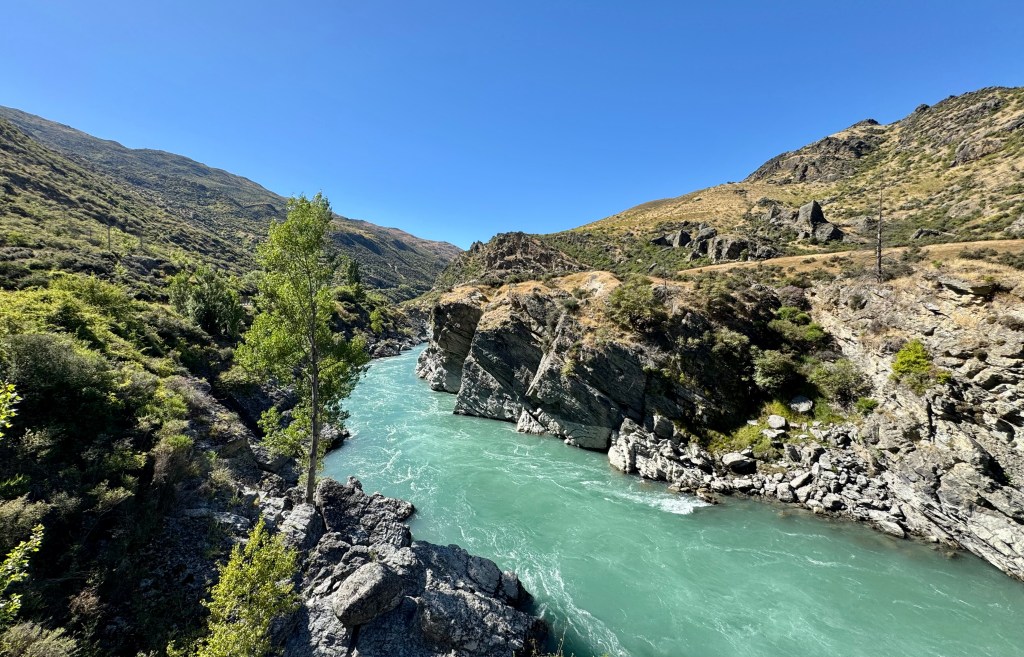
We stopped on our drive to Dunedin to see the Roaring Meg Hydro scheme-a 10 meter hight dam. 3.6 kilometers up the Roaring Meg. It feeds two generating stations with a combined output of over 4,000 kilowatts.
We found Dunedin to be a sleepy town compared to Queenstown but has its own special charm. It was established in 1848 by the Lay Association of the Free Church of Scotland. A gold rush in the Otago province during the 1860s caused Dunedin’s population, and wealth, to increase dramatically. For several years it was New Zealand’s largest and most prosperous city. The University of Otago, New Zealand’s oldest, was founded in Dunedin in 1869, and since then students have made a major contribution to the city’s unique character.
Fun Facts & Highlights
- World’s Steepest Street: Baldwin Street is famously known for its extreme slope, often featuring in local challenges.
- Architecture: The Dunedin Railway Station is the most photographed building in New Zealand and a prime example of Flemish Renaissance style.
- Wildlife: The Otago Peninsula is a world-renowned eco-tourism destination, hosting the only mainland breeding colony of Royal Albatross.
- “Little Scotland”: The city celebrates its heritage with annual festivals, pipe bands, haggis, and a thriving student culture.
After checking into our lodging, we made our way into town and walked around looking for a place to have dinner. We discovered the ‘Octagon’ which is shaped like its title and has an array of restaurants, cafes and shops.
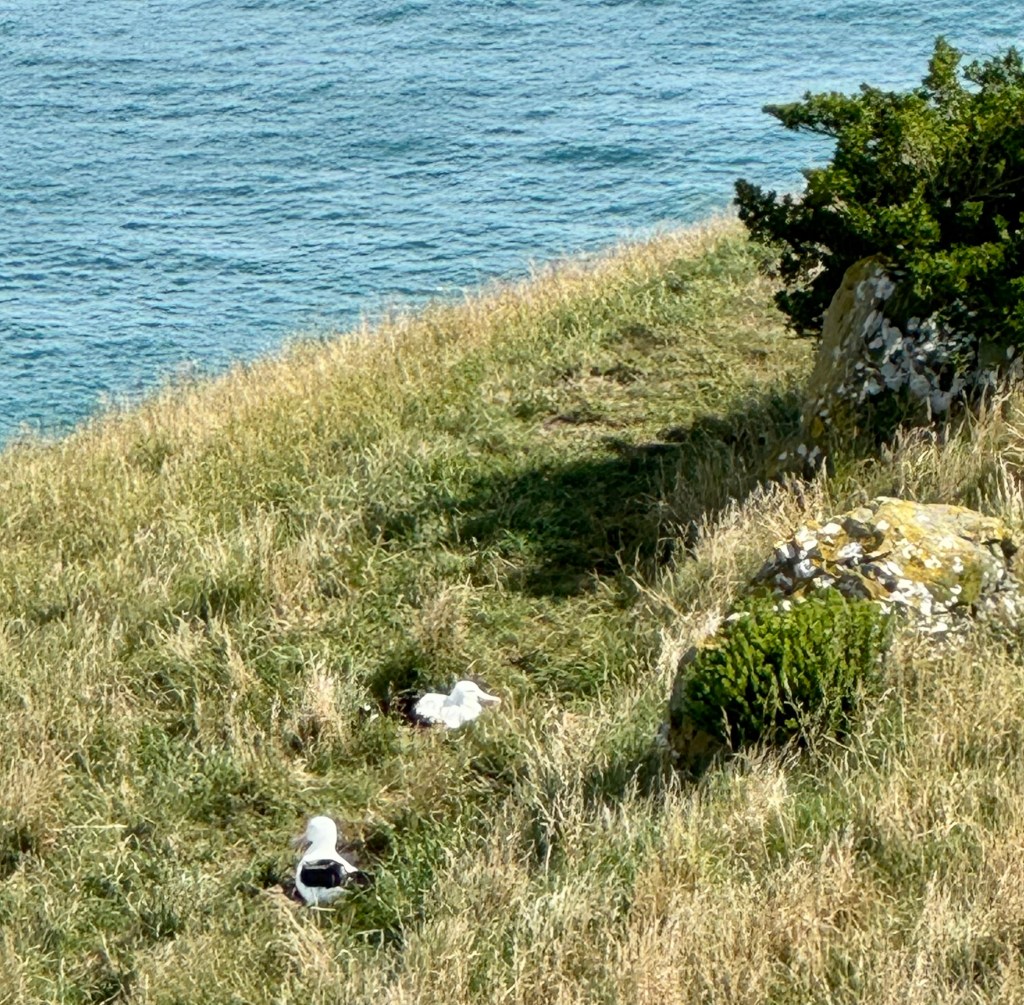
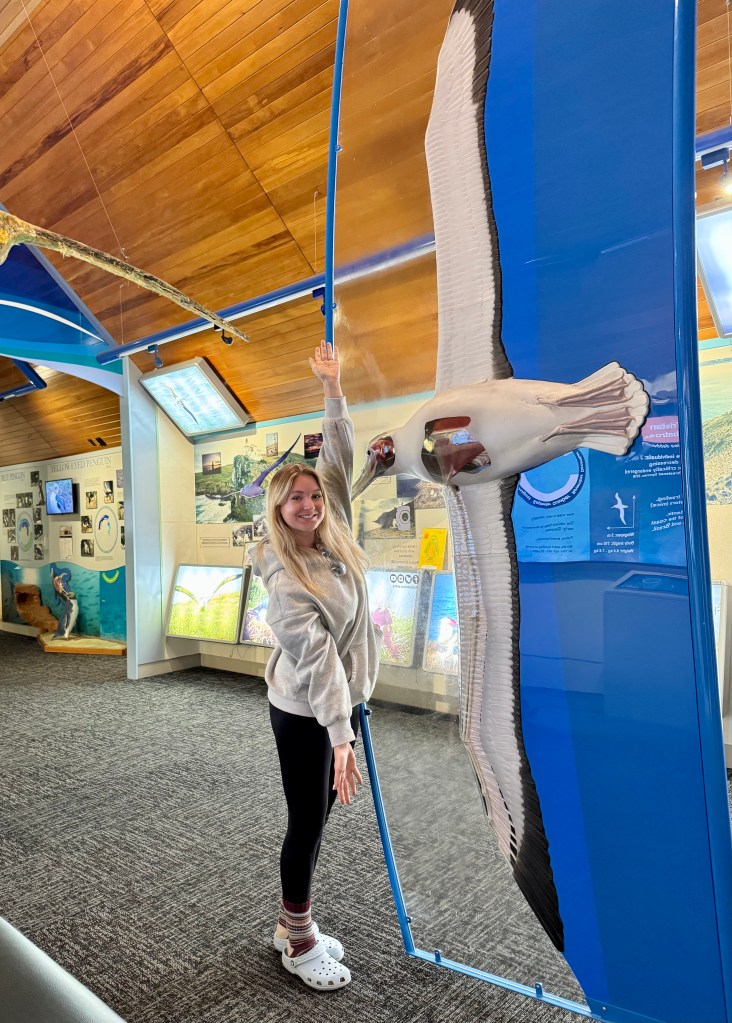
On our second day in Dunedin, we headed to our tours to view the albatross and penguins. Our first stop was the Albatross Center. Albatrosses are the world’s largest seabirds. They usually breed on remote offshore islands and spend at least 85% of their lives at sea, well away from land and humans. Dunedin’s Taiaroa Head is the only mainland Royal Albatross breeding colony in the world. These birds are also a taonga species to Māori, highlighting cultural significance and importance.
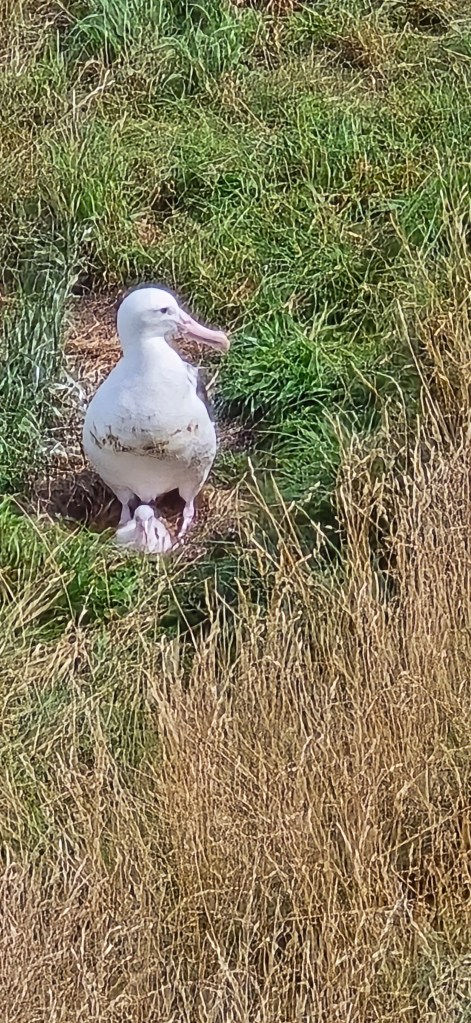
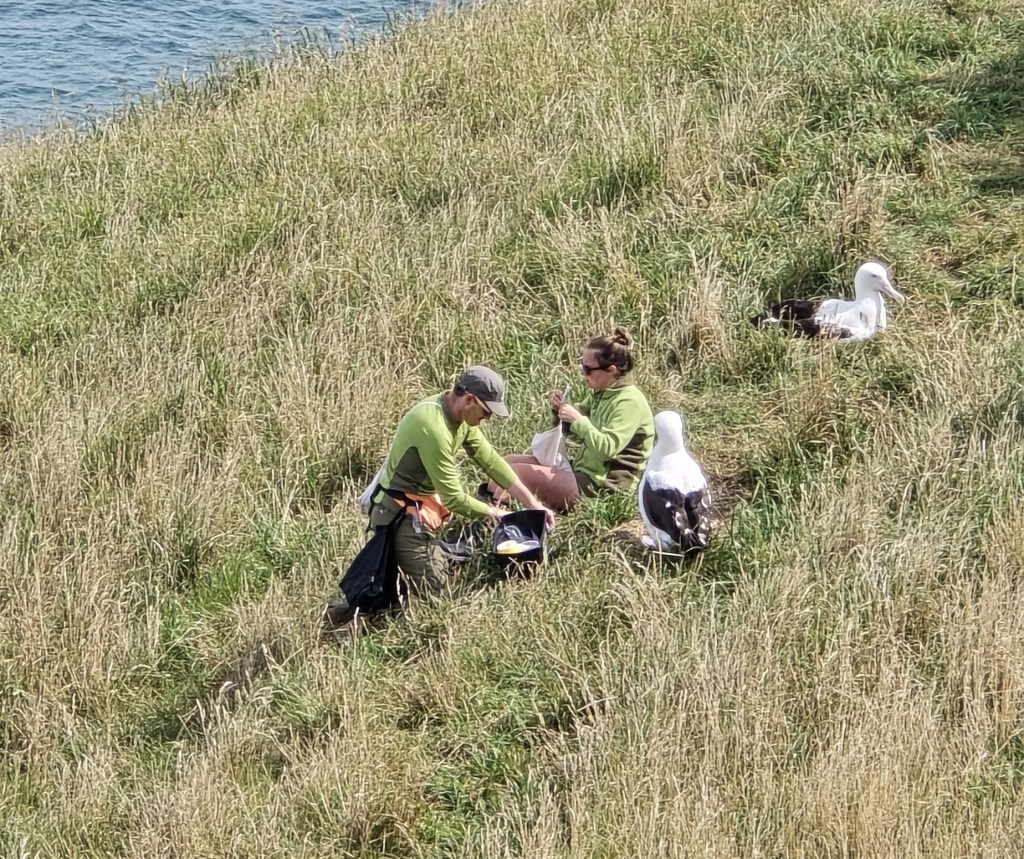
Fortunately for us this season, there were at least three albatross nesting on view from the glassed observatory during our tour. Our tour consisted of a 60 minute fully guided tour; starting with a presentation about the Northern Royals by our guide and a short film by Natural History NZ, followed by a short walk up the hill where we were able to view the albatross without intruding on them. We saw some of the parents sitting on their eggs, as well as a couple of babies.
We learned a lot about these birds during our tour:
- Wingspan and Flight: They can glide for hours without flapping their wings, using a technique called dynamic soaring to travel thousands of kilometers.
- Lifespan: They are among the longest-living birds, with some individuals living over 60–70 years.
- Breeding and Lifelong Pairs: They mate for life, returning to the same nesting sites on remote islands to breed and performing intricate courtship dances. They typically lay only one egg, which both parents incubate.
- Oldest Bird: A Laysan albatross named “Wisdom” is the oldest known wild bird, still breeding at over 70 years old.
- Diet: They eat fish, squid, and krill, often following fishing boats for scraps. They can smell food from up to 12 miles (19 km) away.
- Threats: Almost all 22 species are threatened with extinction, mainly due to longline fishing bycatch, plastic pollution, and introduced species like rats attacking nests.
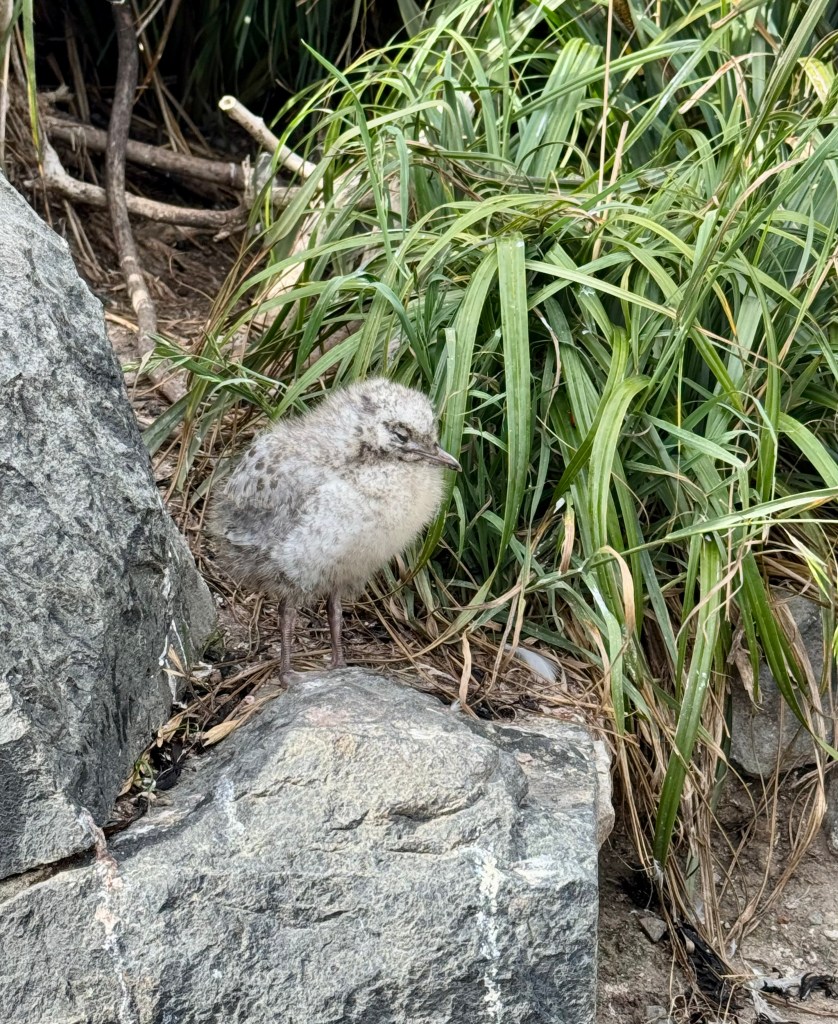
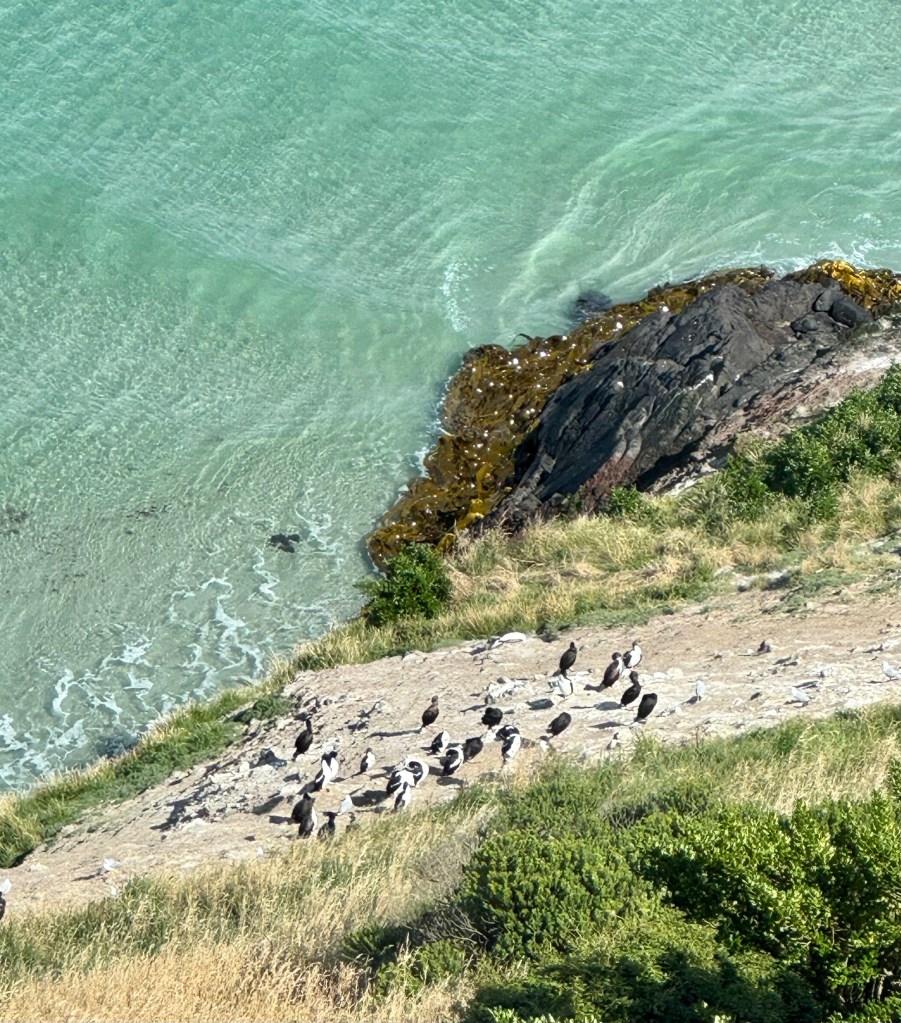
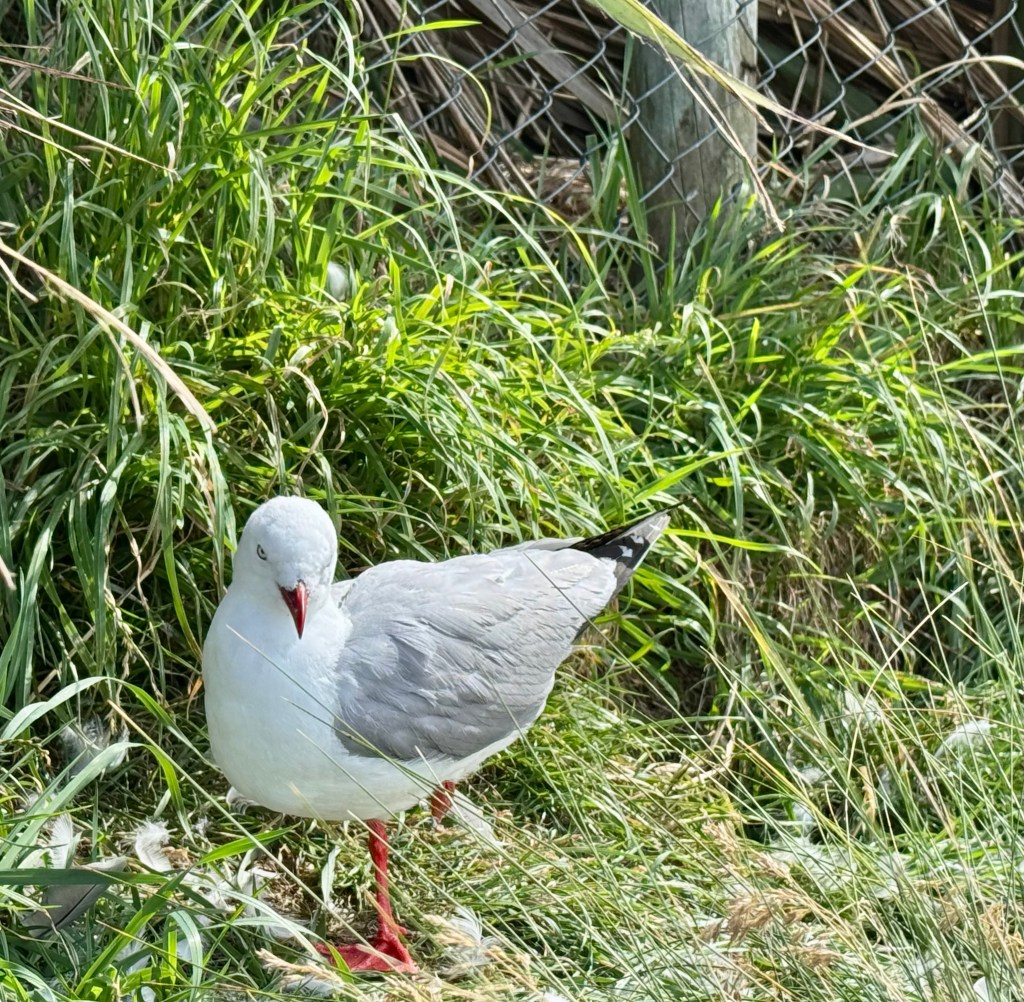
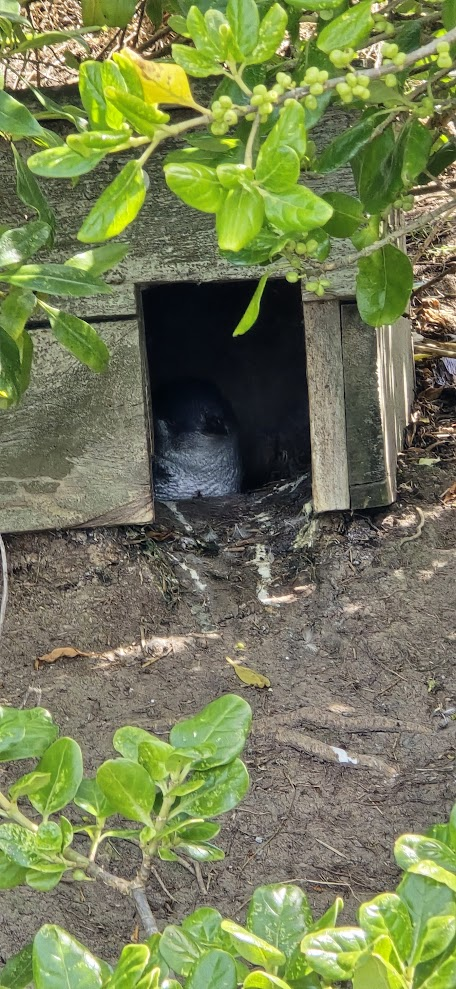
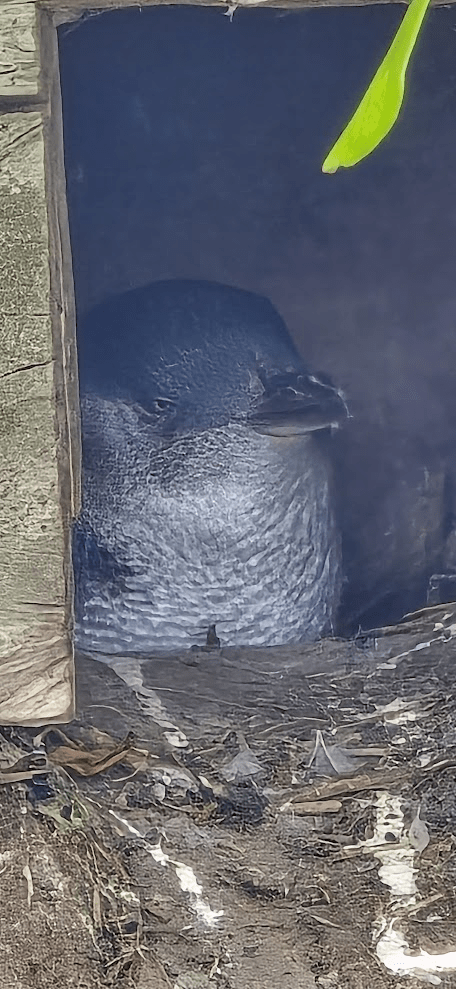
After the albatross visit we drove for about 5 minutes to our next tour at the OPERA (Otago Peninsula Eco Restoration Alliance). It is a private eco-reserve dedicated to conservation, rehabilitation, restoration and education of penguins, fur seals, sea lions and other natural wildlife.
Caring for penguins
On average the center cares for more than 250 penguins per year, with the average stay per bird being just over three weeks. During their time in rehab, they care for the needs of each of the penguins and work to get them up to a target weight and health level to then be released back into the wild. Their staff of trained professionals work diligently to keep the penguins as stress free as possible while in captivity, ensuring as little engagement with humans as is necessary.
Unfortunately, due to the challenges such as disease, climate change, fish shortages, habitat encroachment and other human caused elements, we are seeing some birds in the rehab more than once, with some coming through rehab three or more times.
The tour we enjoyed was called the Wildlife and Conservation tour and consists of three parts;
- We started in their theatre space, where we heard the inspiring conservation story that began in 1985 with the endangered, yellow-eyed penguin (hoiho). This initiated a broader movement to protect native wildlife and restore balance to the ecosystems of the Otago Peninsula.
- Next, we explored the reserve on a short bus ride, and a guided 1.25-mile nature walk. We discovered coastal and forest habitats while learning about OPERA’s predator control work, planting initiatives, and the many native species we monitor and protect—from penguins, fur seals, sea lions, to seabirds and lizards, invertebrates, and native flora.
- Last, we visited the rehabilitation center where we were able to observe about 50 penguins of different breeds. Our guide shared a few reasons as to why penguins are placed in rehab; their weight is too low, fix broken wings, and they had one experience where a penguin lost a foot and needed to heal and learn to walk again. Another was a teenager who kept trying to run away.
We highly recommend visiting both the Albatross and the OPERA centers. It’s a great way to learn about these birds and our tour payment goes back to the center to help fund their continued care.
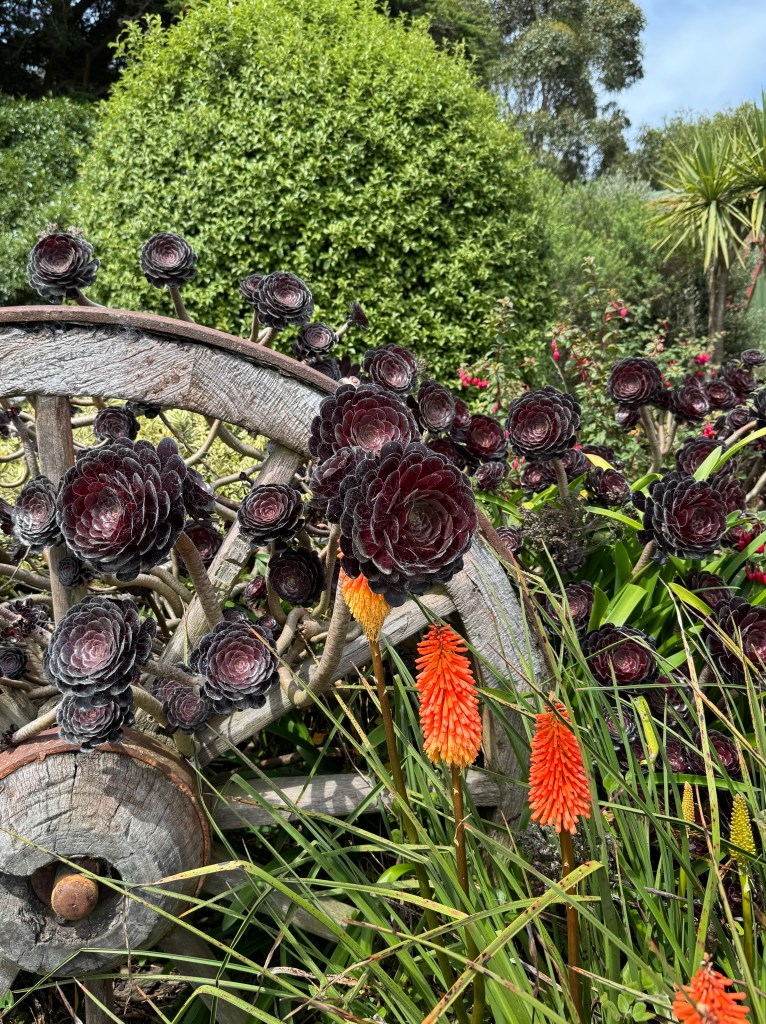
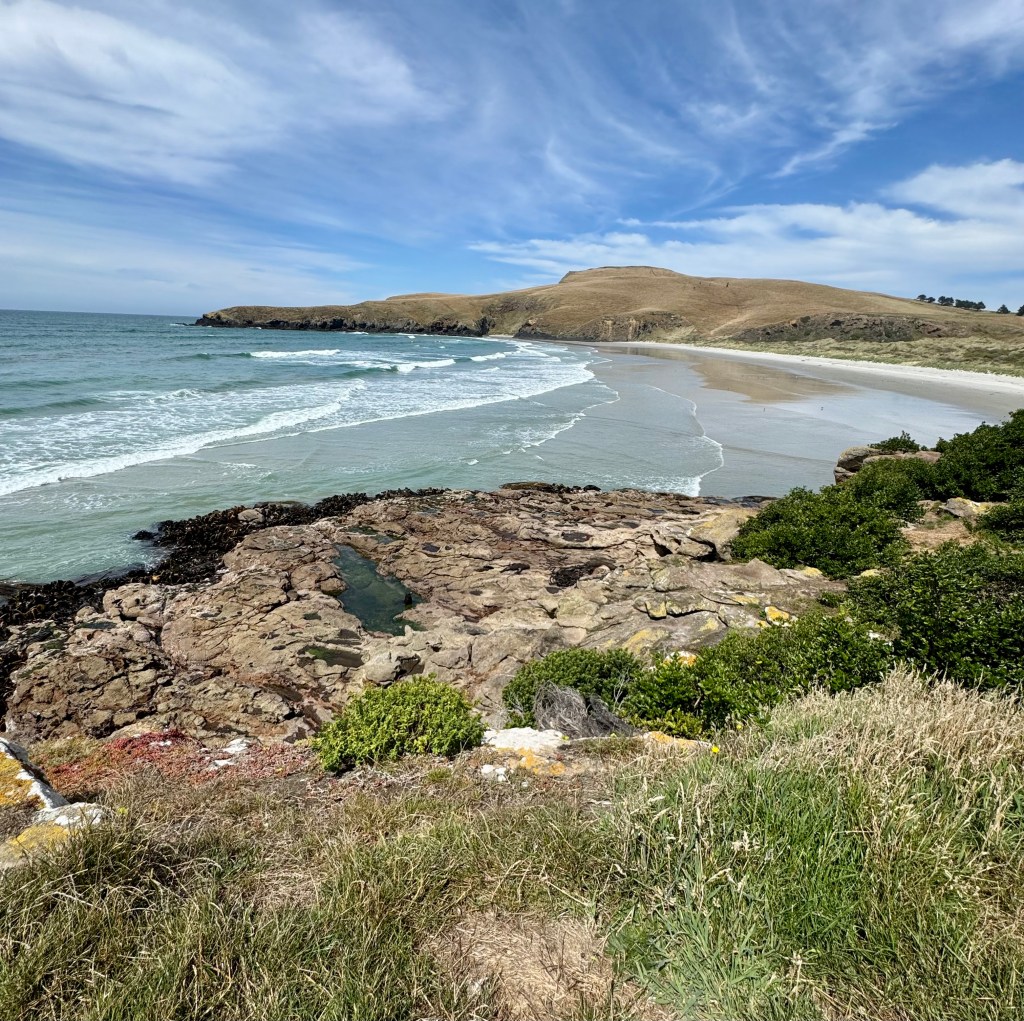
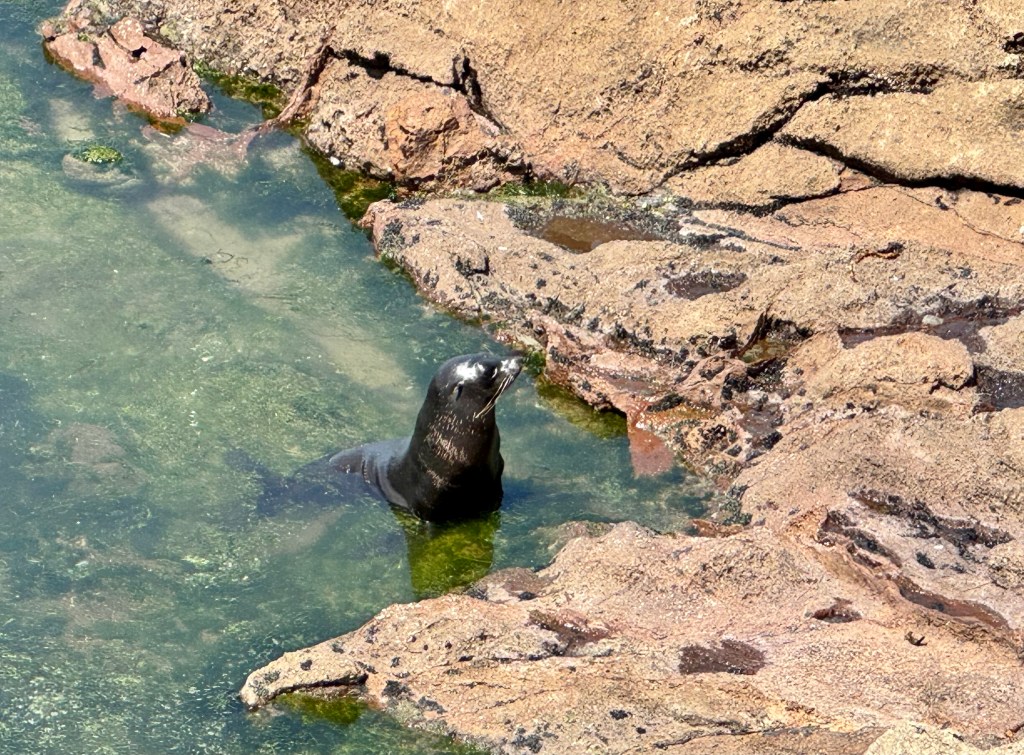
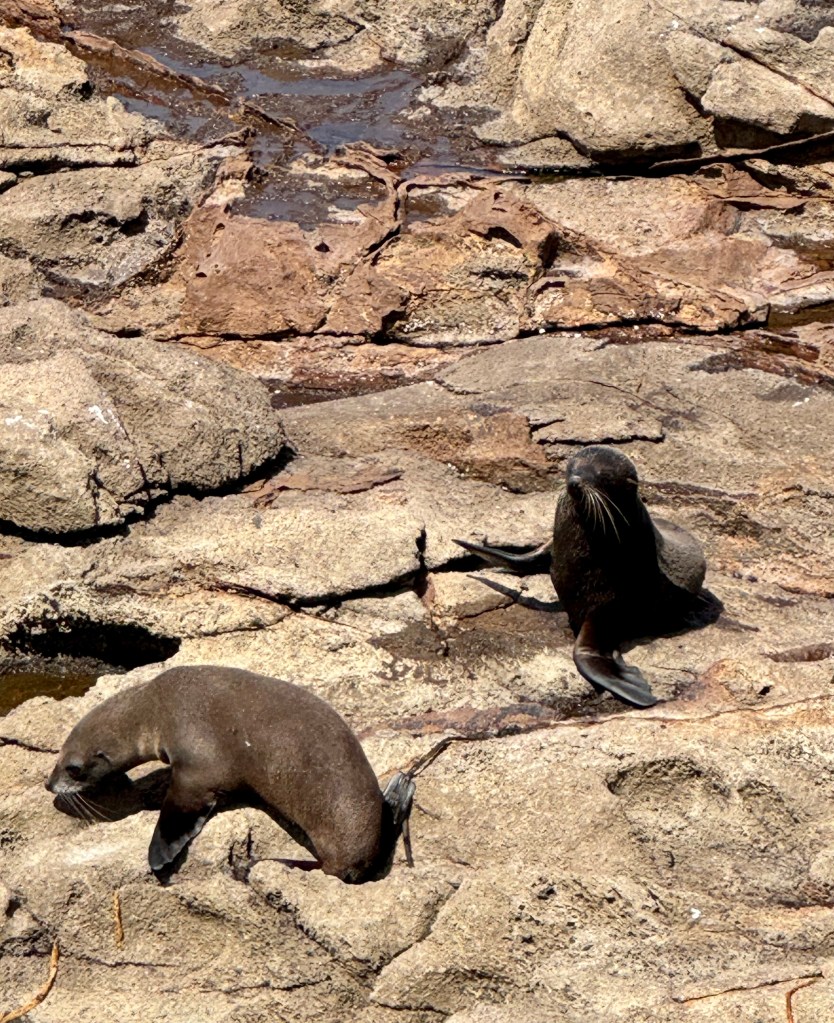
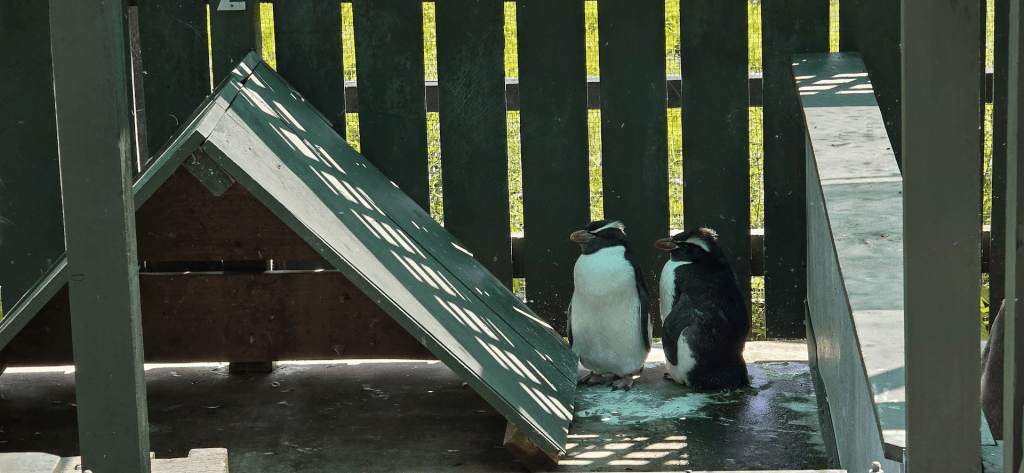
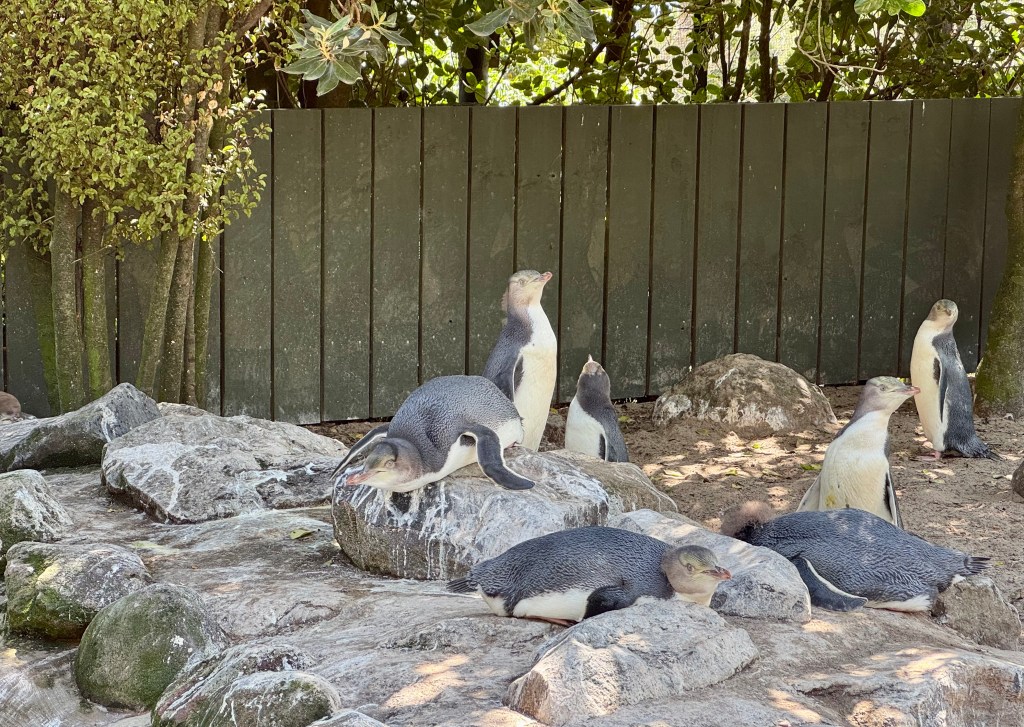
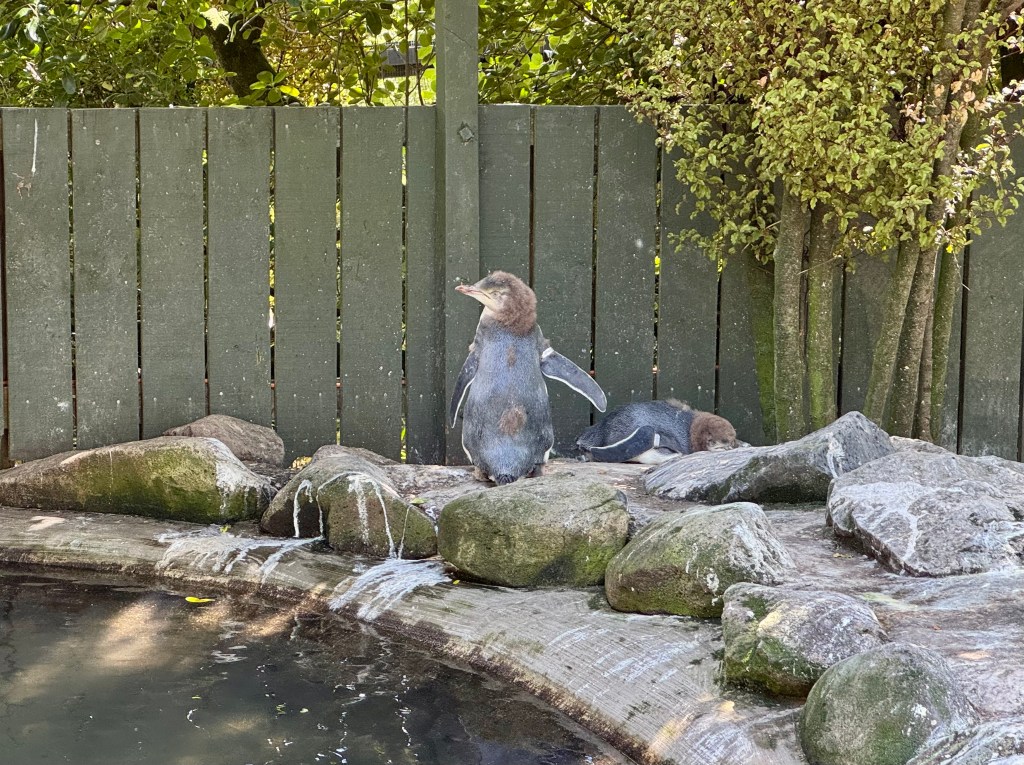
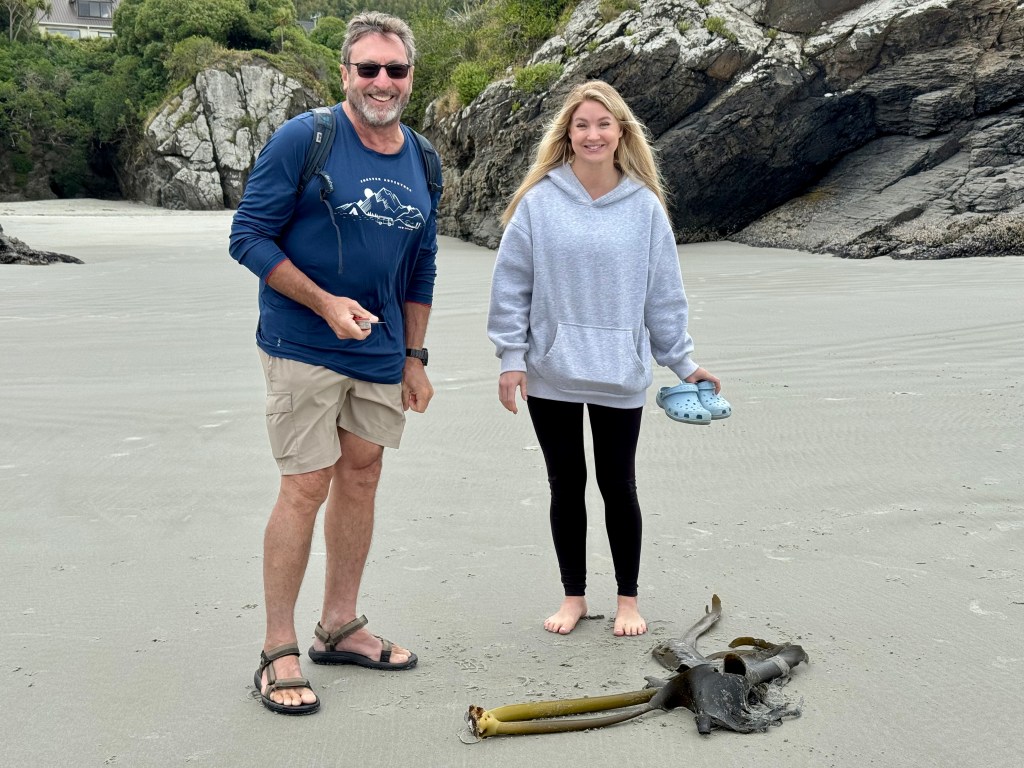
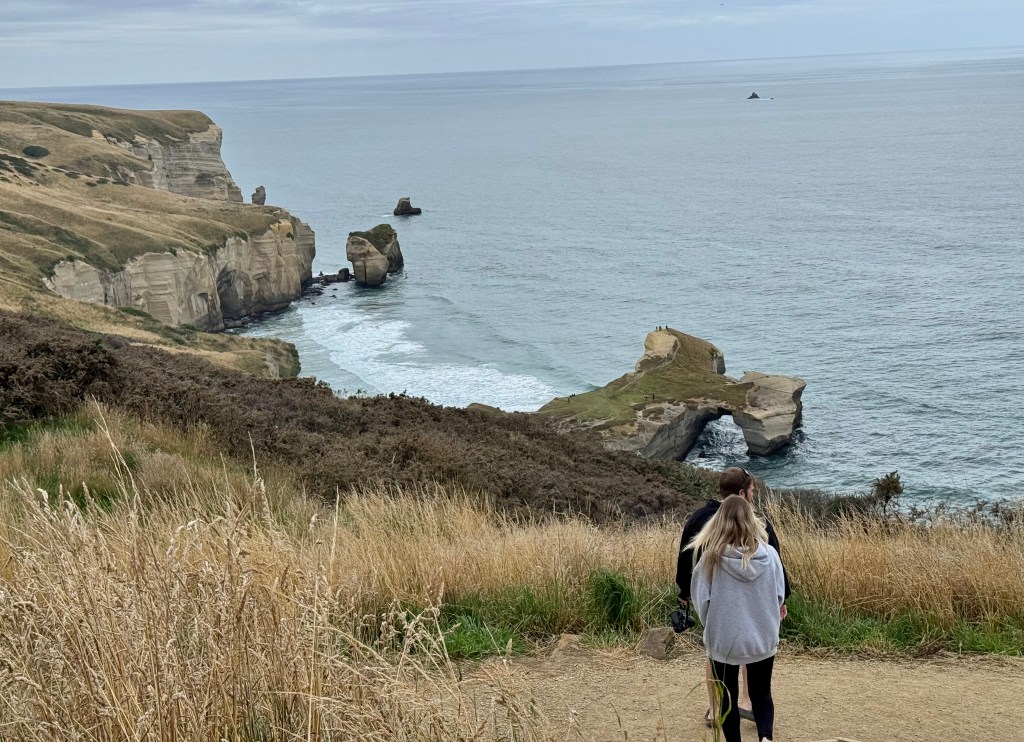
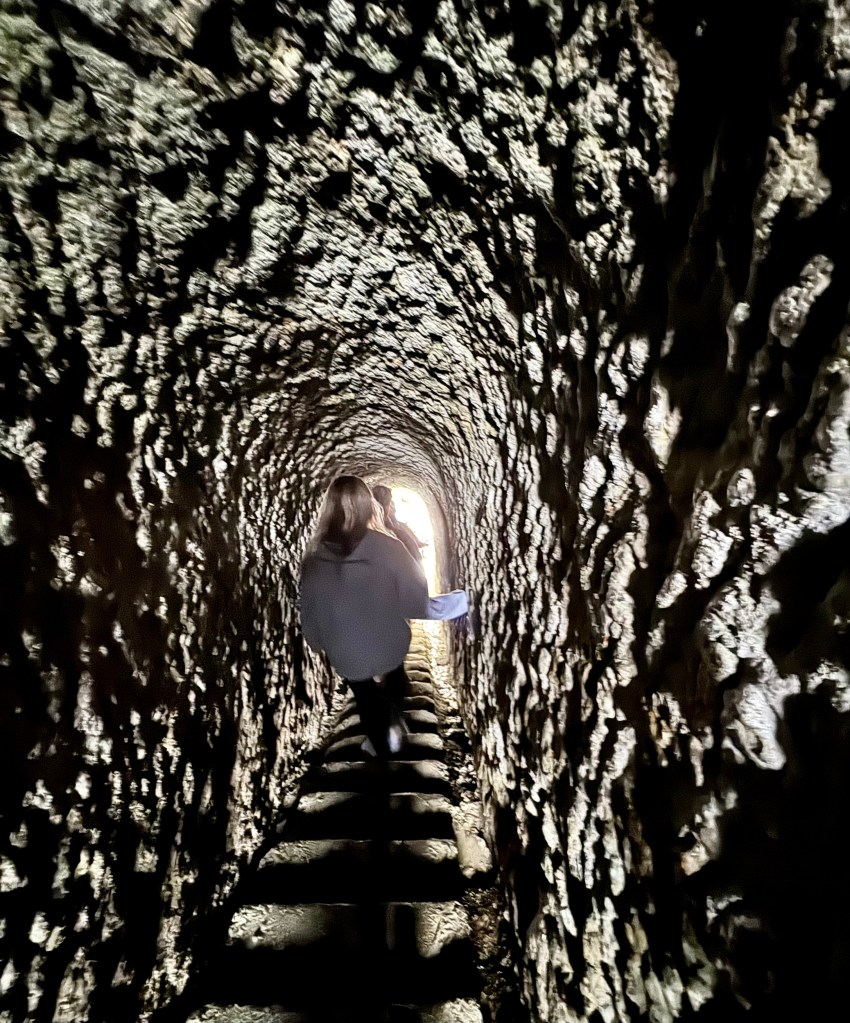
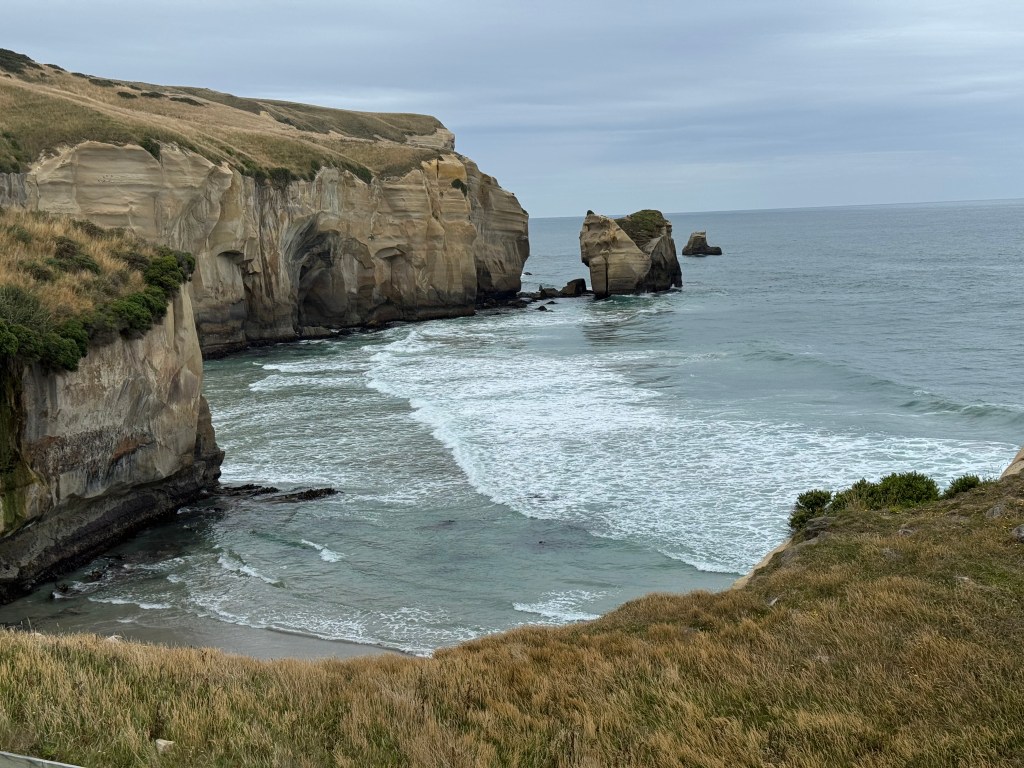
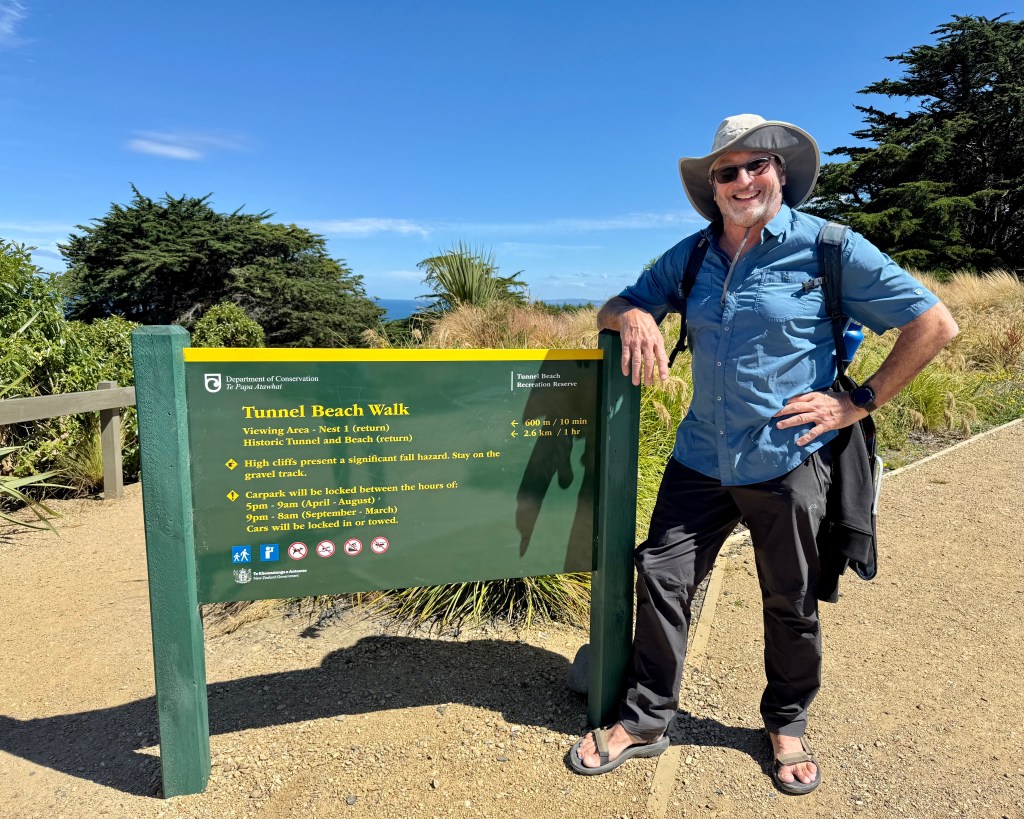
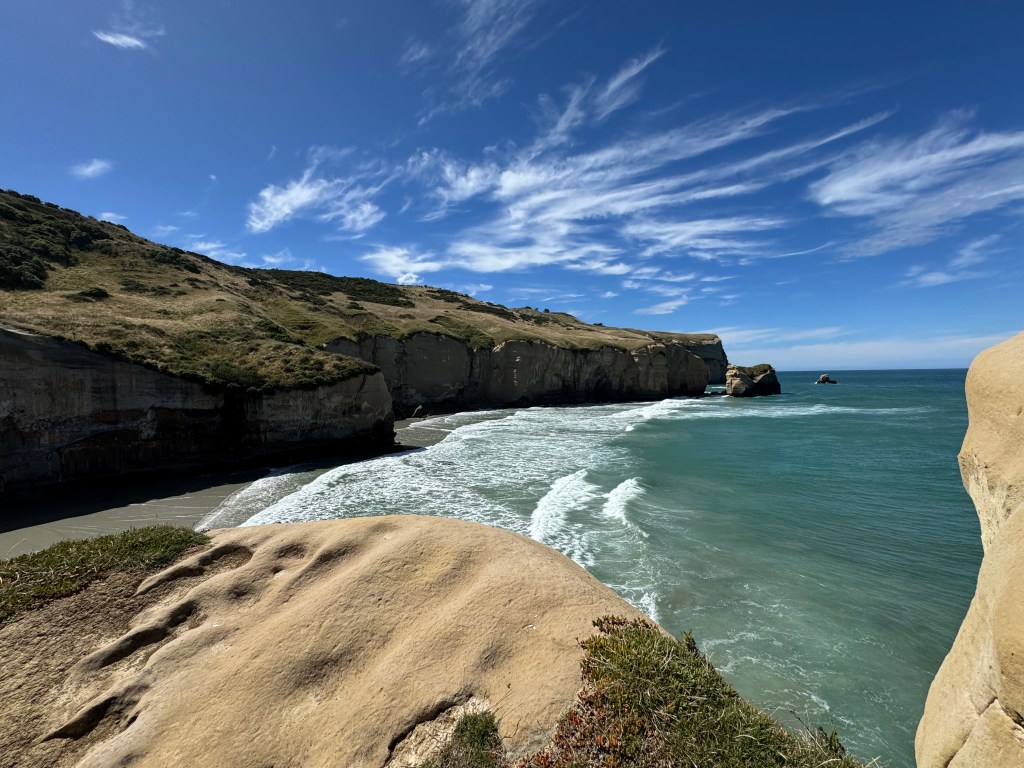
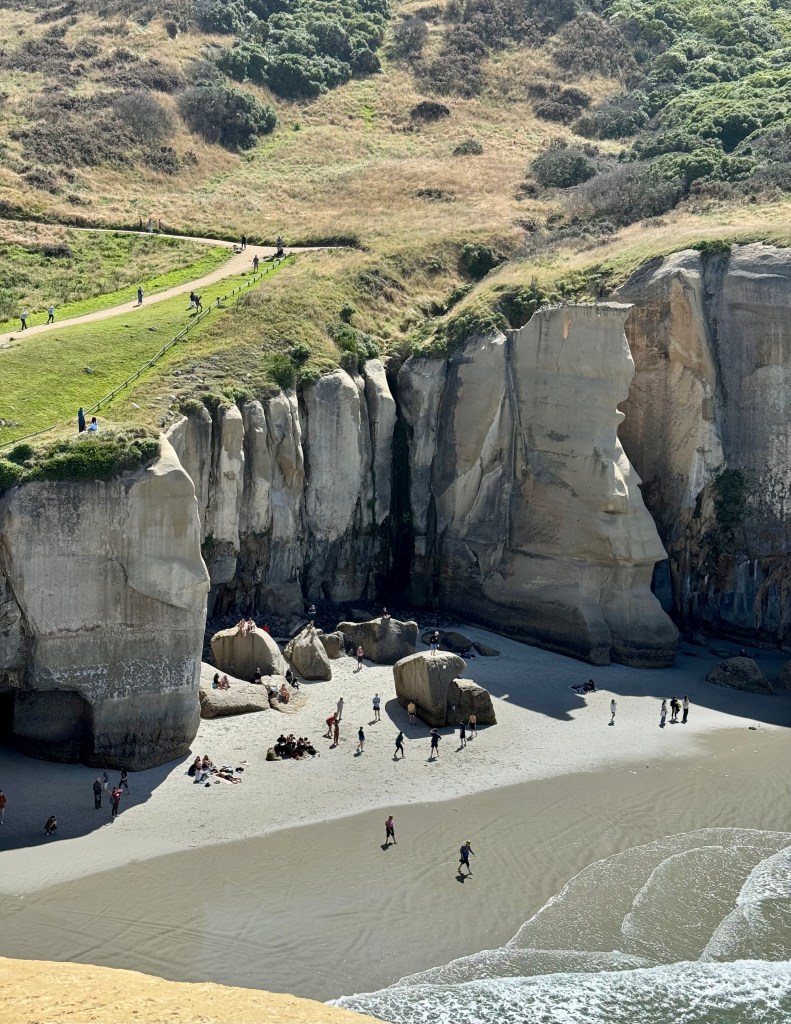
Our last day in Dunedin was spent driving to a few beach areas for hiking and sightseeing. Tunnel Beach was our favorite!
It was difficult to say good-bye to Marina and Dakota but we didn’t have too much time to be sad before more family joined us 5 days later. We met my sister and brother-in-law at the Auckland airport where we joined them on a flight to Christchurch also on the South Island. This was a new destination for us, and we were excited to discover the area.
Our Airbnb was right in the heart of the city which was very walkable. We spent most of our time on their hop-off/hop-on trolley car to explore the city. One of our many stops was a museum called Quake City.
Here we learned about the 2011 Christchurch earthquake. It was a 6.3 magnitude event that struck on February 22, 2011, at 12:51 p.m., causing widespread devastation and 185 fatalities. Occurring at shallow depth beneath the city, it triggered severe infrastructure damage, extensive liquefaction, and significant building collapses, including the CTV building, making it one of New Zealand’s darkest days.
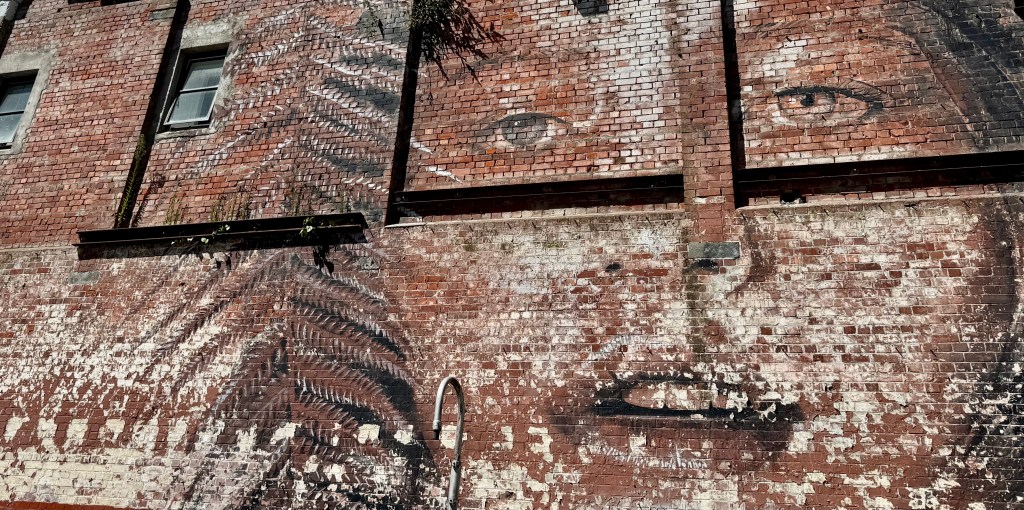
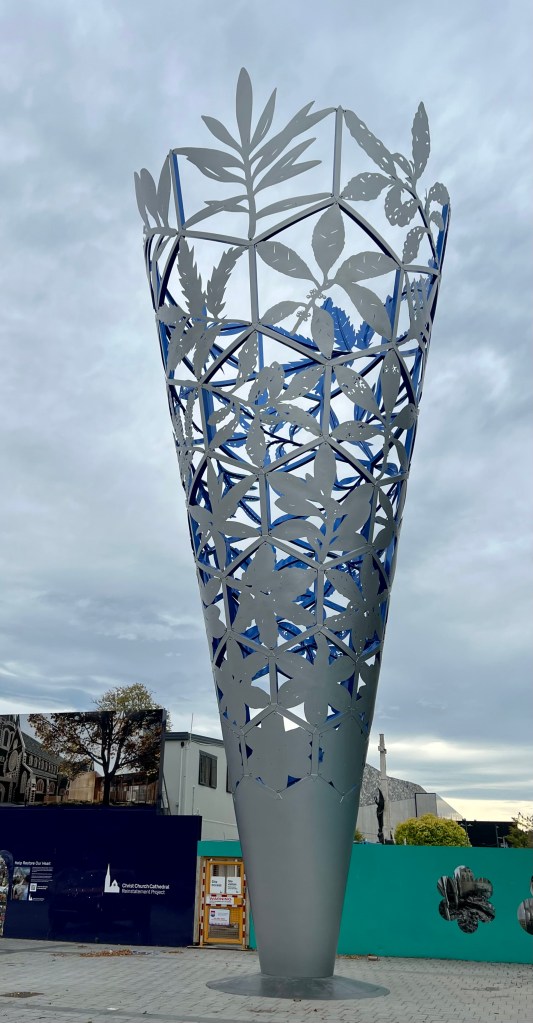
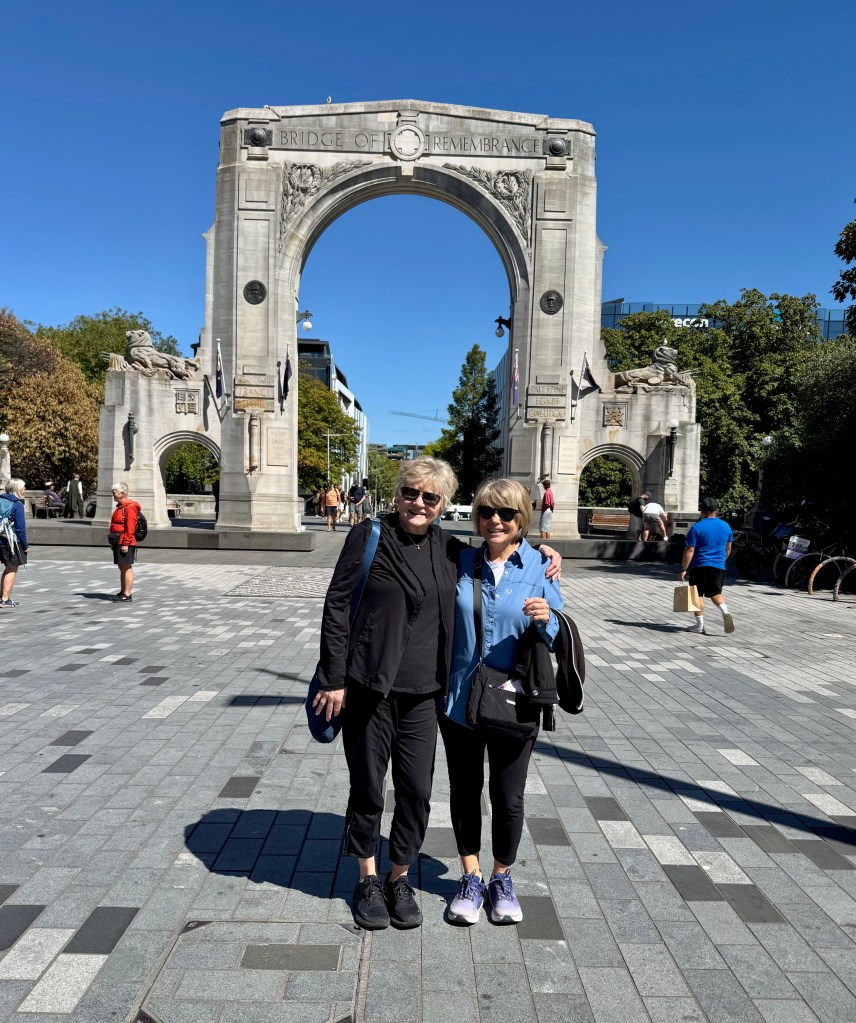
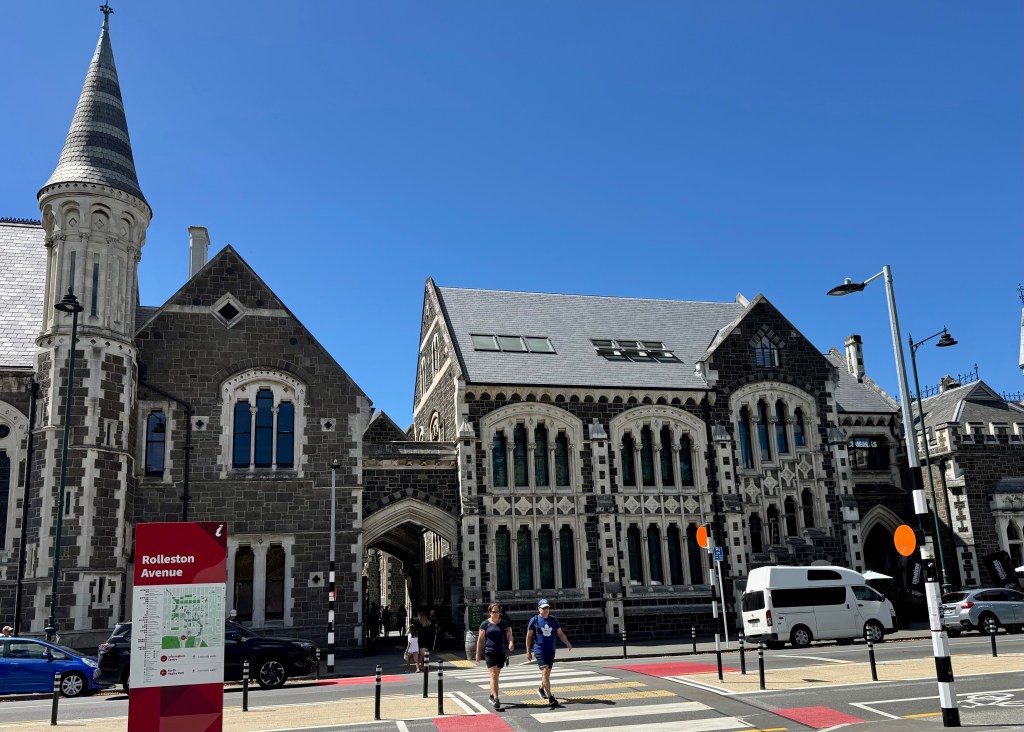
One of the museum’s staff shared that due to the devastating earthquake, the city had to rebuild much of the downtown area. It is now better than ever with earthquake-resistant buildings, beautiful architecture and incredible artwork throughout.

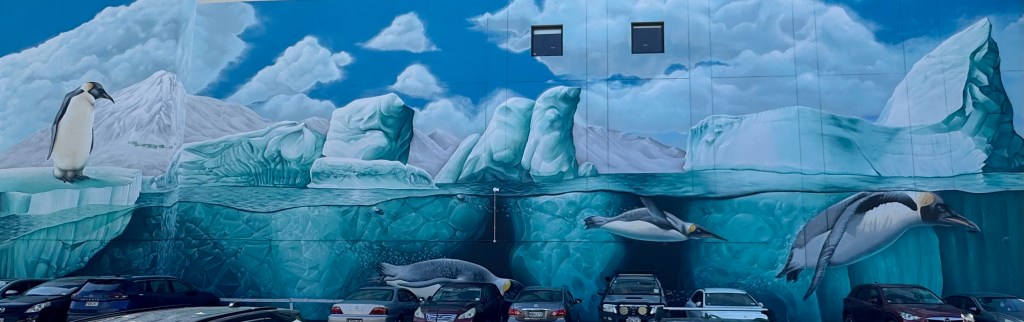
Next, we visited the International Antarctica Center. Christchurch is one of five cities in the world known as a ‘gateway to Antarctica.’ This is far more than an empty title. The garden city acts as a conduit to the icy continent, sharing and championing Antarctic geography, history and culture.
In 1990 Christchurch International Airport saw the need for a visitor center to Antarctica. The airport wanted a complex that could show people why the airport was so important to the Antarctic scientific programs, and why these programs and the continent were so important to the world.
Since opening in 1992, the International Antarctic Center has welcomed millions of visitors, steadily introduced exciting new exhibits and experiences and won plenty of awards and much recognition for work in tourism.
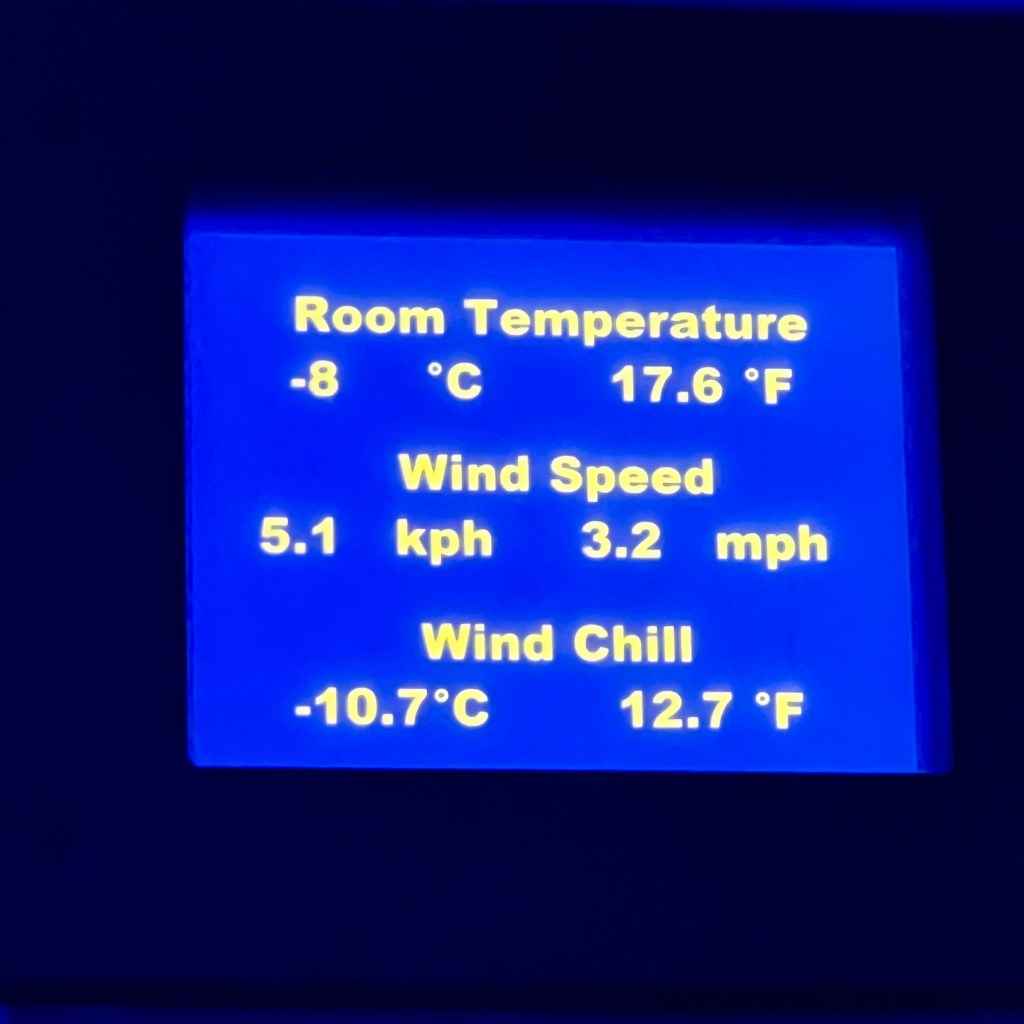
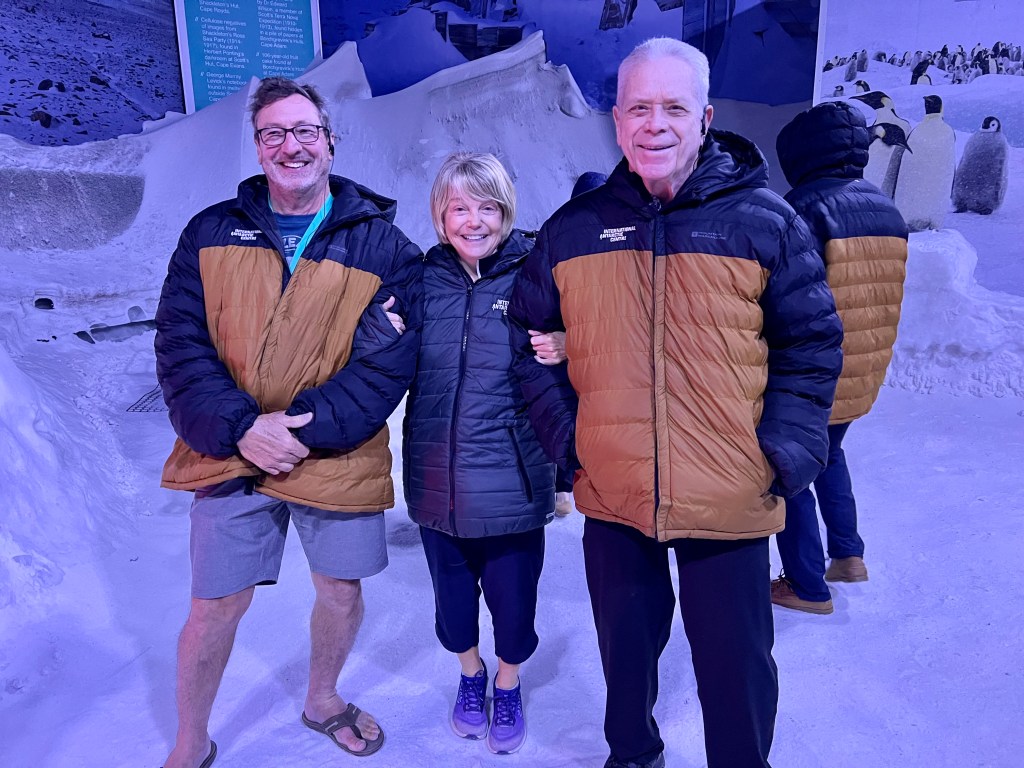
We enjoyed a two-hour fully guided experience with one of our Antarctic Guides. The highlight was experiencing the Antarctic Storm Room and feel the chill of a -8 C windstorm. While they did provide down jackets to wear in the room, it was still extremely cold. Brrrrr! In spite of the cold room, we highly recommend this tour if you are ever in Christchurch.
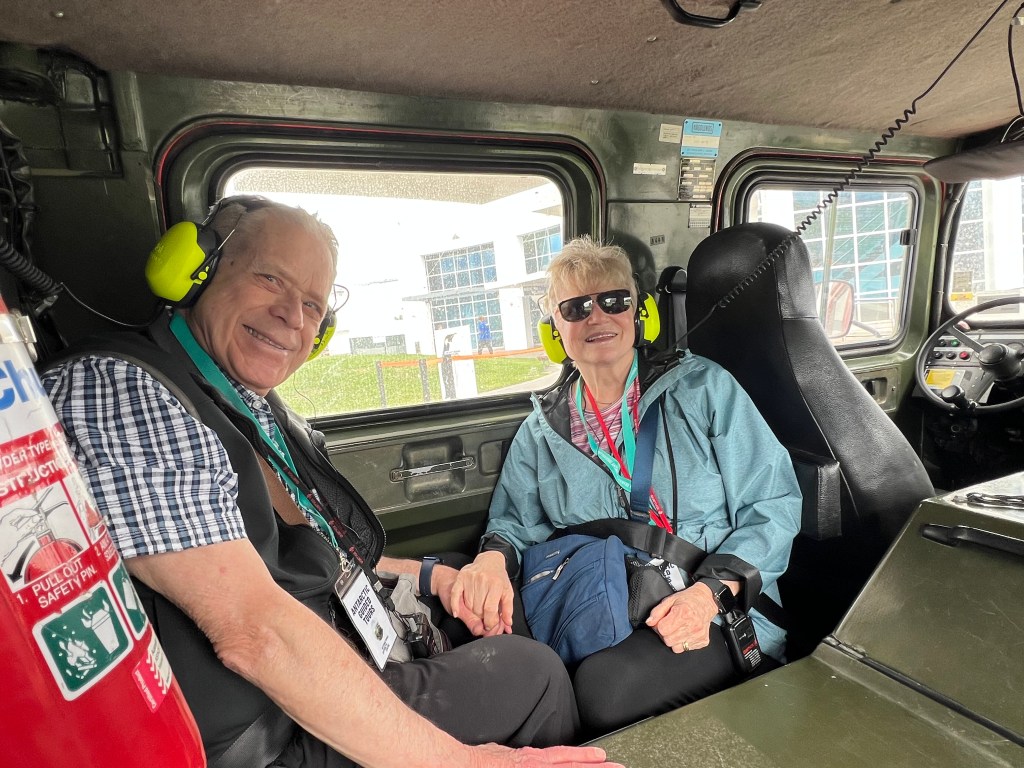
We were also able to experience a ride in a Hagglund which is an amphibious, all-terrain tracked vehicle used in Antarctica for transporting personnel and cargo over deep snow, ice, and frozen sea ice. We bounced around and tried to imagine what it would be like traveling in Antarctica. See photo below.
While we loved Christchurch, it was time to go. Our next visit included a return to Queenstown. We enjoyed a few scenic sites along the way.
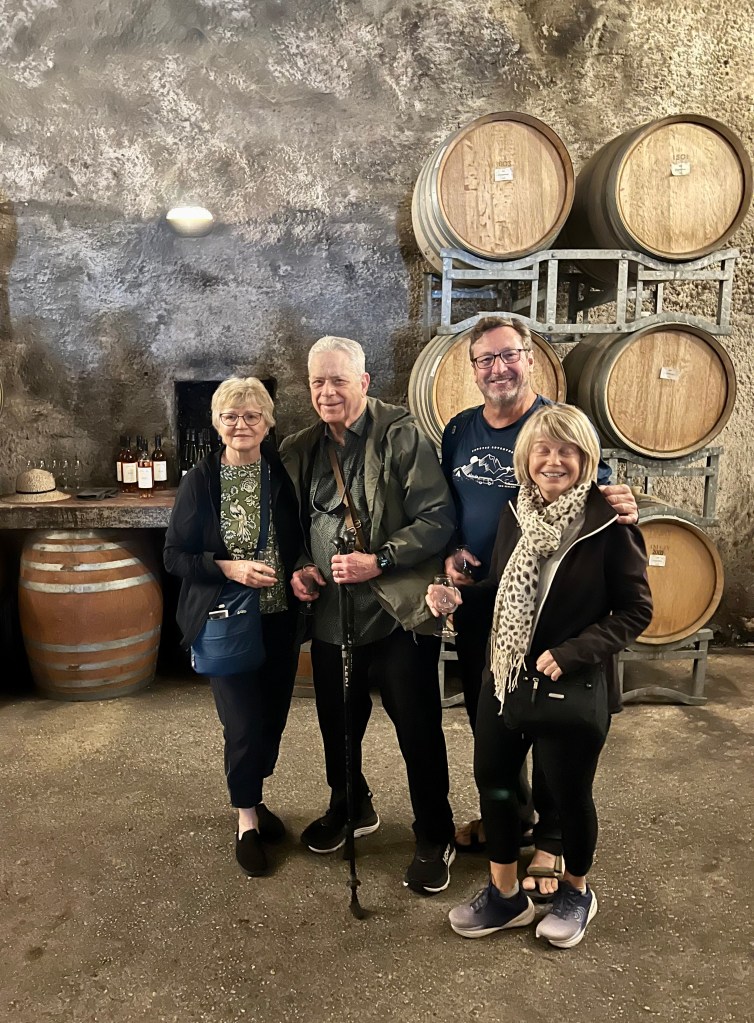
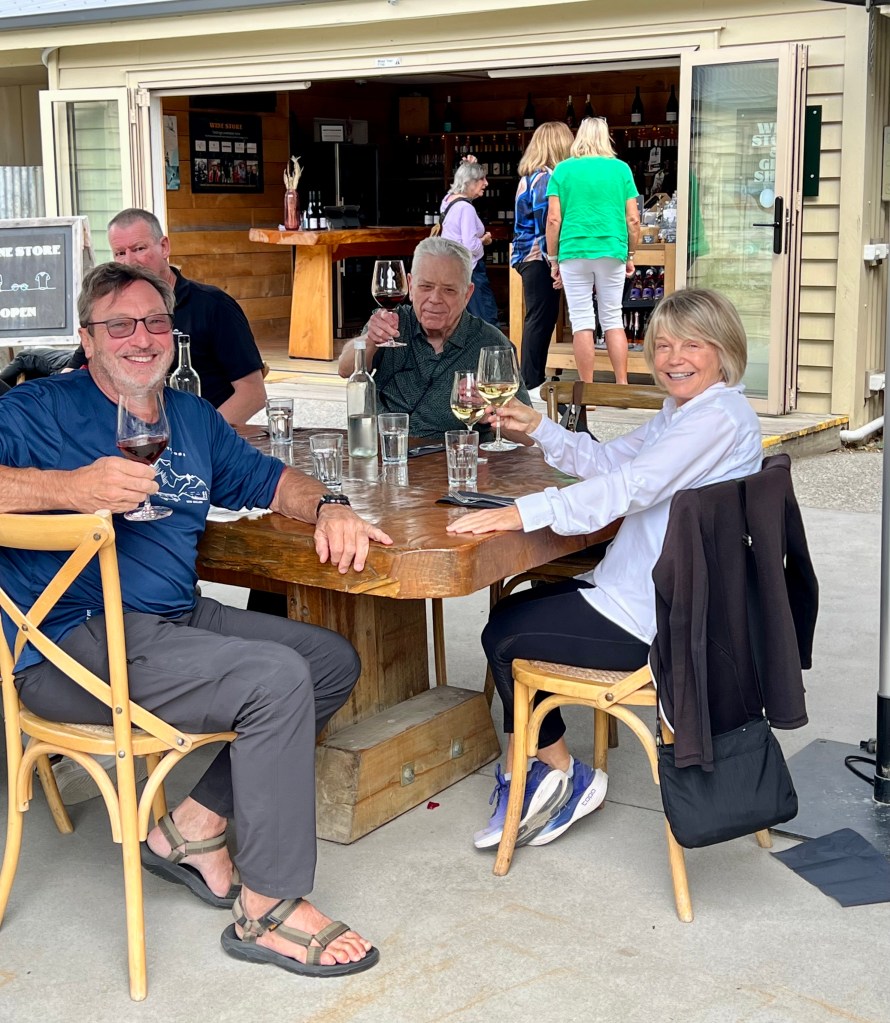
Our first full day in Queenstown, we enjoyed a winery tour in the Gibbston Valley region. We drove to our pick up point and started with Cellar Door for an underground tasting and education about their wines. Next, we went to Kinross Winery where they partnered with 4 other wineries in the region. Gibbston specializes in Pinot Noir wines, but they also had a limited offering Sauvignon Blanc and Rose. We all made a few purchases to appreciate later.
Last, we were treated to a wonderful lunch where they paired our wines with our meal selection. The food and the wine were delicious and overall, we had a great day! Back at the condo, we skipped dinner and went to bed early.
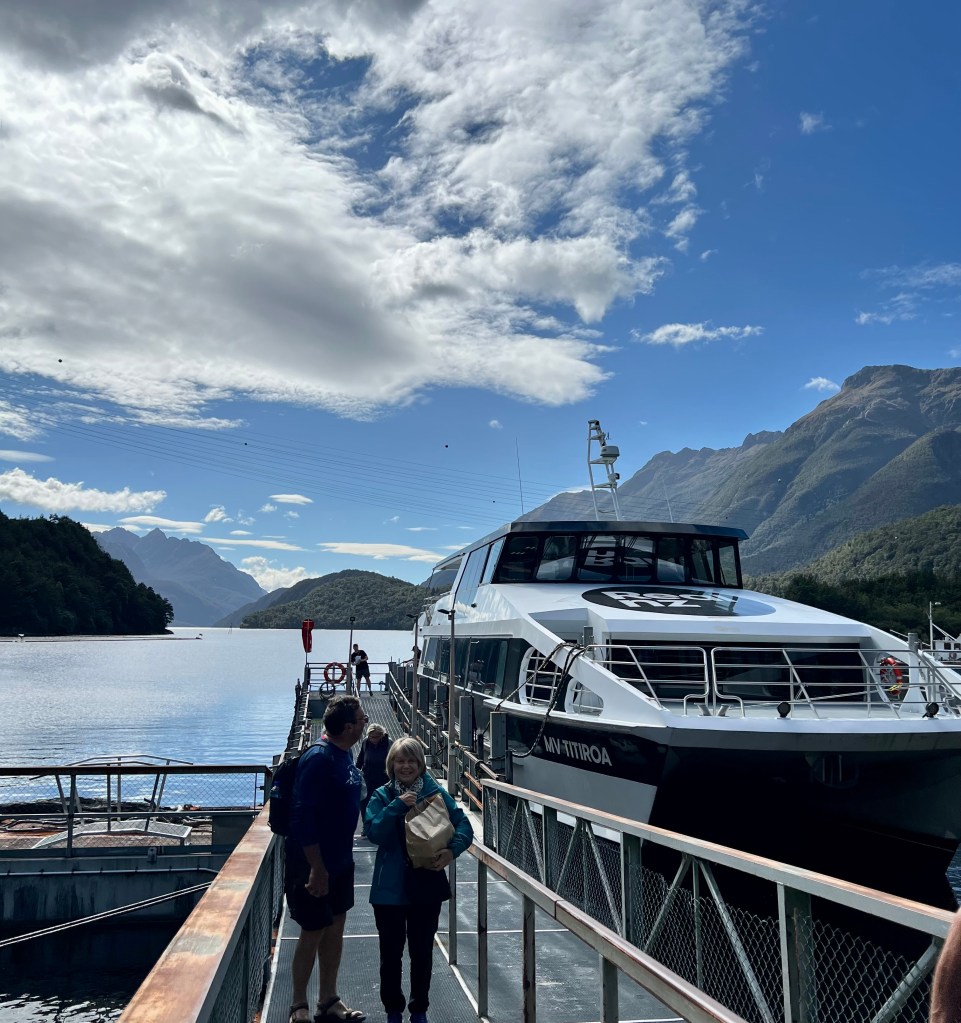
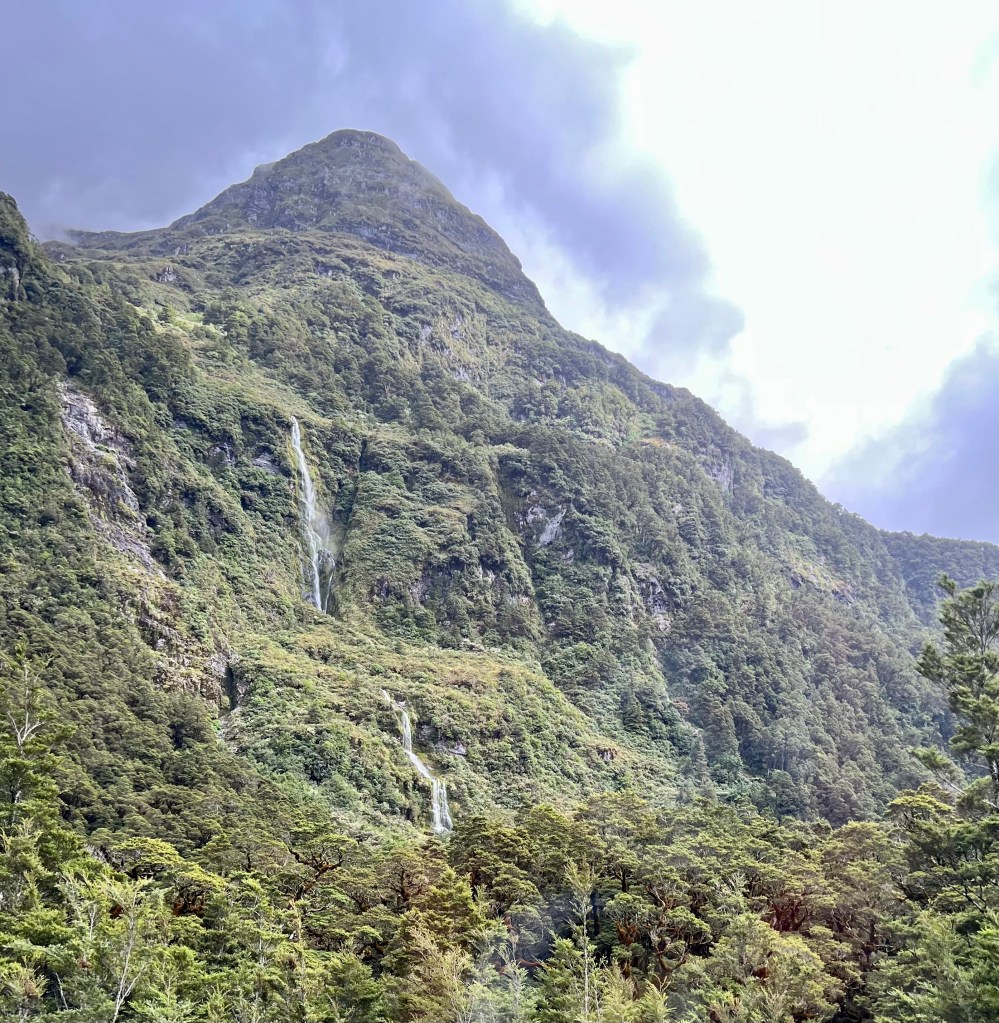
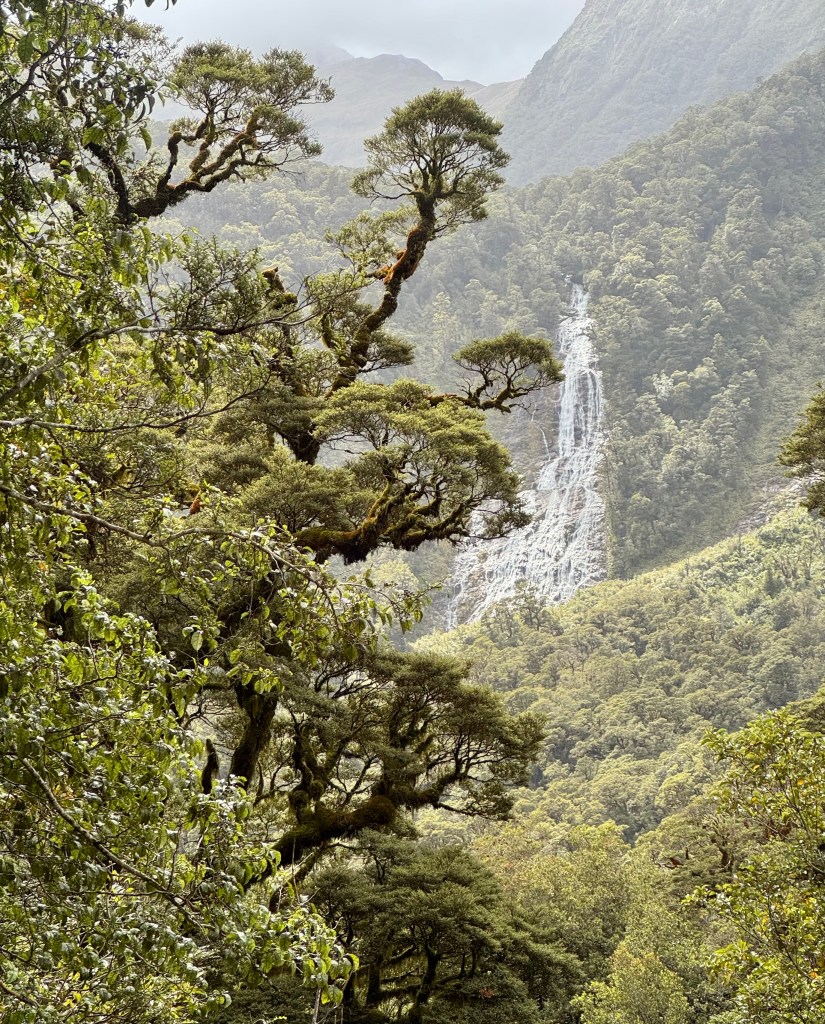
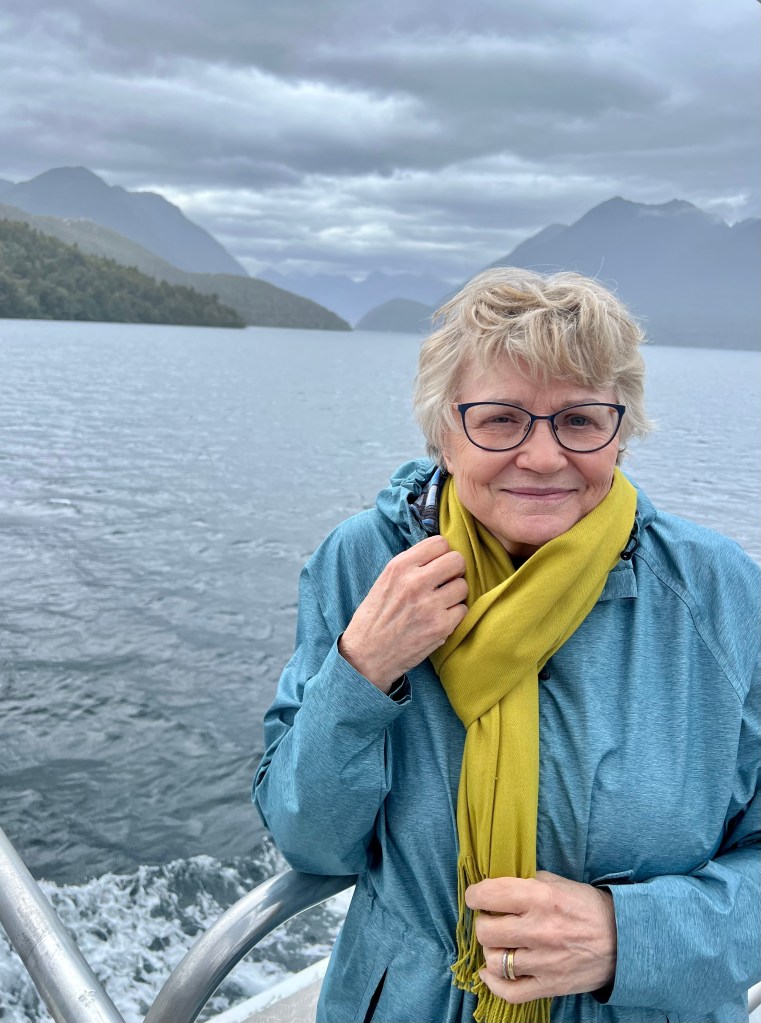
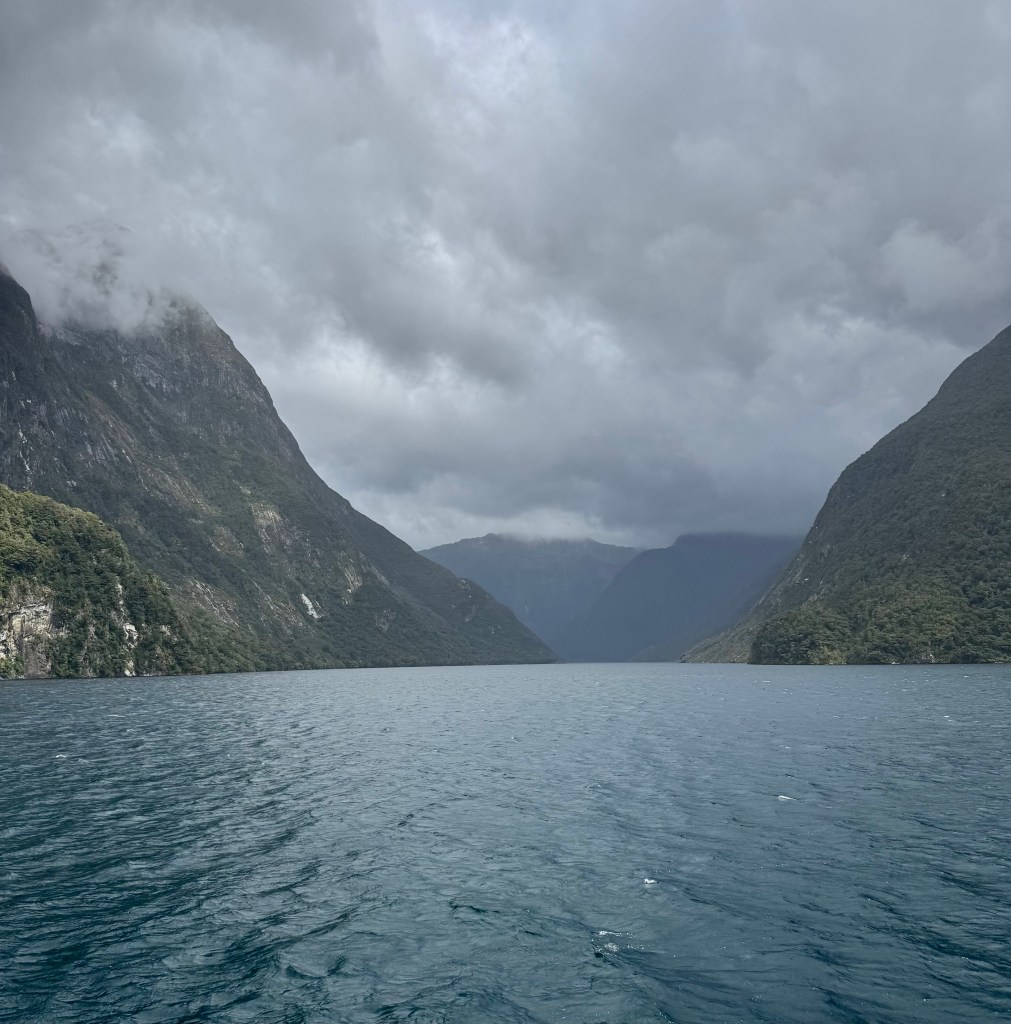
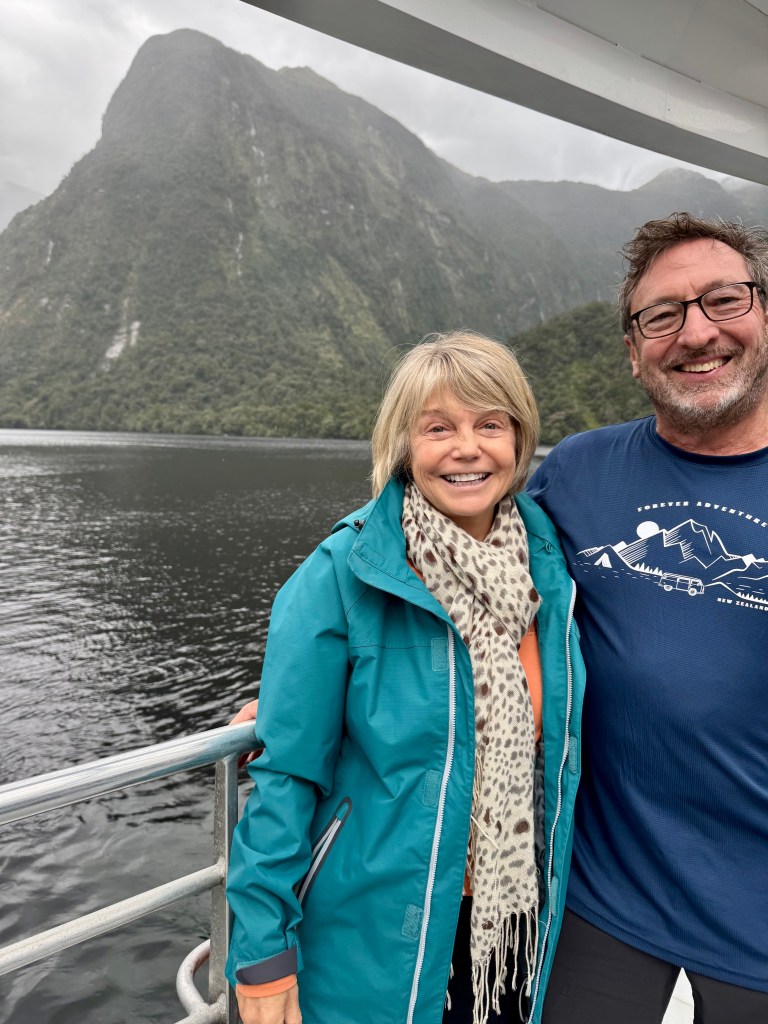
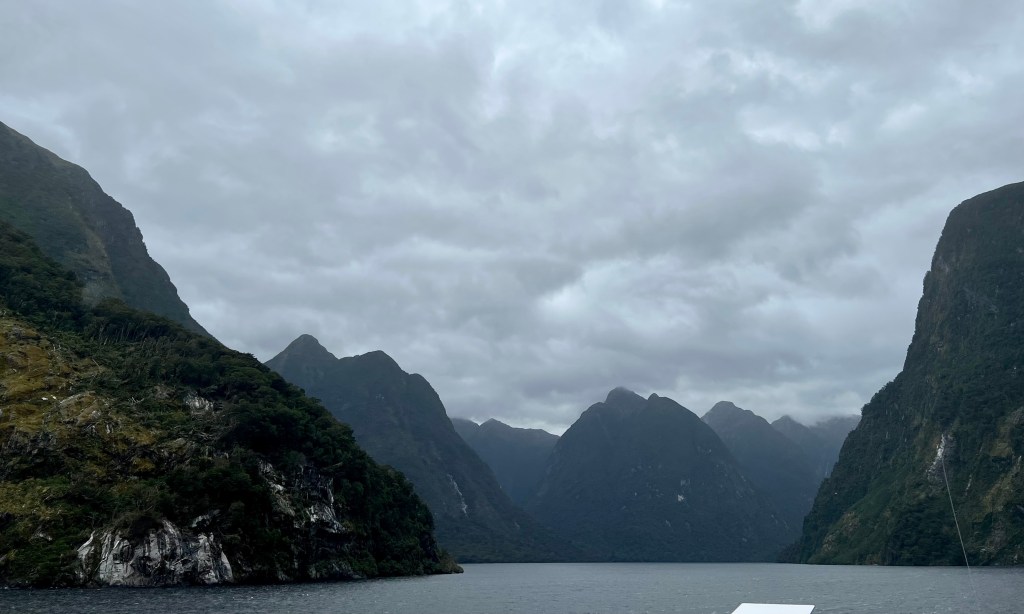
On our last day in Queenstown with Jim and Susan, we toured Doubtful Sound. It was forecasted to be a rainy and windy day but that was not all bad news. With rain, the waterfalls are flowing!
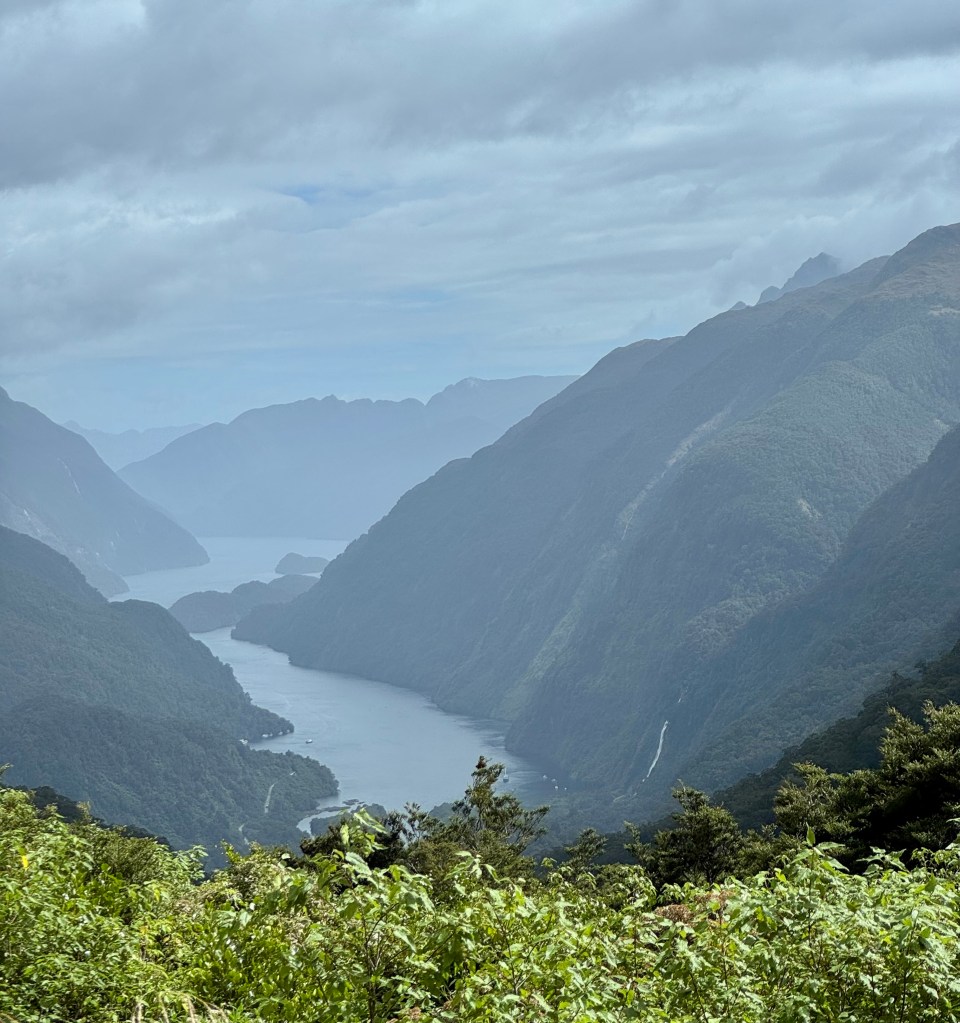
We traveled on multiple types of transportation. We started on a bus, then a boat across a lake, then another bus to get over the pass and then onto a large tour boat to explore Doubtful Sound. It was bigger compared to the Milford Sound, and because there was rainfall, the waterfalls were more visible. When we toured Milford Sound it was a beautiful sunny day and it was gray and rainy while viewing the Doubtful Sound. The sun can certainly change your perspective but having the opportunity to see both sun and rain, was a worthwhile experience.
The pictures below are from our tour of Doubtful Sound.
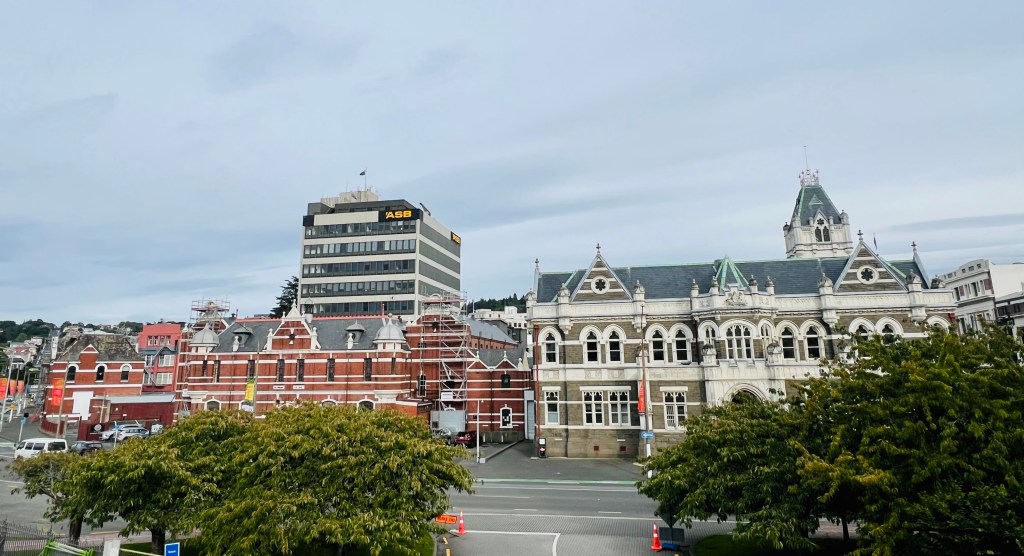
We returned to Dunedin for our last stop with Susan and Jim. Are you seeing a theme here?? We stayed in a unique apartment with a bit of history. The Thomas Gregg Apartments on the Dunedin waterfront span nearly 150 years of history, transforming from a booming 19th-century coffee mill into a derelict warehouse, a legendary music hub, and finally boutique apartments. Our place was beautiful and location was great.
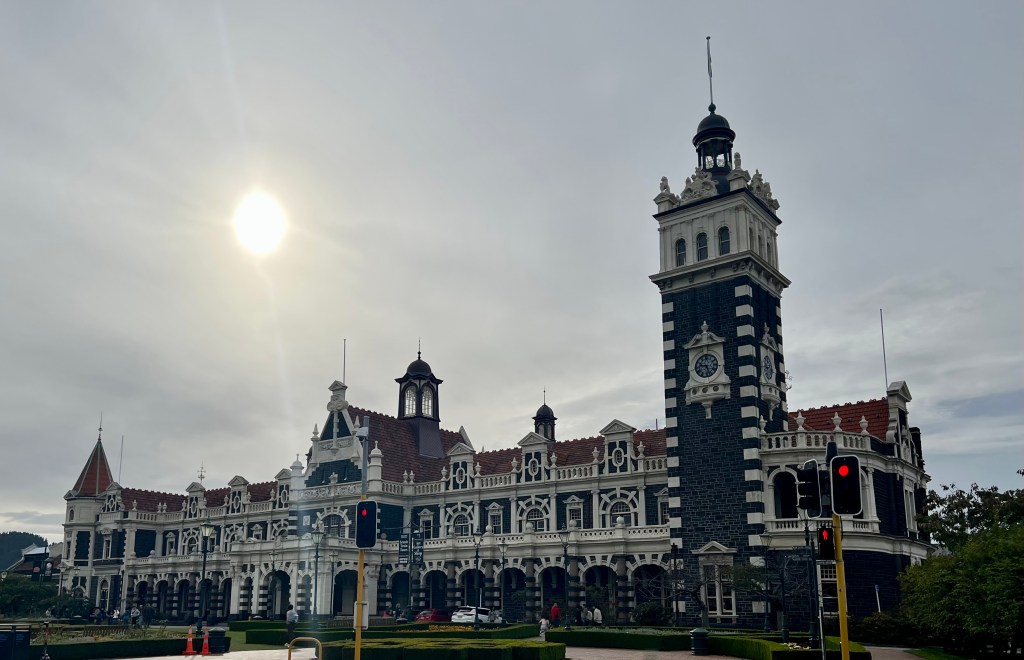
On our first night we went to a restaurant in the old train station called Cobb & Co. We enjoyed it and the robots delivering our food were interesting. Tracy and I experienced this for the first time at a restaurant in Pahia on the North Island. It’s not something we have seen in the US.
The Dunedin Railway Station is a stunning Flemish Renaissance-style landmark opened in 1906, famous for its “Gingerbread House” appearance, white Oamaru limestone, and black basalt rock construction. Located on Anzac Avenue, this iconic, ornate building houses a mosaic-tiled hall, the New Zealand Sports Hall of Fame, an art gallery, and the weekend Otago Farmers Market.
We also did the Albatross tour again and it was great fun. The day was very windy, blowing about 35 knots. You might ask how windy was it? It was so windy, the wind blew my sunglasses off my face!
The good news is the albatross love to fly in the wind. As a result, we were able to observe them flying near their nests. In some cases, they would have trouble landing and would take flight again and make another attempt at landing. It was quite a show.
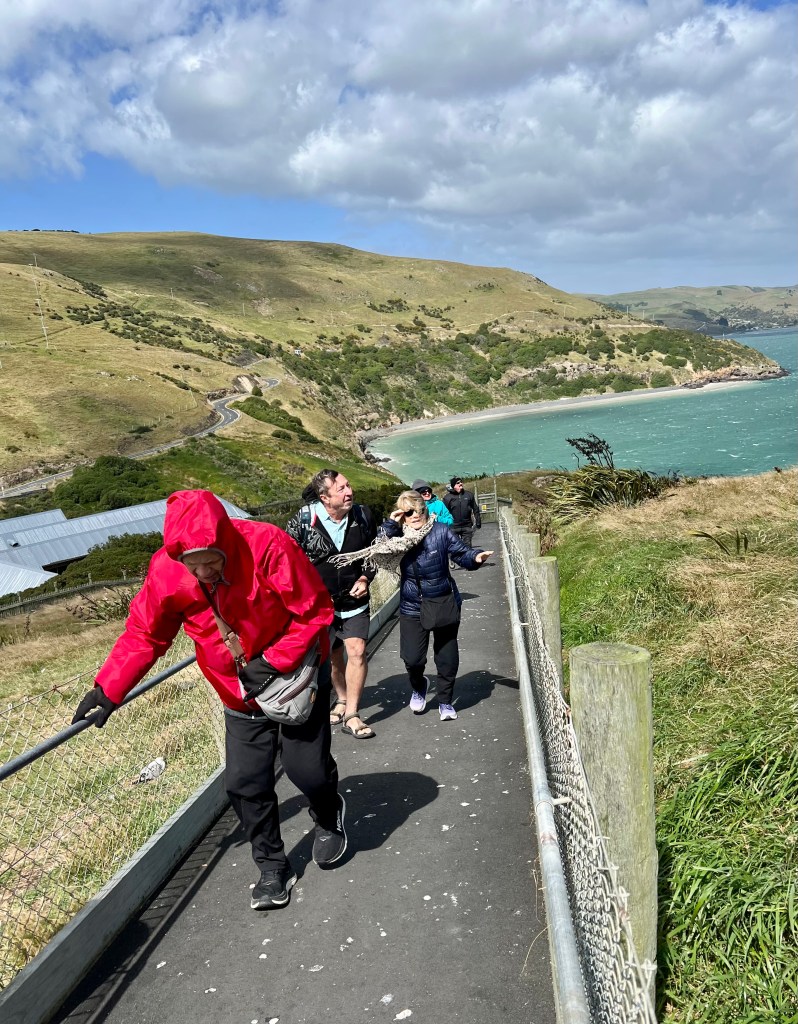
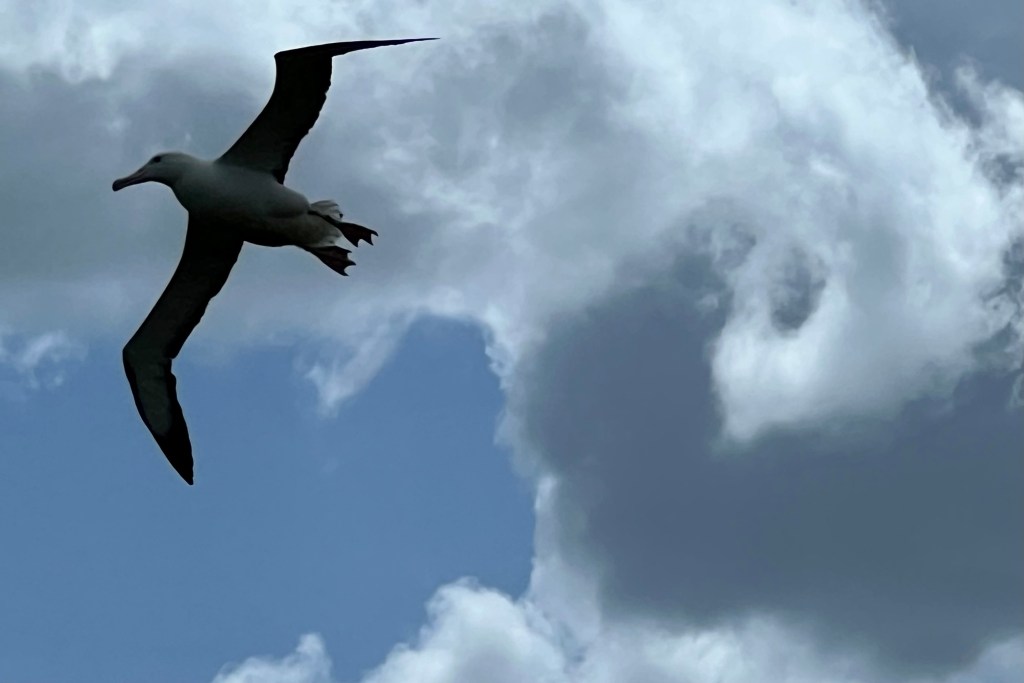
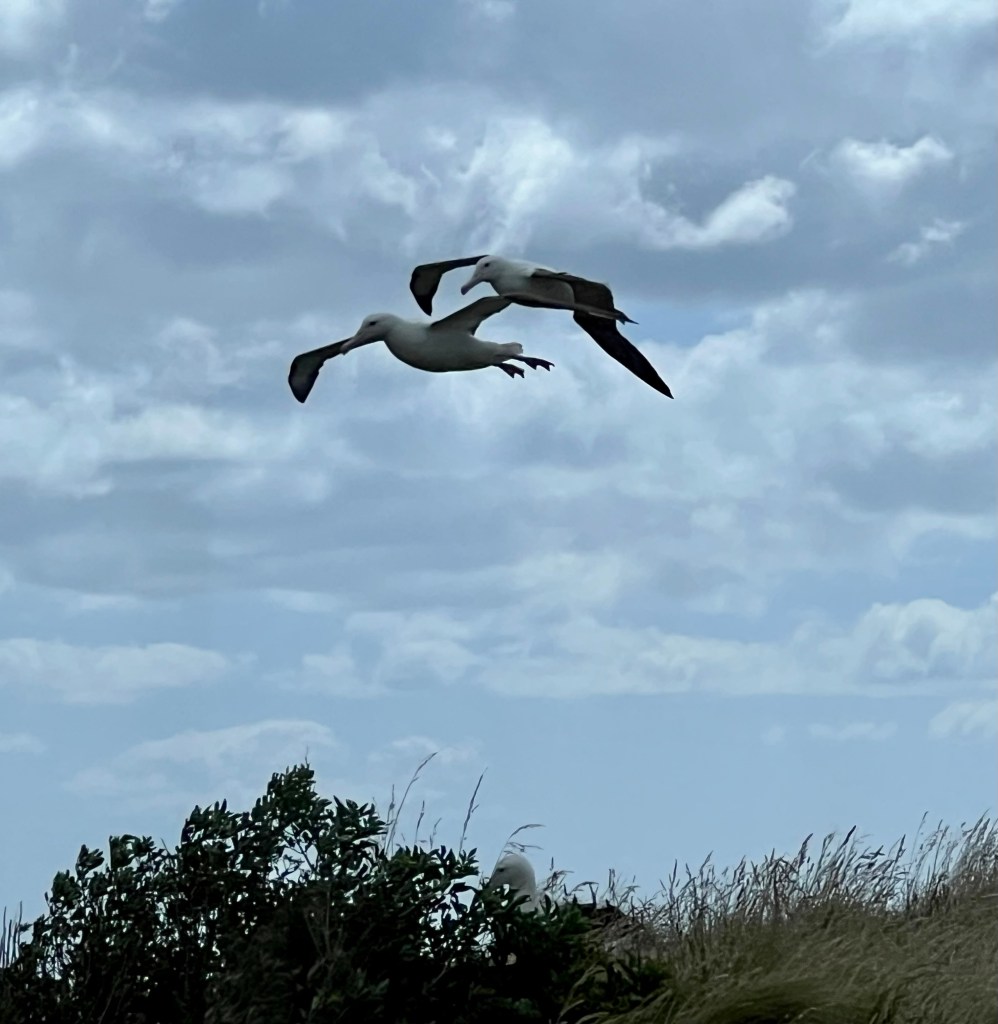
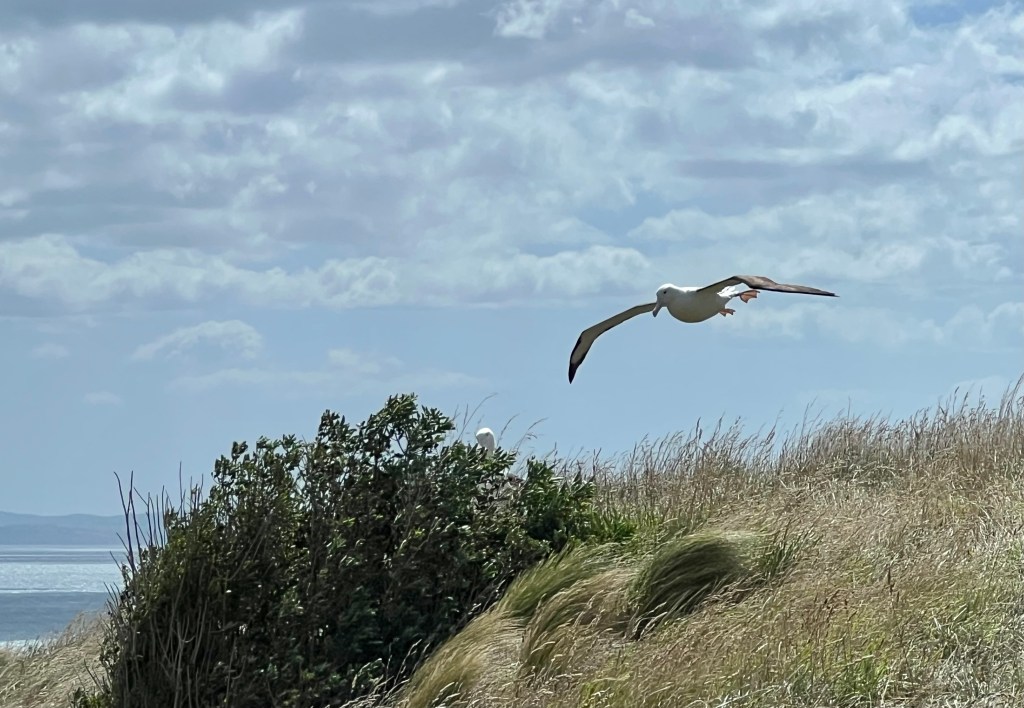
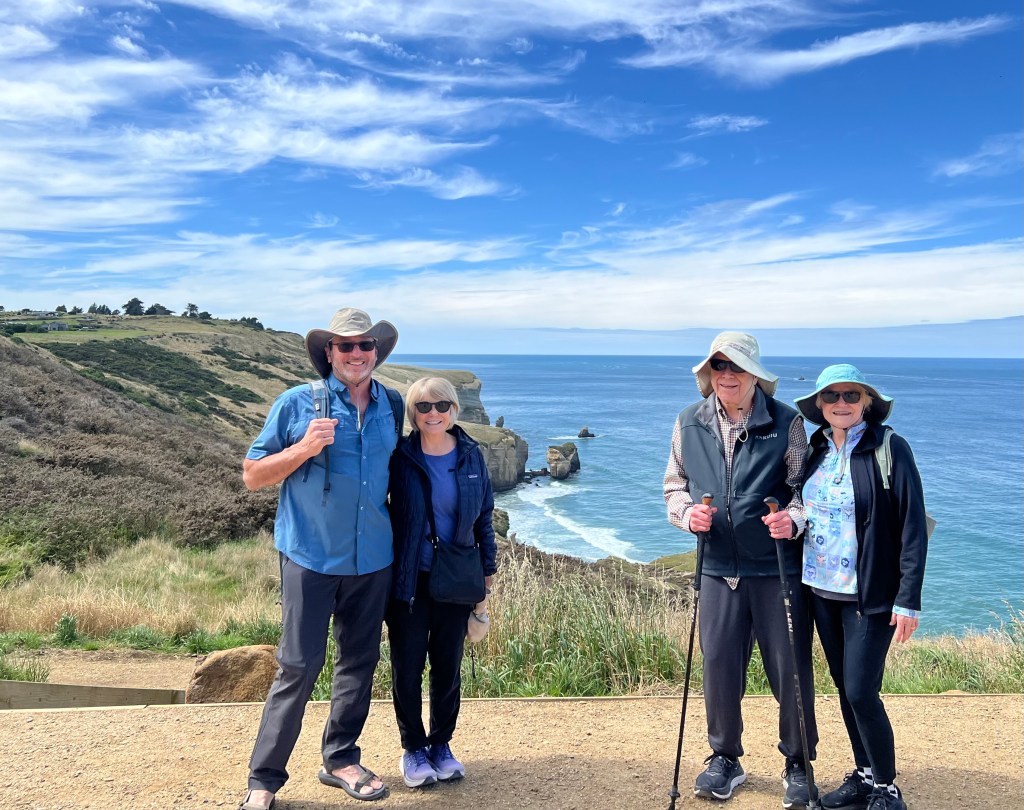
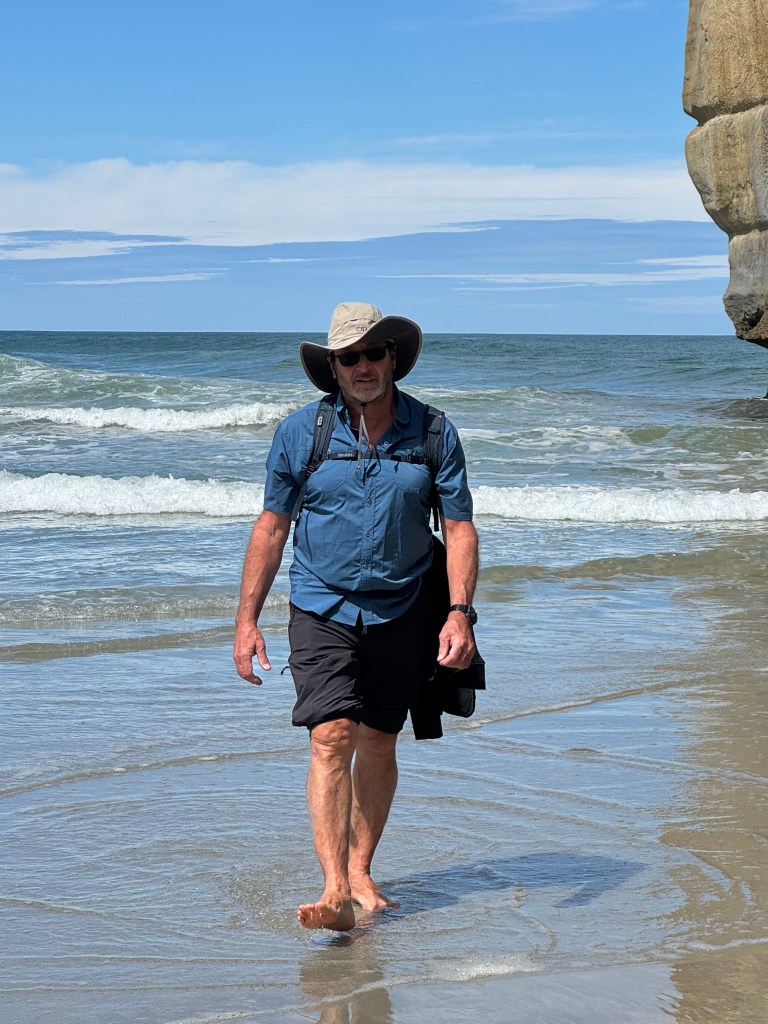
Our last day we visited Tunnel Beach. This was a return visit too but we enjoyed it just as much as the first. This time we hiked out to the point for even better views.
See below for more pictures.
Next day, we all left Dunedin together and flew back to Auckland.
Our next travel plans included meeting up with Tracy’s brother and sister-in-law, Brad and Elizabeth, in Rotorua. They arrived in Auckland February 20th and had been touring the North Island while we were still in the South Island. Susan and Jim had planned to spend their last few days in Rotorua as well and we drove together to meet up with Brad and Elizabeth.
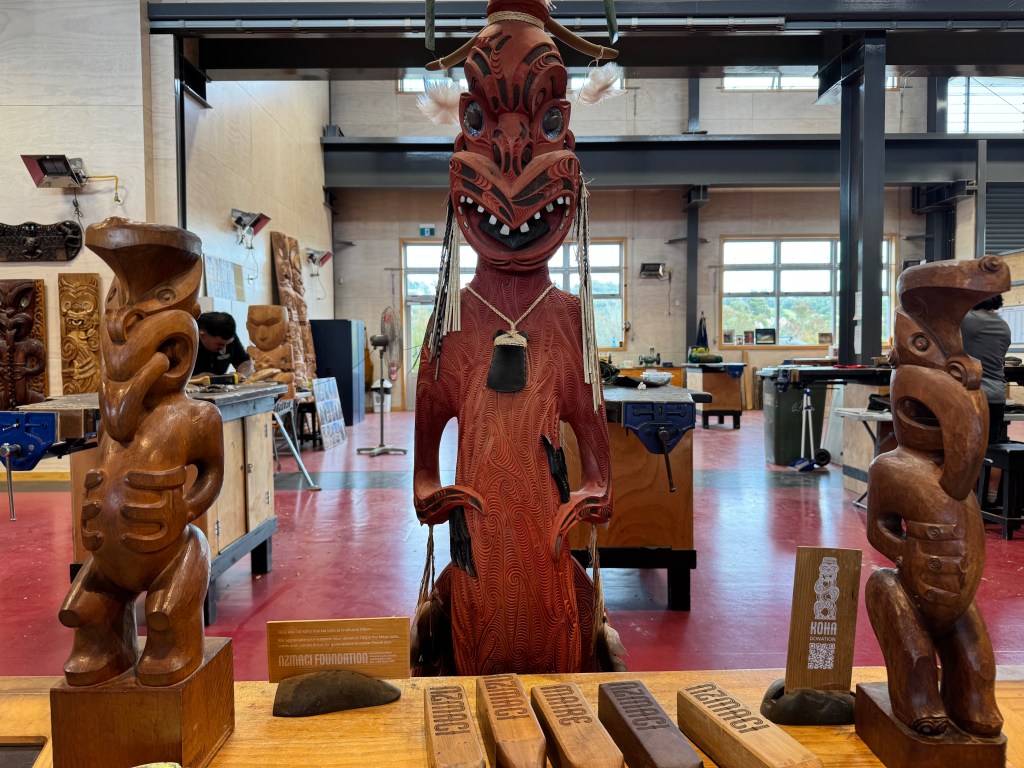
It was great to connect with Brad and Elizabeth and with no time to waste, the four of us went on a 90-minute guided tour through Te Puia’s Māori Arts and Crafts Institute where we watched skilled carvers and weavers demonstrate their expertise. We saw indigenous material culture on display through the lens of internationally recognized artists.
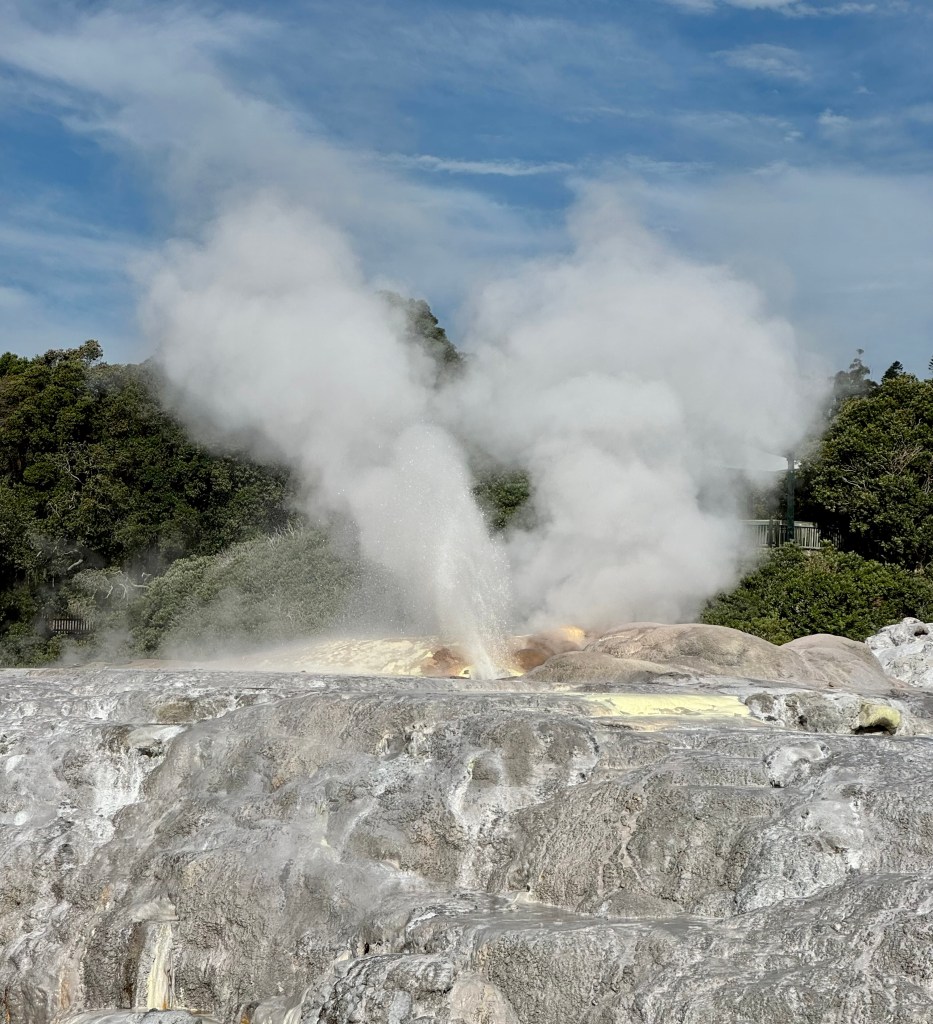
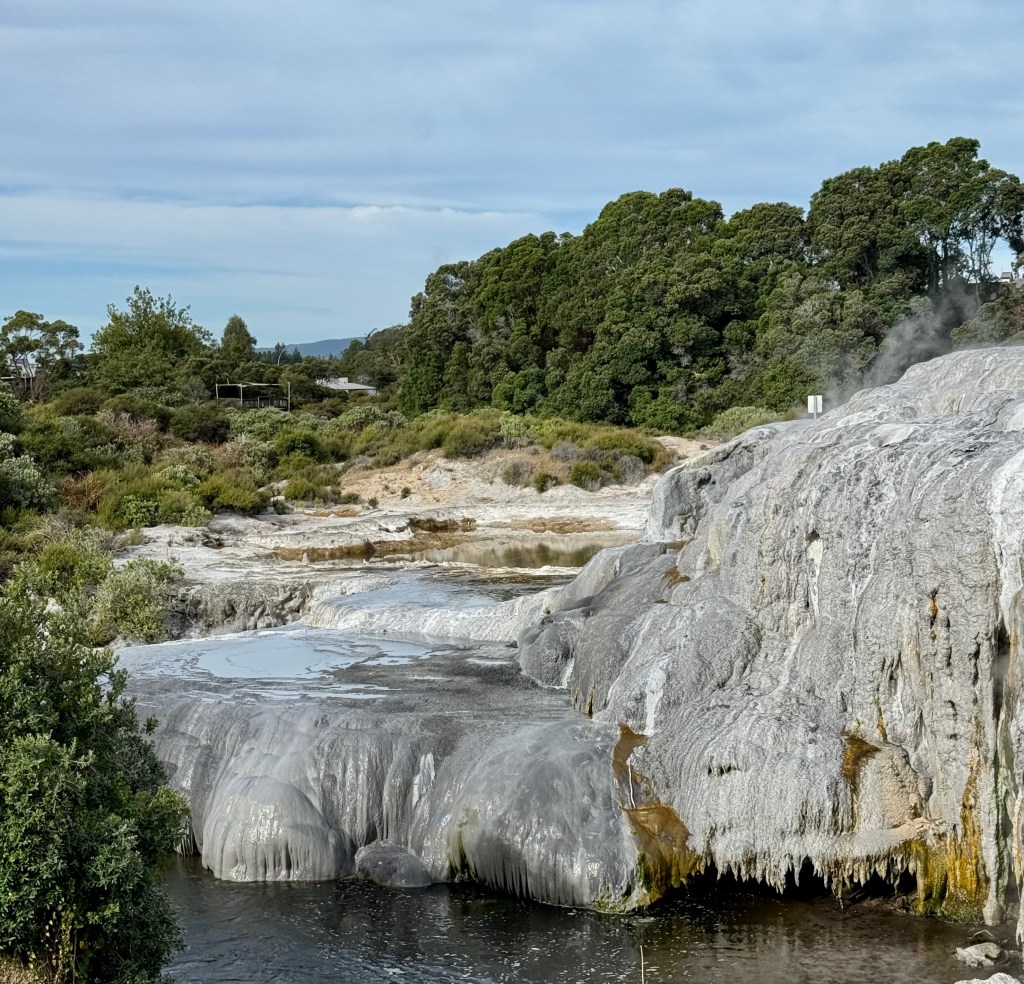
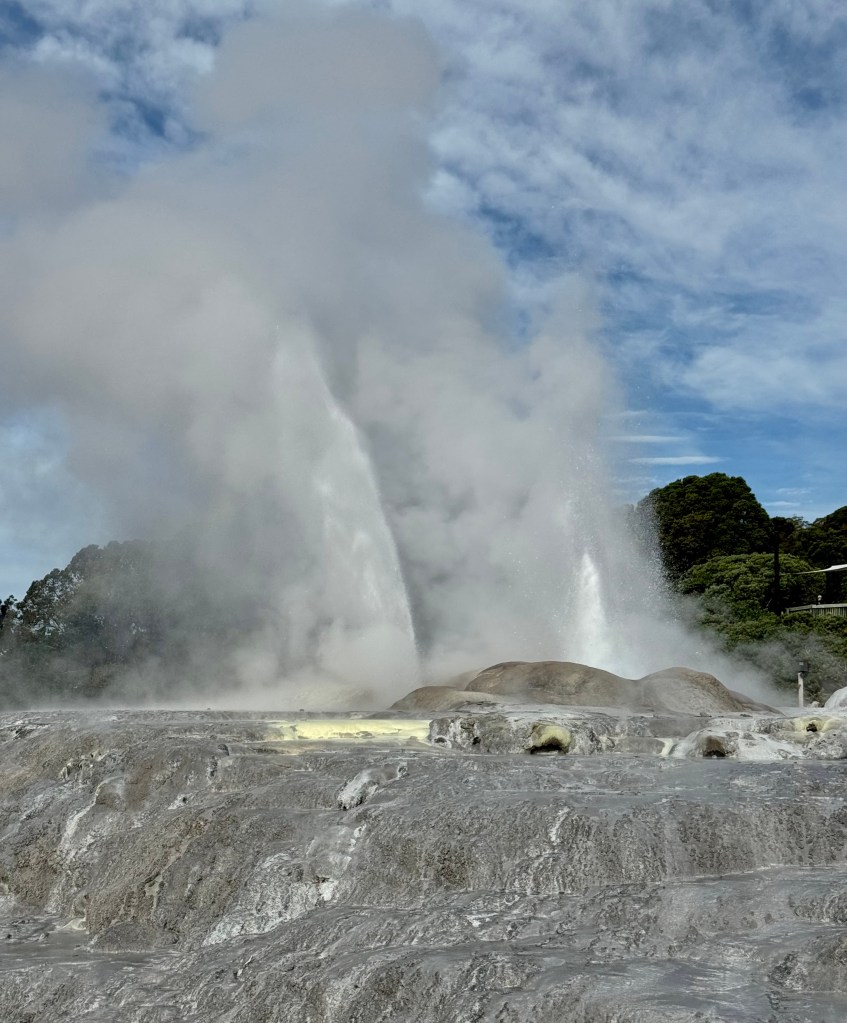
Next, we walked up to the Pohutu Geyser. We had missed this during our first visit to Rotorua much to Tracy’s disappointment. We were told this is the largest natural Geyser in the southern hemisphere and erupts skyward over 15 times a day. It is New Zealand’s most prolific geyser and fortunately our timing was great, and we were able to sit erupt for several minutes.
After the geyser tour we all went back to our hotel where we met back up with Susan & Jim for dinner. It was nice to introduce our siblings and partners while enjoying good conversation along with a nice dinner. Afterwards we said goodbye to Susan and Jim as they were heading back to the US the next day.
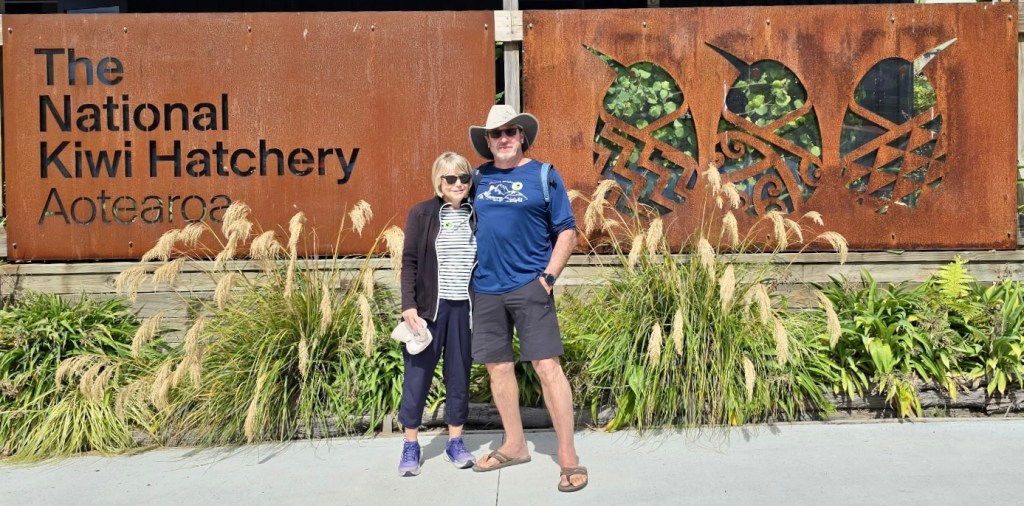
Elizabeth made reservations for us to visit the National Kiwi Hatchery in the morning. Kiwi’s are New Zealand’s most iconic bird. It is a bird, but it has featured more characteristic of a mammal. For example:
- It has wings but cannot fly.
- It has loose feathers that are more like fur and unlike other birds the feathers molt throughout the year.
- It is the only bird in the world with nostrils at the end of its beak.
- It uses sensory pits at the tip of the bill to find food.
- It has no tail feathers but does have whiskers, like a cat.
- Very unusual, females have two ovaries, most birds have only one.
Kiwis are mostly nocturnal which means that they come out of their burrows after nightfall to forage for insects, grubs, earthworms, fallen fruit and native plants. Other night birds are equipped with big powerful eyes so they can see at night.
Kiwis are different. They have a well-developed sense of smell with the part of the brain controlling this sense being much larger and more like a mammal’s structure than a bird. Kiwi have small eyes, do not see as well at night, instead, they feel smells and hears its way around.
Kiwi have one of the largest egg-to-body weight ratios of any bird. The egg averages 15% of the female’s body weight (compared to 2% for the ostrich).
Incubation is done by the male and can take anything from 74-90 days. When first hatched, the belly of the chick is swollen with yolk which will sustain them for their first few days. Female kiwis grow to be larger than males (up to 3.3 kg and 45 cm).
Stoats, ferrets and weasels are the biggest threat to the survival of Kiwi, closely followed by cats and dogs. Only 5% of all Kiwis hatched in the wild survive to adulthood.
We were able to see Kiwi’s walking around in their natural habitat that was darkened to make the birds think it was nighttime. They appeared faster and larger than expected. We also watched a video of a Kiwi hatching, and we saw a couple of baby birds being fed and weighed doing their checkups. The hatchery does a great job of educating the public and getting the Kiwi’s back into their natural habitat as soon as possible. Unfortunately, we were not allowed to take pictures inside the facitlity.
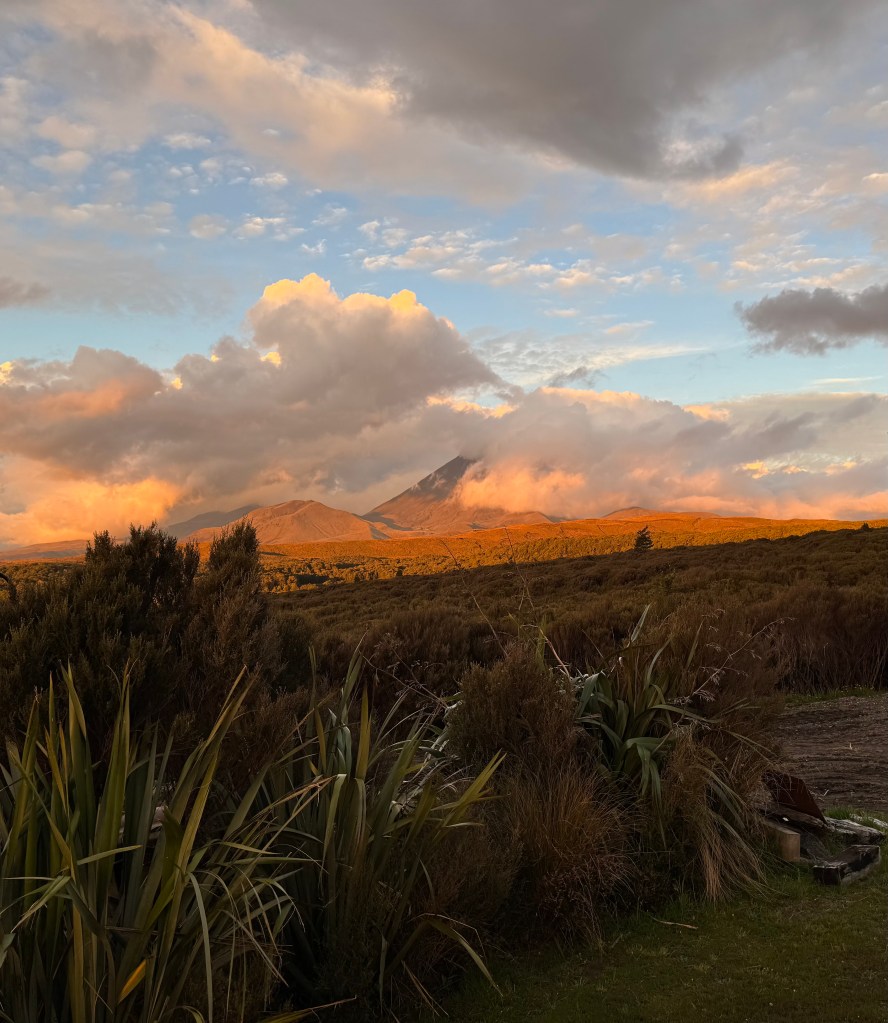
Next, we traveled to the heart of New Zealand’1s North Island and explored Tongariro National Park. We stayed in cabins as part of the Skotel Hotel which is situated in Whakapapa Village. From our front door, we had access to many hiking trails. Thanks to Brad and Elizabeth for finding this spot.
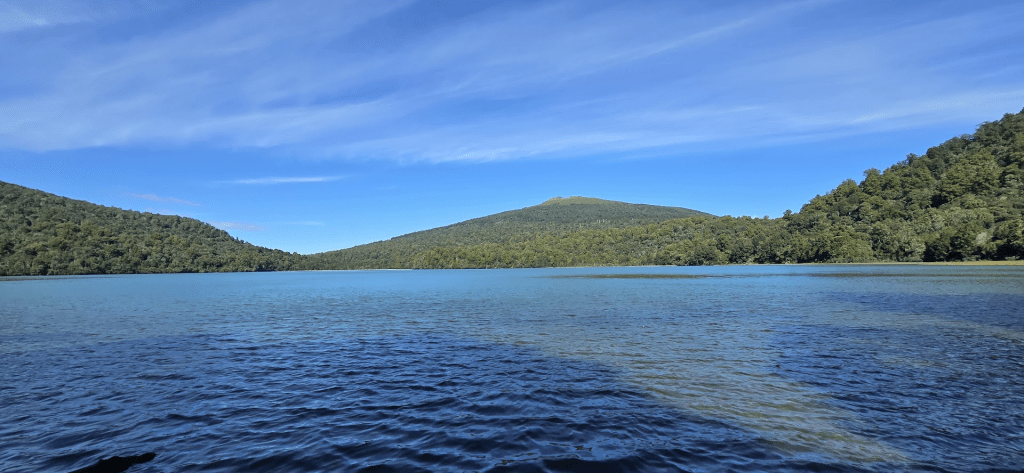
On the way to Tongariro National Park we stopped along the way and hiked the Rotopounamu track. It is a peaceful, 5 km loop hike that circles a stunning emerald-green, crater-formed lake in the Pihanga Scenic Reserve of Tongariro National Park. See photo below of the lake.
These are the places we hiked during our stay in the National Park.
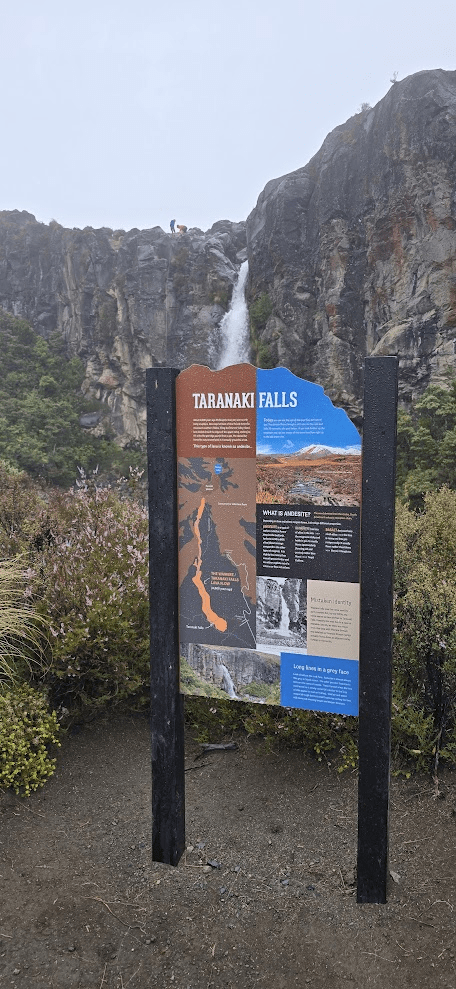
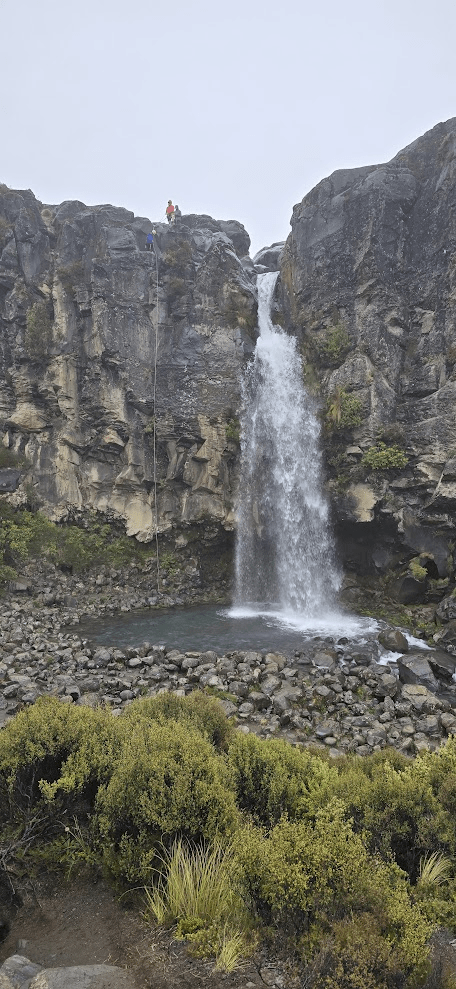
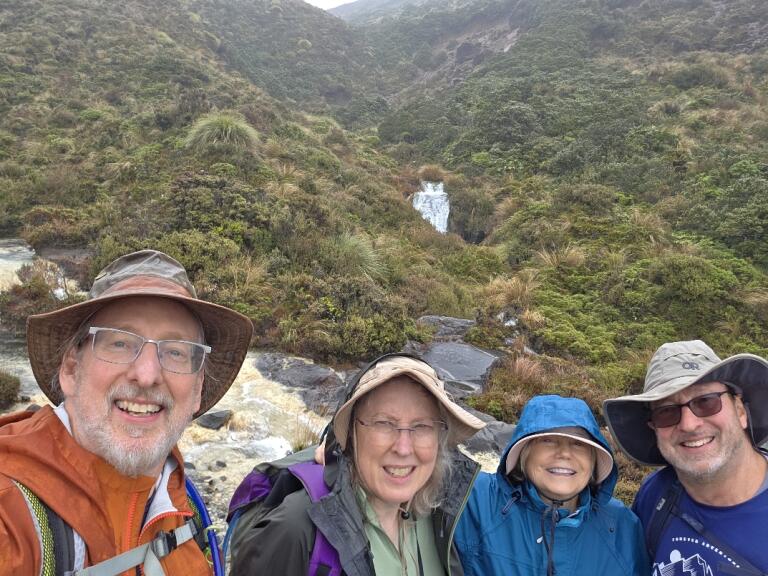
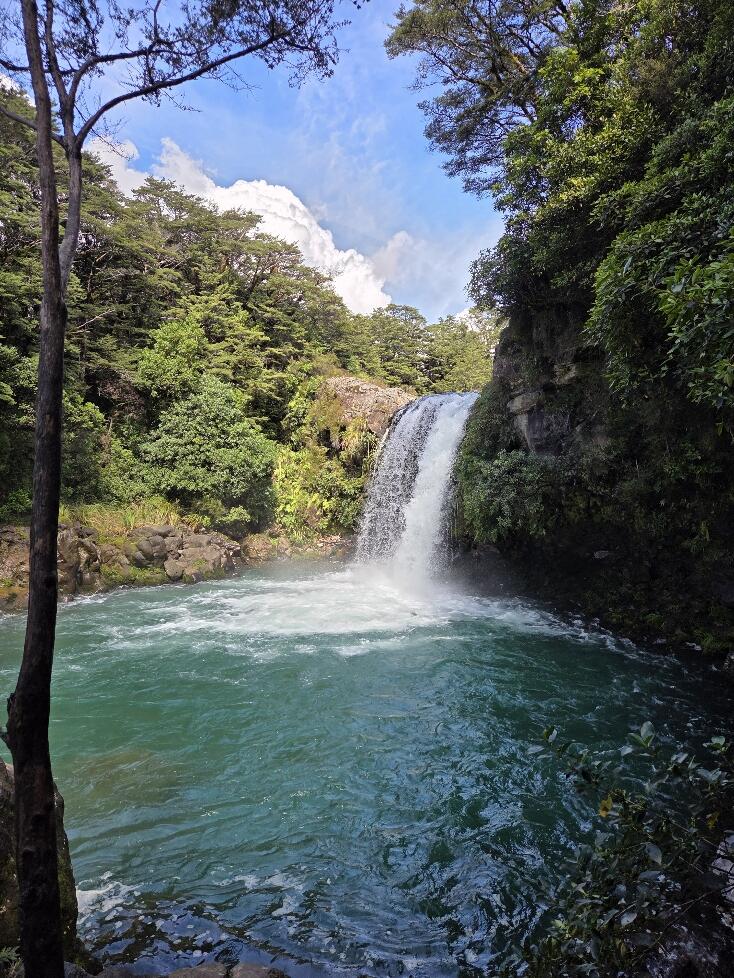
Taranaki Falls
This hike provided an excellent glimpse of the varied scenery and landscapes the Tongariro National Park is known for – taking in tussock, bush and ancient lava flows, as you hike to a stunning waterfall.
Silica Rapids
This hike lead us through a mountain beech forest alongside a cascading stream to arrive at the creamy-white terraces of the Silica Rapids. We saw a range of vegetation types around the track.
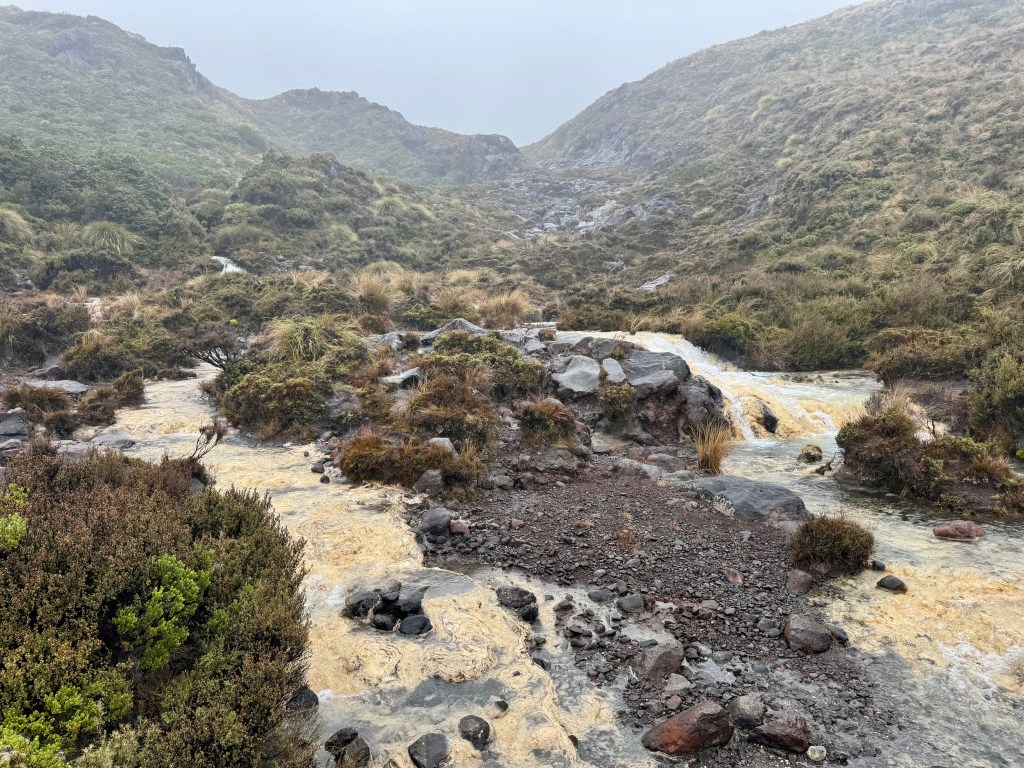
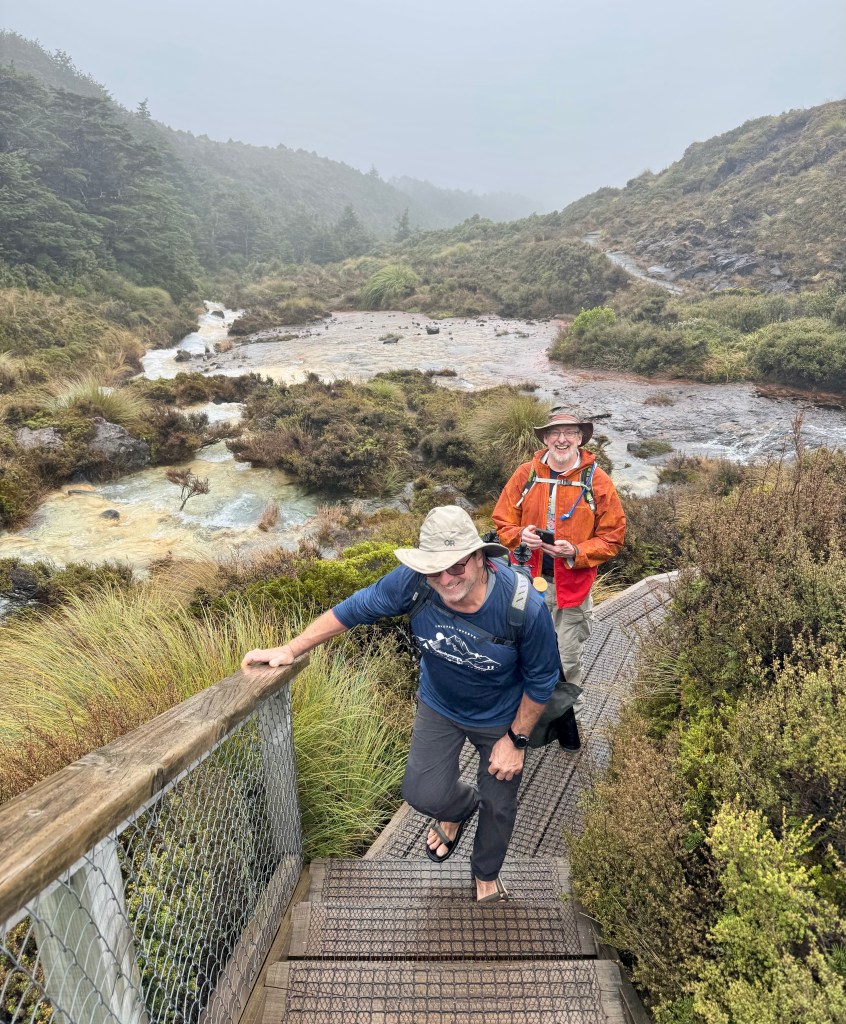
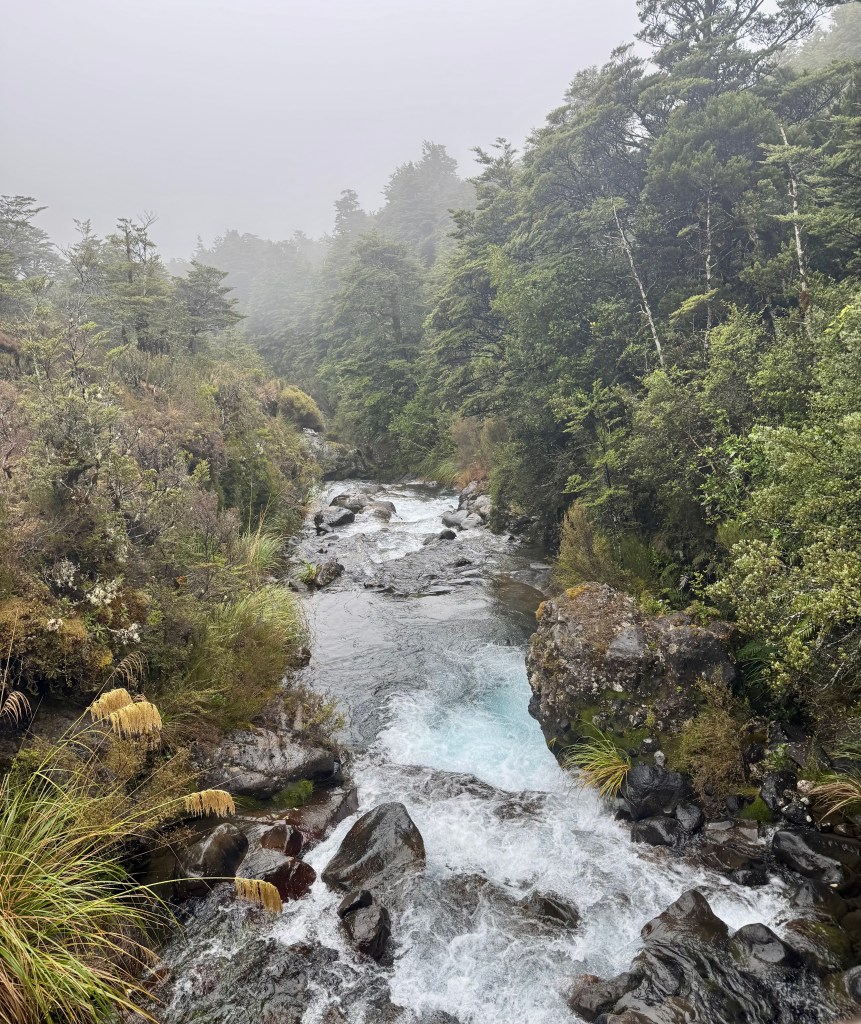
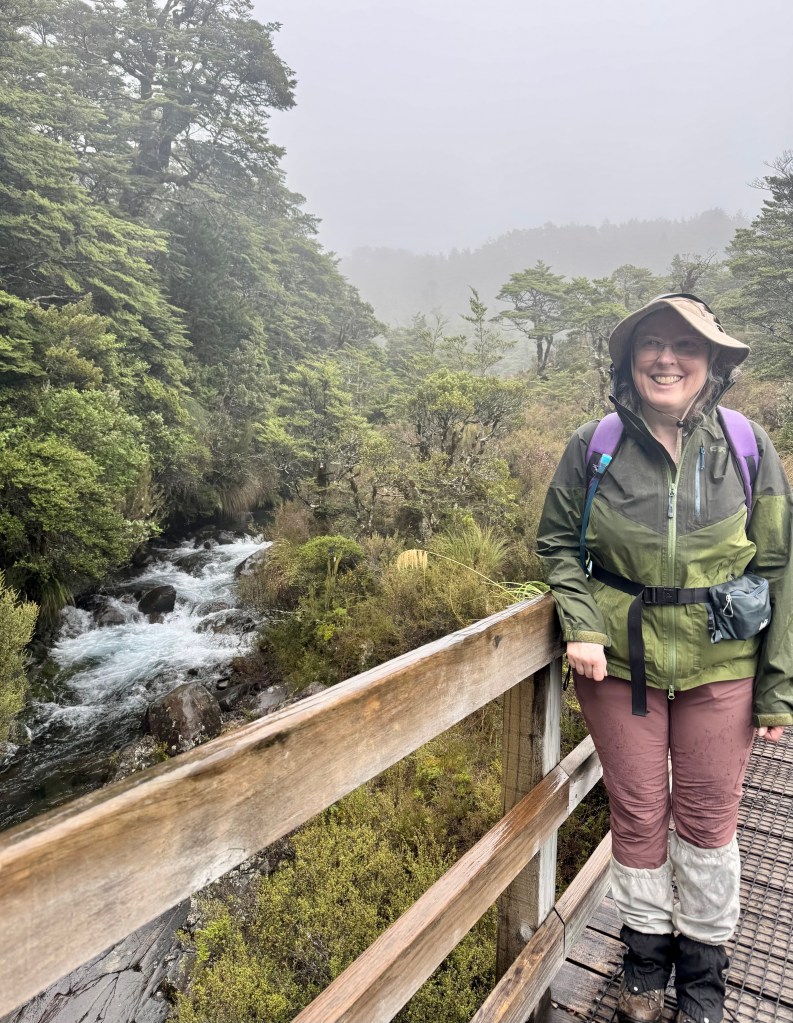
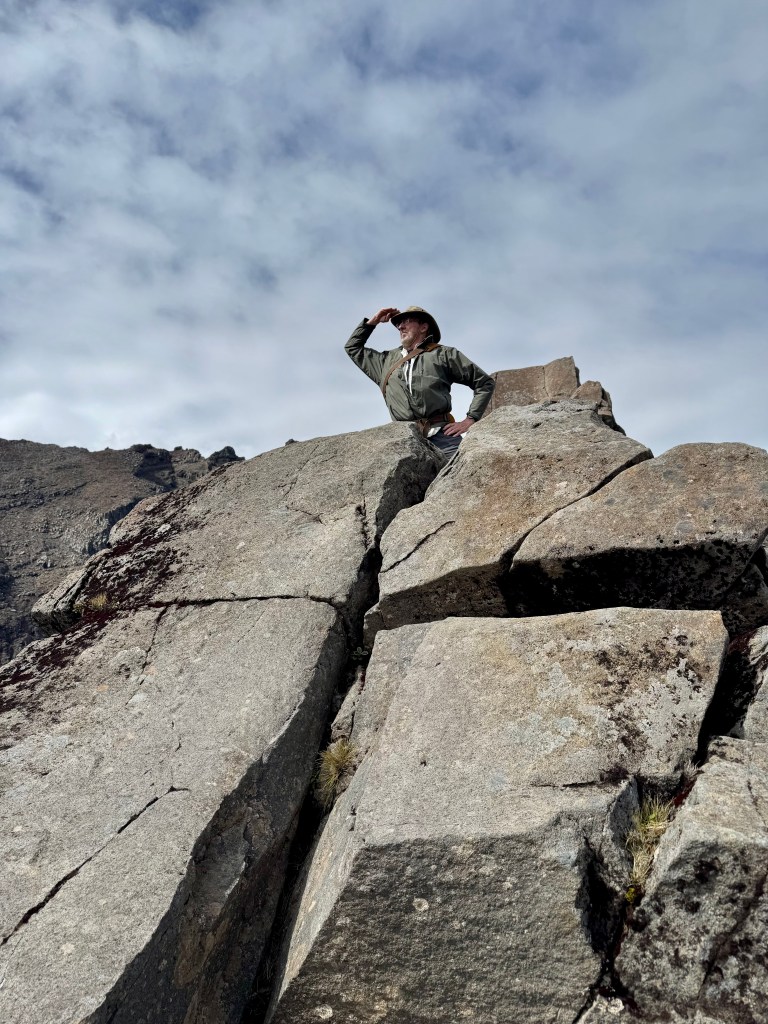
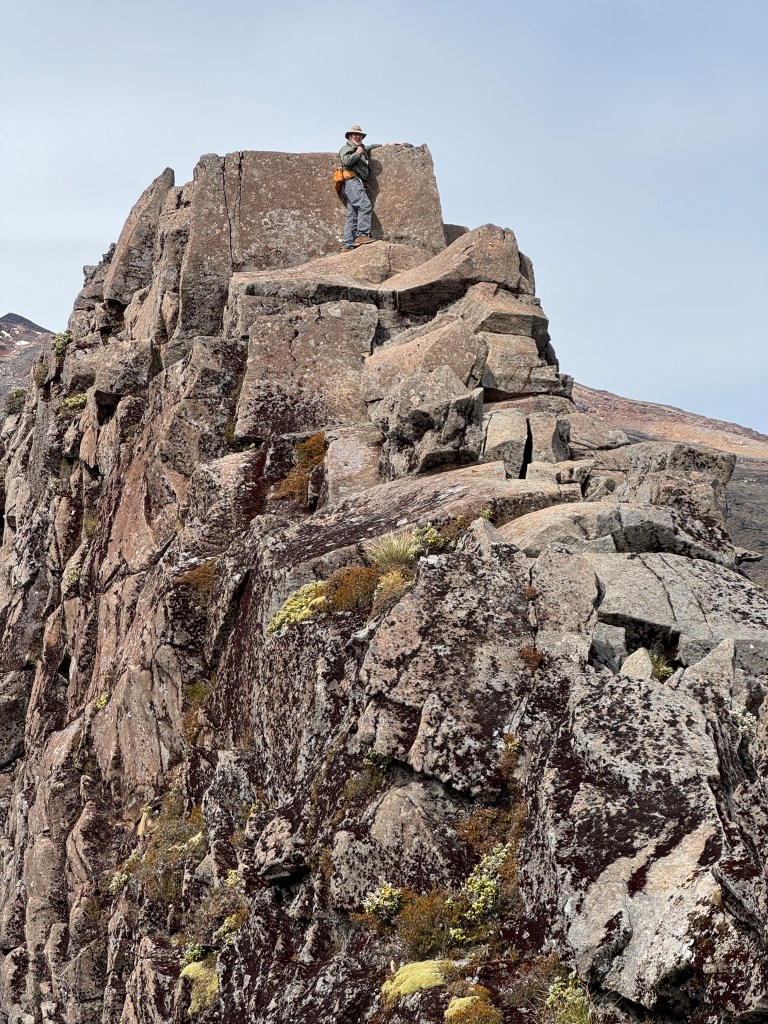
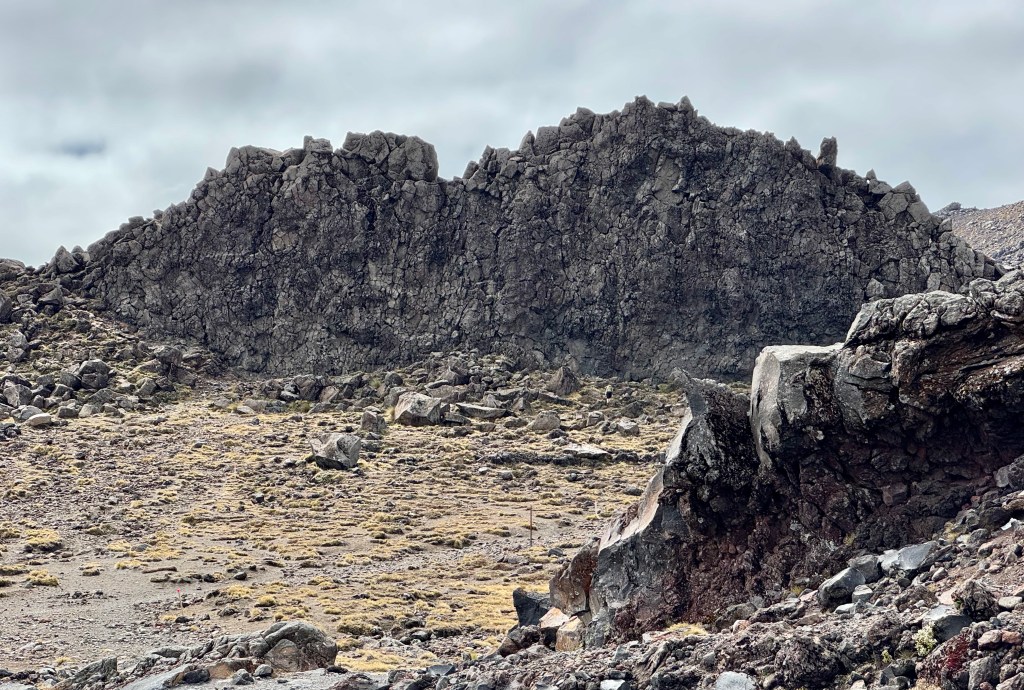
Meads Wall is an iconic filming location from The Lord of the Rings: The Two Towers. Standing atop this dramatic volcanic rock formation, we were rewarded with sweeping views of Mt Ruapehu and the rugged alpine landscape that brought Middle earth to life.
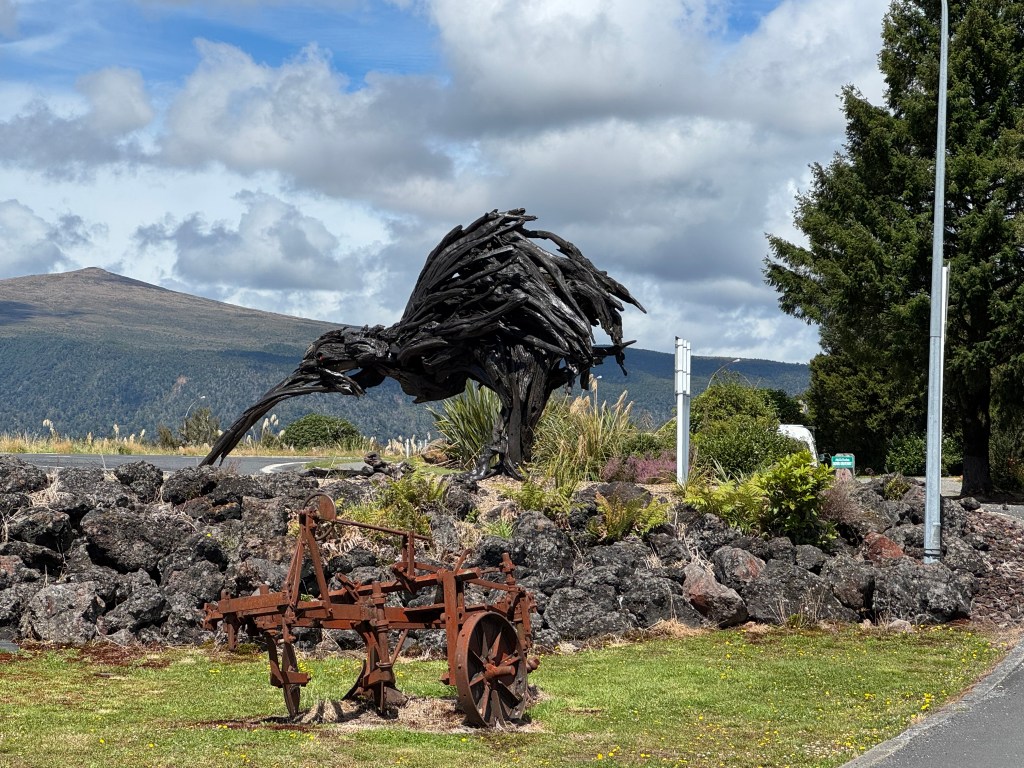
Gollum’s Pool
This short walk is an iconic waterfall in Tongariro National Park. It is a part of the set in Lord of the Rings as the forbidden pool in which Frodo and Faramir capture Gollum.
After 3 days in the Tongariro National Park we headed back to the Auckland Area while Brad and Elizabeth headed to Stewart Island for about a week. They returned to Auckland to spend their last couple of days before catching their flight home.
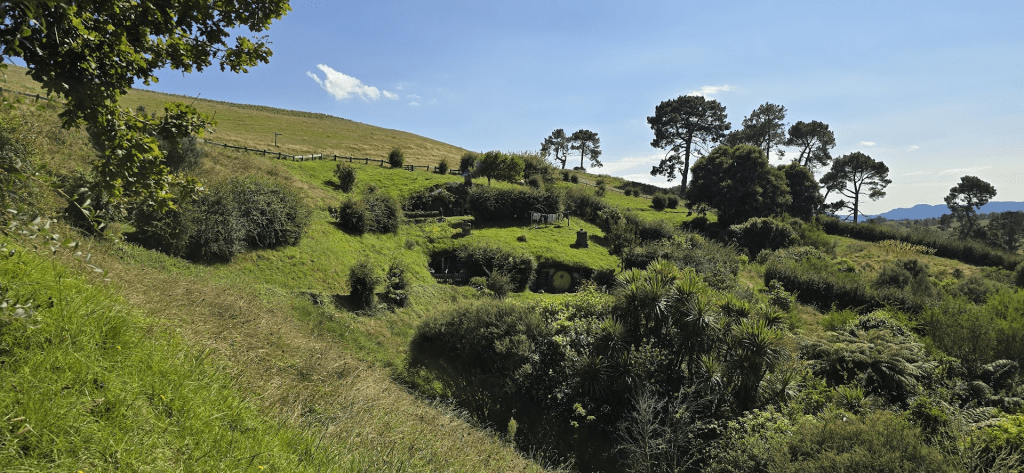
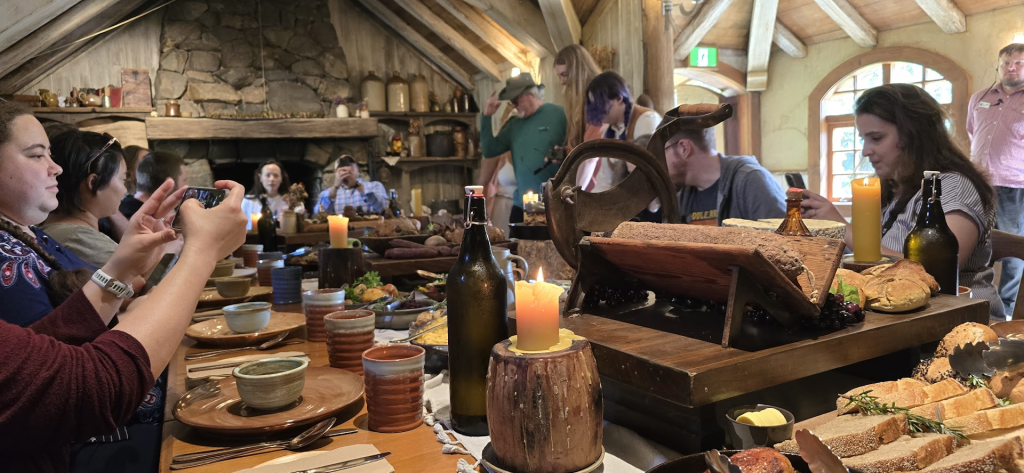
Of course they squeezed in another visit to the Hobbiton. This time tour included a ‘behind the scenes’ visit! It included a feast in the Green MIllhouse and tours of the workshops that included background on the shire concept and history as well as current support for the “shire”.
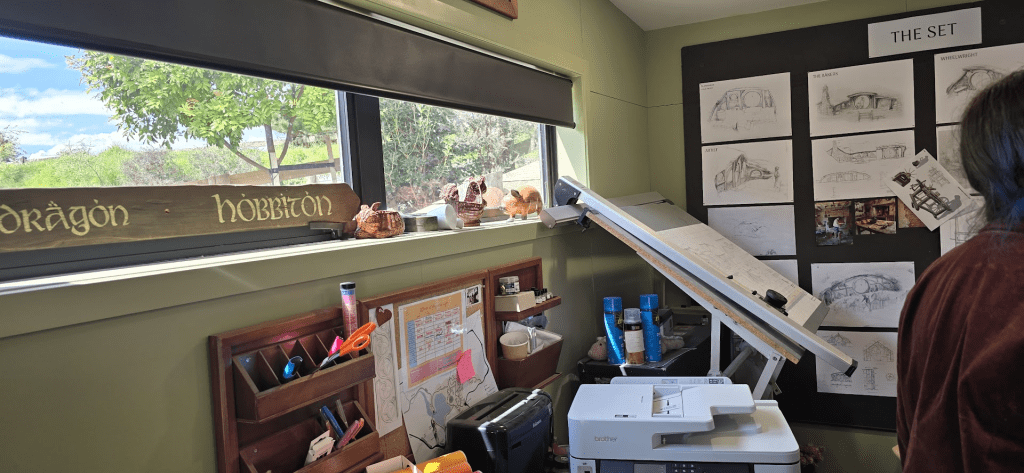
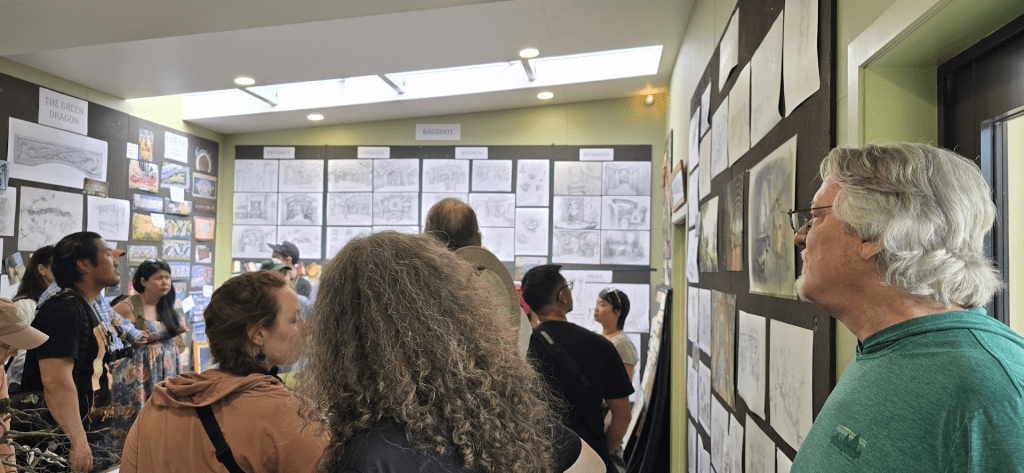
We met up for dinner on their last night in New Zealand and a few of our Kiwi friends were able to join us which made it a nice festive evening. It was sad to say good-bye to Brad and Elizabeth, but it helps that we will see them again in July!