Cindy’s Departure – July 17th
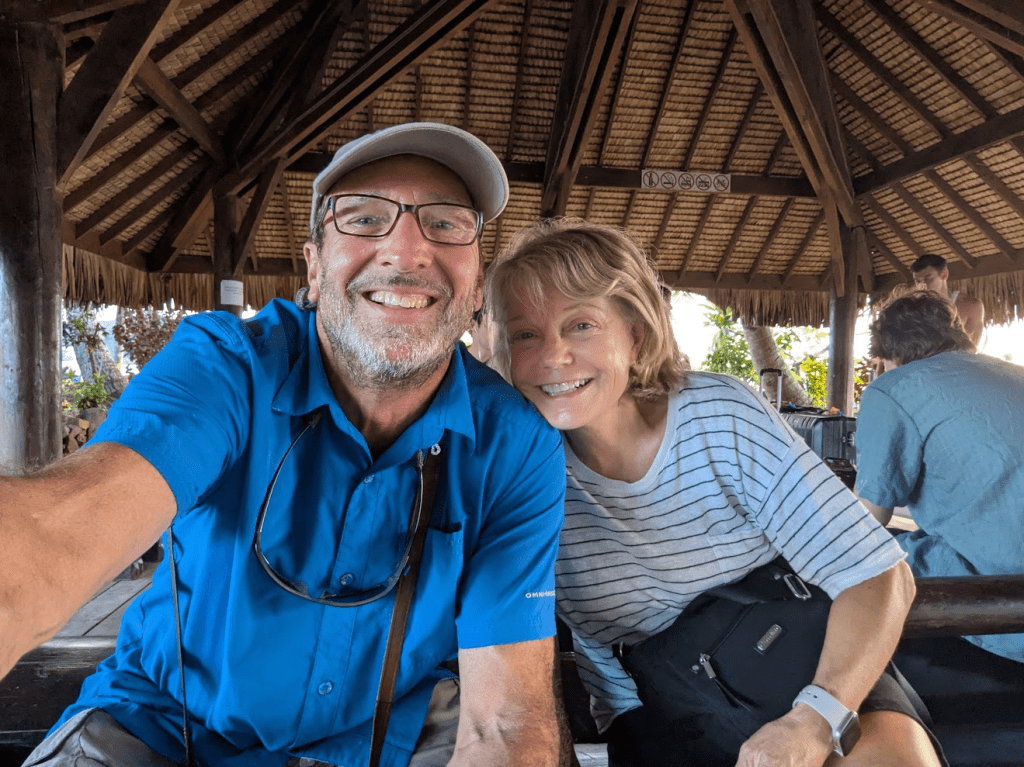
Cindy left on July 17th for the long voyage by air back home where I’ll be joining her after I sail Quid Sea to Tonga. My plan is to leave Bora Bora in a few days when the weather window looks good. I’ve booked a flight from Tonga back home on August 7th so I need to be in Tonga a few days before that flight.
Day 1 – July 19th – The solo adventure begins!
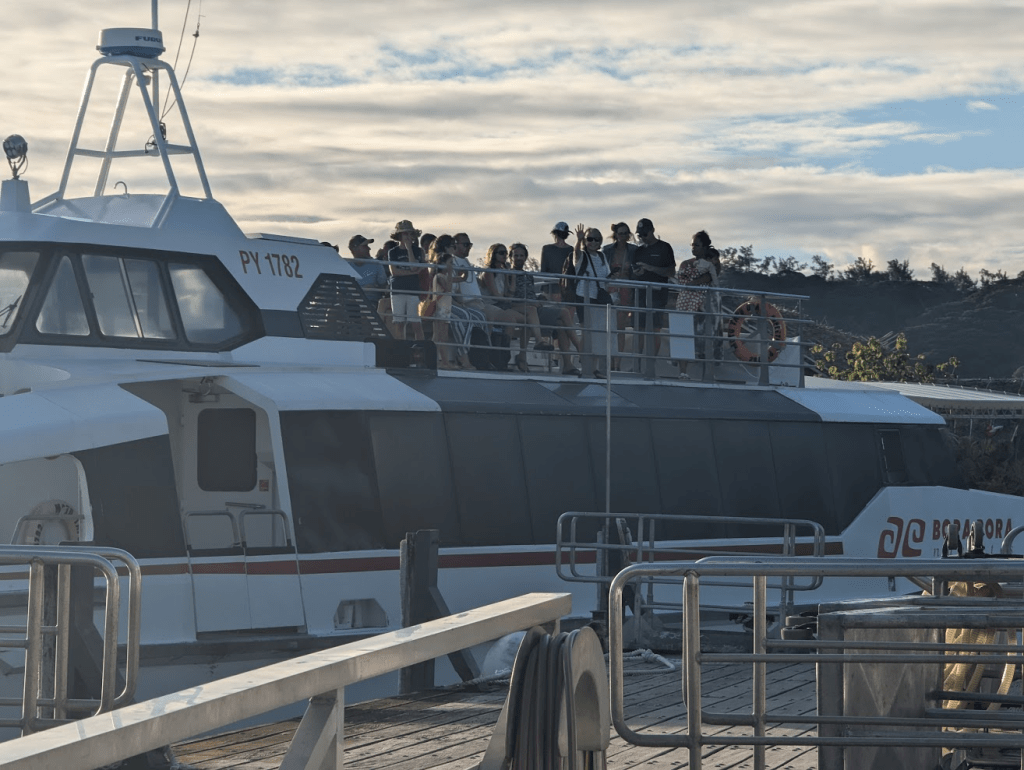
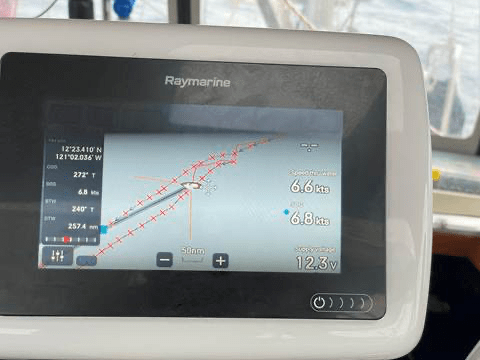
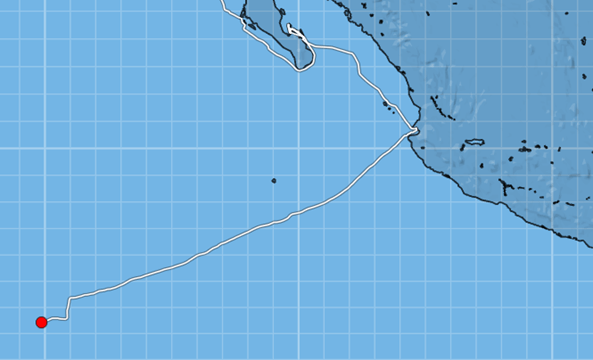
I left the Bora Bora mooring at 10:00 to start my longest solo voyage yet. It’s with mixed feelings I leave Bora Bora. Leaving a lot of good cruising friends who will be following after me by about a week. Cindy and I both would like to have stayed and explored Bora Bora more but alas, our 90-day visa for French Polynesia was expiring on July 21st. I am looking forward to the “challenge” of a solo sail. I expect the 1300nm trip to take between 9 to 12 days.
I am a little concerned about the weather. A cold front is approaching Tonga from the south that will bring some heavy rain and high winds during the last part of my trip. I am using a weather router to provide guidance as well as talking with other cruisers that are out here near me (near meaning within a few hundred miles) and cruisers that are leaving Bora Bora after me. A few days before, the weather forecasting tool I use showed winds in excess of 40kts near the cold front. More recent forecasts though show the winds to be in the 30kt range which is more manageable. Hopefully, the forecast continues to improve. Based on weather models and input from my weather router, I started out on a more northerly heading to avoid the higher winds to the south and take advantage of the Edeerasterly trade winds more north.
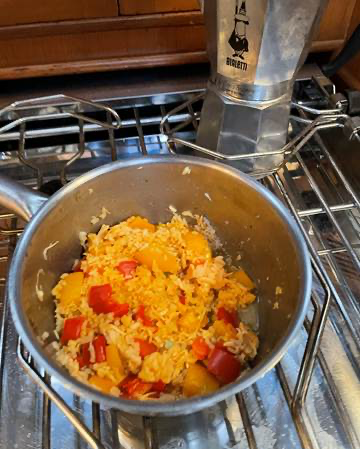
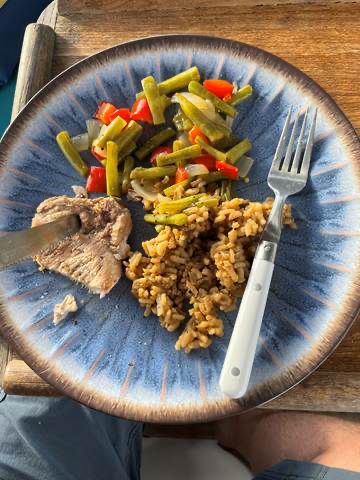
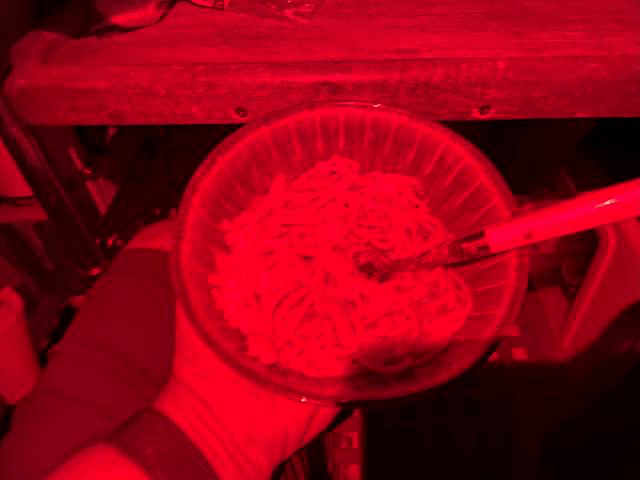
I spent the morning before leaving getting the boat dialed in and ready for 9-12 days at sea by myself. I prepared a couple of meals ahead of time, made water, charged the batteries, and secured everything on deck and below deck. I also prepared the storm jib on the inner forestay and setup for a 3rd deep reef in my mainsail should the high winds forecast later in the voyage develop.
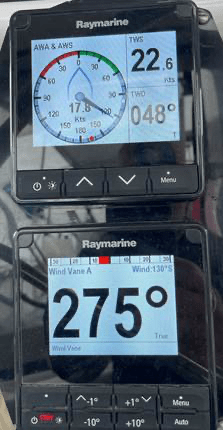
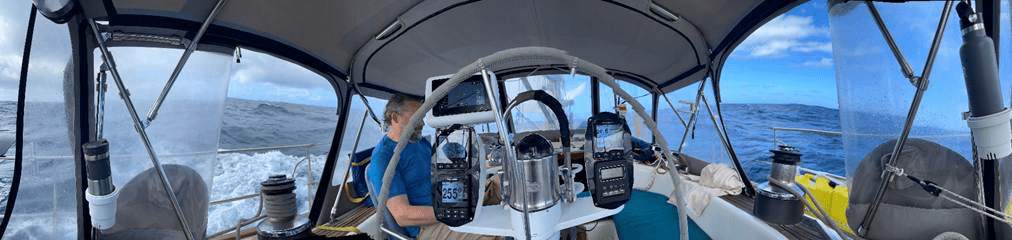
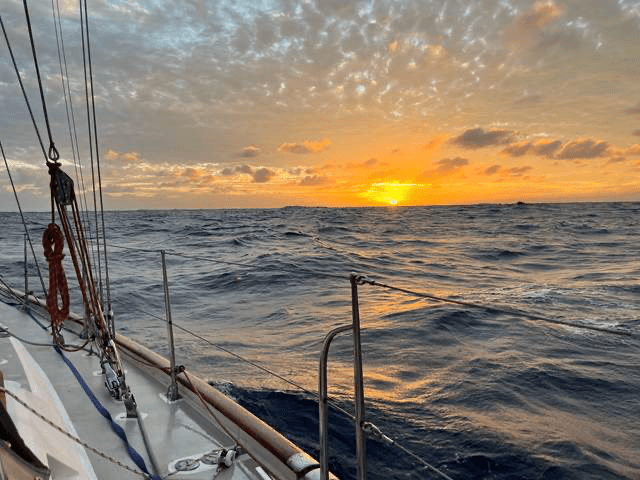
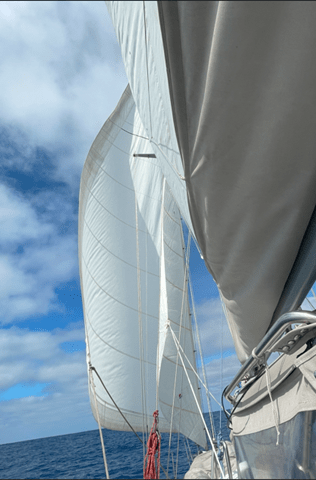
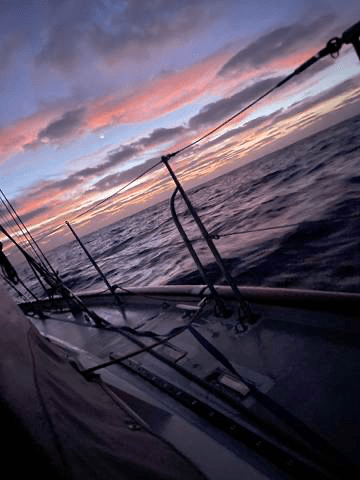
I exited the pass from Bora Bora about 10:30, shut off the engine, and set sail! It’s a beautiful sailing day. Clear skies and following winds in the 10-15kt range. Perfect for sailing. I’m sailing almost directly downwind so I am only using the genoa. I use the Hydrovane autopilot during the day to save power on the batteries. She is doing very well holding my course.
The difference between the Hydrovane and the electronic autopilot is that the Hydrovane is purely mechanical. The Hydrovane has a wind vane and auxiliary rudder. The direction of the wind vane is adjusted until it is pointed in the direction of the apparent wind. When adjusted properly, the wind vane controls the auxiliary rudder and keeps the boat at a constant angle to the wind holding the vessel’s course unless the wind shifts. The electronic autopilot has a hydraulic ram that is connected to the main rudder and controlled by electronics. It has several modes of operation but essentially keeps the vessel on course through the electronics. The main advantage of the Hydrovane is to save on battery power. Another advantage is the auxiliary rudder that is part of the Hydrovane system can serve as an emergency backup rudder should the primary steering system fail.
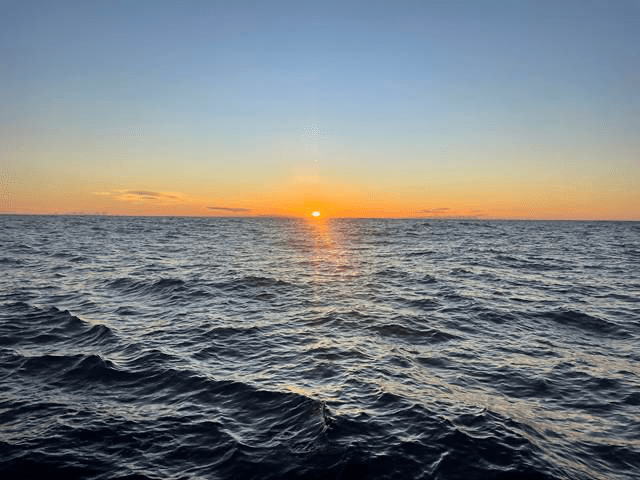
Around 18:00 (6:30pm), after the sun set, I turned on the electronic autopilot and prepared to get some sleep. The Hydrovane requires some attention and occasional adjustment, especially if the wind direction changes. The electronic autopilot generally requires almost no attention once set. I feel safer sleeping with the electronic autopilot.
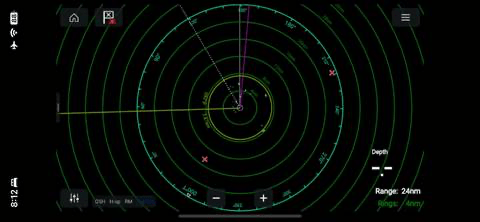
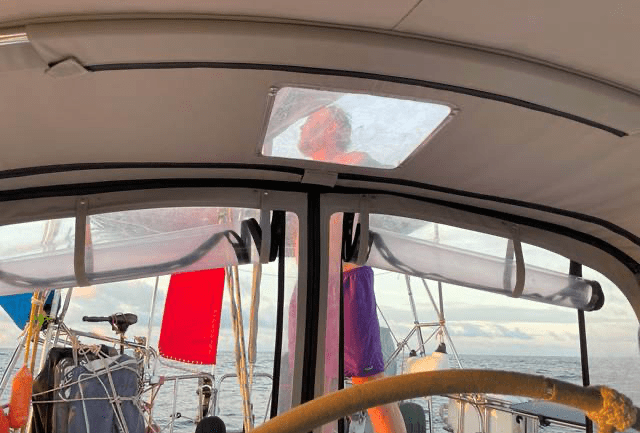
Sleeping when sailing solo is complicated. Where to sleep and for how long is a challenge. With more than 1 person onboard, someone can sleep comfortably while another keeps watch. When alone, you need to decide how long you can safely sleep without keeping a lookout or checking on sails and wind. The current conditions are steady 10-15kt winds, 3 to 5 foot seas, and no traffic. I have not seen another vessel since leaving Bora Bora. Even though I don’t see any other traffic and the wind and sea conditions are nice, I still decided to sleep in the cockpit my first night. I can quickly manage any adjustments to the autopilot. I also set my radar and AIS alarms to warn me of any vessels that appear.
Day 2 – July 20th
Conditions are pretty much unchanged in the morning. Started out mainly downwind but then the wind shifted a bit, so I was able to raise the mainsail. The weather is beautiful, good Easterly trades and clear skies. Sailing with both sails and starting to relax and enjoy the experience. The first 24 hours are usually tough on a passage whether alone or with crew. The time is spent getting the boat dialed in, establishing routine, and adjusting to being at sea again.
In the afternoon, the wind dropped to about 10kts and my SOG (Speed Over Ground) dropped to 3-4kts. I turned more southerly for the night.
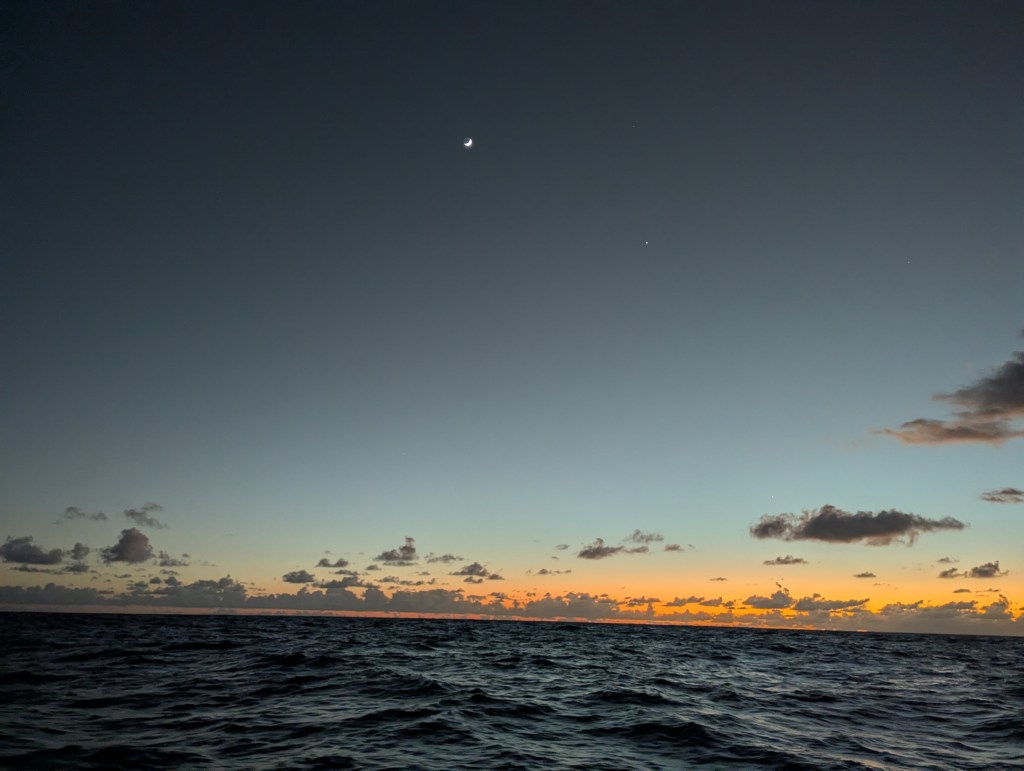
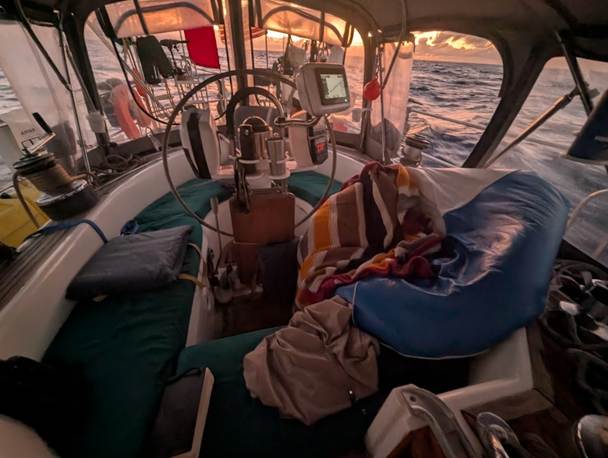
I’m still sleeping in the cockpit, but I’ve figured out how to make myself more comfortable with my beanbag chair, cushions, and a pillow.
Day 3 – July 21st
Continued on the same southwesterly tack. The winds had picked up a bit during the previous night to 10-15kts. Making better speed today, SOG averaging 5-6kts.
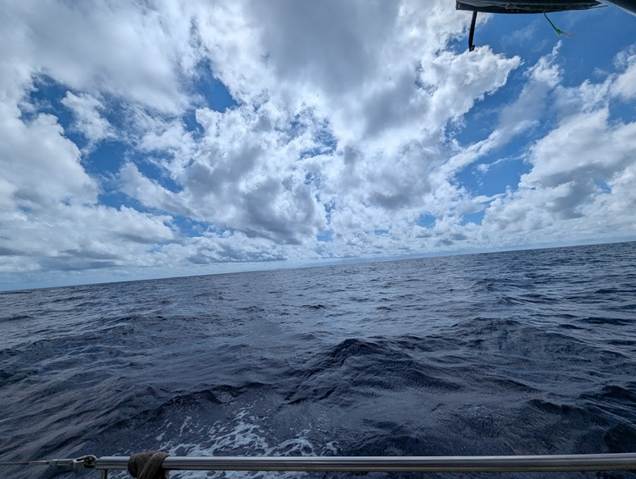
Passed through some rain squalls later in the day. No heavy winds or lightning in the squall and Quid Sea enjoyed the freshwater washdown.
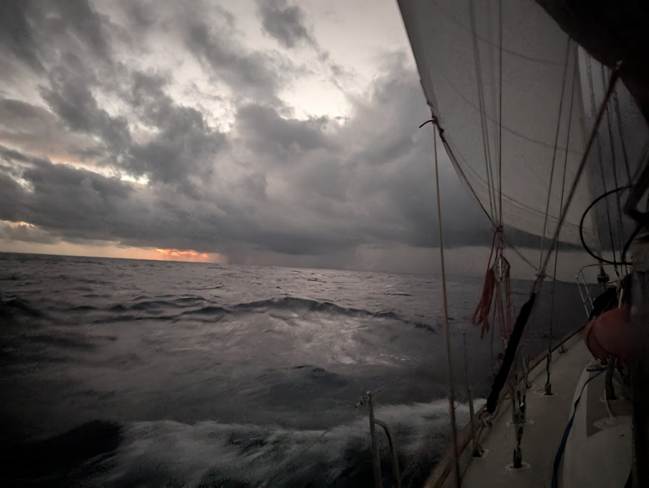
Still sleeping in the cockpit. Not sure how much confidence I have to be below and sleep in the cabin.
Day 4 – July 22nd
The wind is still consistent at 10-15kts but shifting more northerly. It started out coming from the NE but through the night shifted to the N and then the NW. I’m starting to approach the zone where the weather is changing.
Slept in the cockpit again because of the shifting winds, the autopilot needed a lot of adjusting.
Day 5 – July 23rd
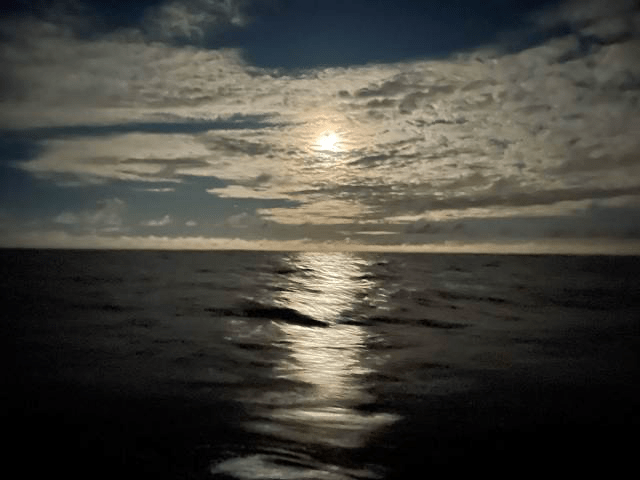
The wind dropped to about 7kts, and my speed was about 3kts. Winds are getting light and variable. At this point I started motor sailing. Motor sailing is using the engine as well as the sails to make headway. It also helps charge the batteries . While motor sailing, I was making about 6kts SOG. I motor sailed for a couple hours until sunset and then went back to just sailing. It’s quieter and more peaceful but slow in these light winds. I’m back to about 3kts SOG.
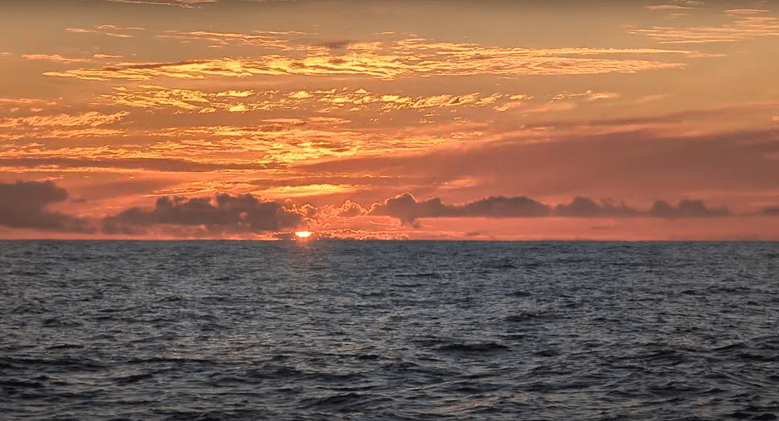
Day 6 – July 24th
Wind dropped to less than 4kts during the early morning and the water is like glass. At this point I started motor sailing again.
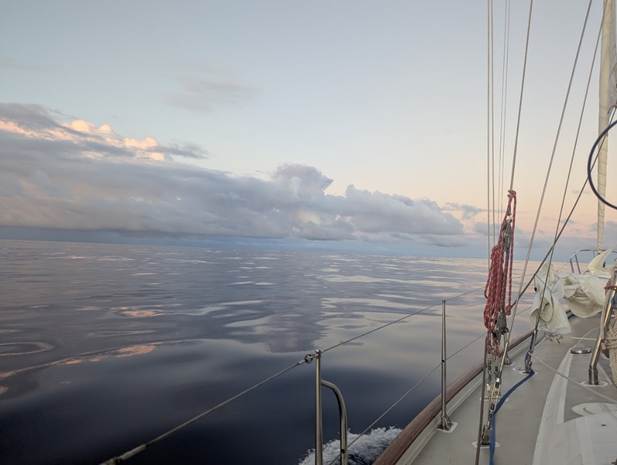
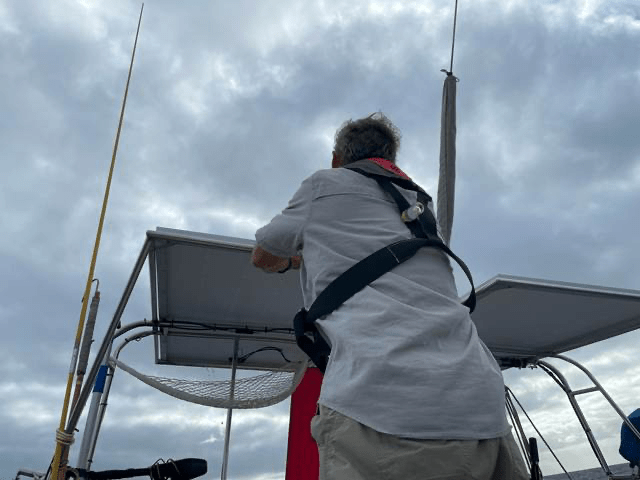
Although conditions are calm, I know the strong southerly winds are coming so I decided to put the 3rd reef in the mainsail while conditions are calm, and I have daylight. The sky is clear but there are some darker clouds on the horizon.
About 9:30PM, I was hit by the first squall. Winds picked up to about 17kts, but Quid Sea is performing solidly with the 3rd reef in the main and the genoa fully deployed, no reef.

Day 7 – July 25th
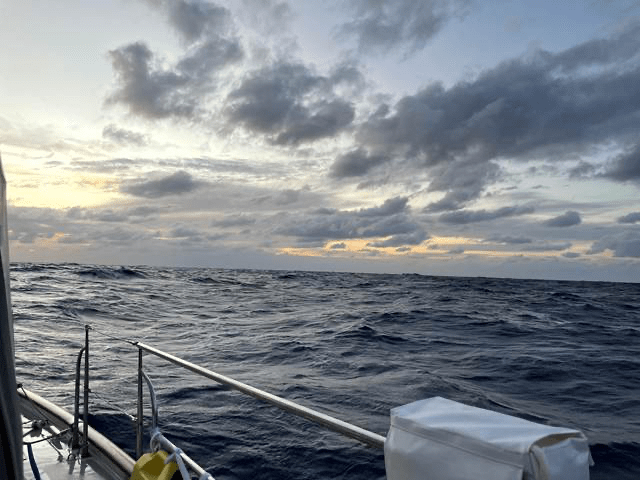
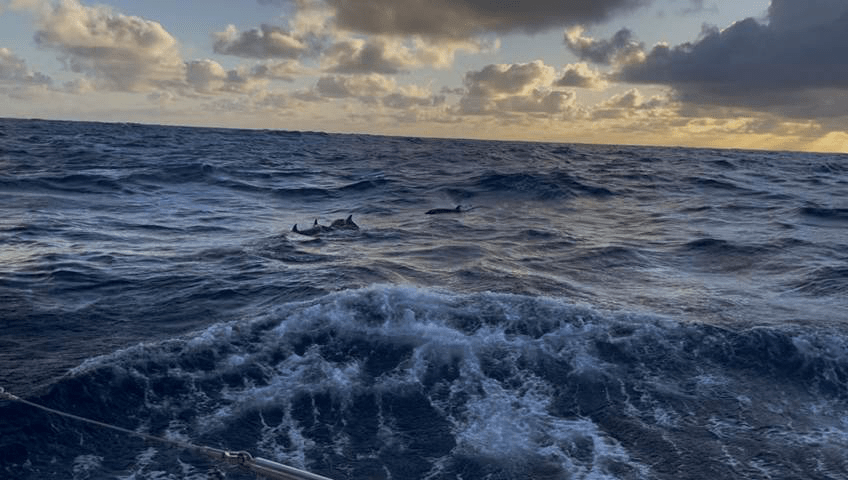
By morning the winds are now coming from the SSE at about 20kts and waves are about 10ft. That is combined wind waves and swell. It’s also overcast skies now. Sailing now with 3rd reef in the main and 2nd reef in the genoa. The wind was gusting to 25kts which is why I reefed the genoa. SOG is now about 7kts. Quid Sea is doing great under these conditions. We’re heeled over about 5 degrees and rolling an additional 5-10 degrees but occasionally the waves and swell align causing us to roll 35-40 degrees. It’s getting difficult to move around a lot below deck because of these rolls. Lunch and dinner is now just sandwiches. These are the conditions that start to wear me down physically and emotionally.
Day 8 – July 26th
Wind has built to 20-25kts and seas are now 15ft. Skies are still overcast. Quid Sea is still doing well although we are taking the occasional wave over the port side. The Hydrovane is performing great even in these rough conditions.
Day 9 – July 27th/July 28th
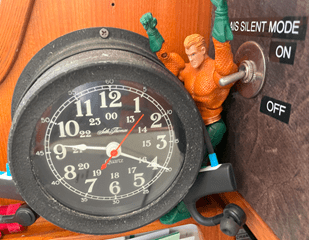
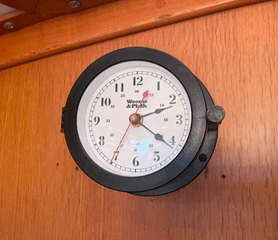
I decided to change the ships clocks to Tonga time today which is UTC+13. I am currently on French Polynesia time which is UTC-10. What that means is I will cross the international date line and change clocks one hour earlier and one day ahead. So, 09:00am on Sunday, July 27th, changes to 08:00am on Monday, July 28th. Confusing, right?
Winds built to over 30kts today. I trimmed the genoa more to take strain off the rigging and adjusted the heading to a wind angle that keeps the wind further abeam to reduce stress on the rigging.
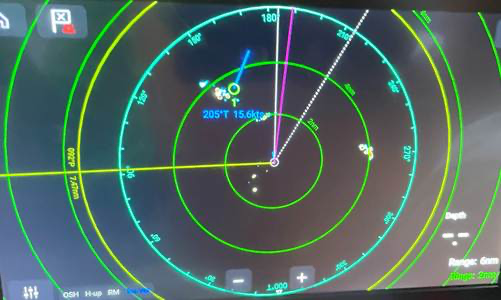
The AIS alarm went off about 05:00 meaning another vessel is close. A trimaran, S/V Oceans Tribute, overtook me. She passed within about 1 mile but I never did get a visual sighting. Still, it was nice to know there was another boat out here. The only one I’ve seen since leaving Bora Bora.
About 09:30, the wind dropped back down to about 20kts and the sun came out. That really helped lift spirits. The heavier seas along with overcast skies definitely wears on a person.
Day 10– July 29th
Winds built overnight and are ESE at about 25kts. I’m doing about 7.5kts SOG with a DTG (Distance To Go) of about 240nm. If I maintain this speed, I’ll arrive in Tonga around 18:00 tomorrow, July 30th. It’ll be just before sunset. I’d prefer to enter a new place in daylight, especially since the dock I must go to in Tonga for customs check-in is tricky. If I can get some more speed, I’ll try for arrival tomorrow.
Day 11– July 30th
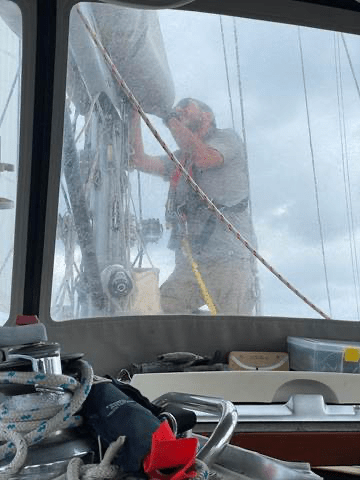
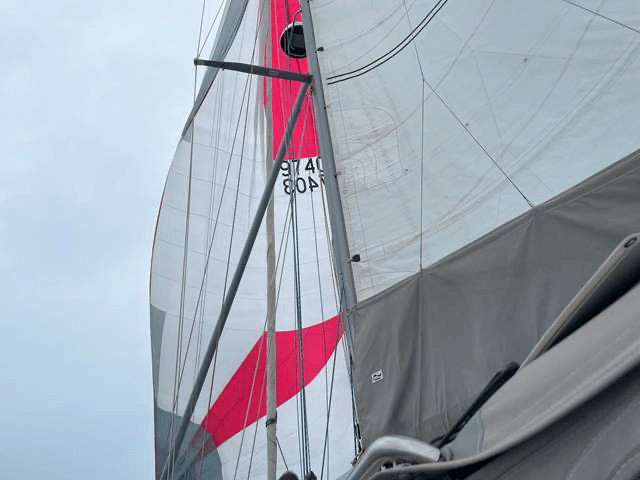
Winds are still blowing about 25kts but have shifted more Northerly and are coming from the ENE. It’s forcing me to gybe so that I am not sailing directly downwind. Gybing is changing course when the wind is from behind so that the wind direction changes from one side of the boat to the other and the boom swings from one side to the other. In heavy winds, a gybe can be dangerous if not well controlled. If the boom swings too quickly and not well controlled it can damage rigging and gear. I gybed to a starboard tack for a while. I noticed on my gybe that the viewport on the genoa was blown out. The viewport is a circular “window” in the sail about 8 inches in diameter that lets you see the telltales on the leeward side of the sail. Not sure how it blew out but now I have an 8 inch hole in the sail. I’m a little concerned a tear could start so I gybed back to a port tack and kept the sail furled enough that the view port is not exposed.
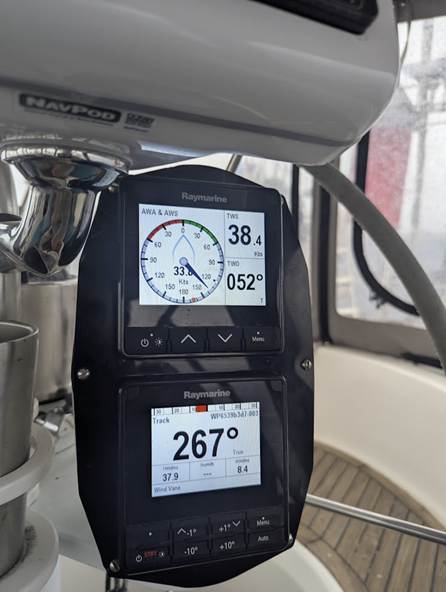
By the afternoon the winds had built to over 30kts, gusting to 40kts. I furled the genoa completely and now I am just sailing with the mainsail, and it is still on the 3rd reef point. I’m lucky all this wind is behind me.
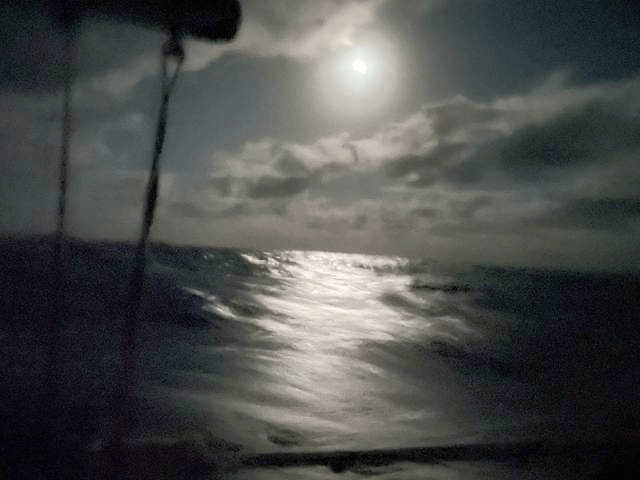
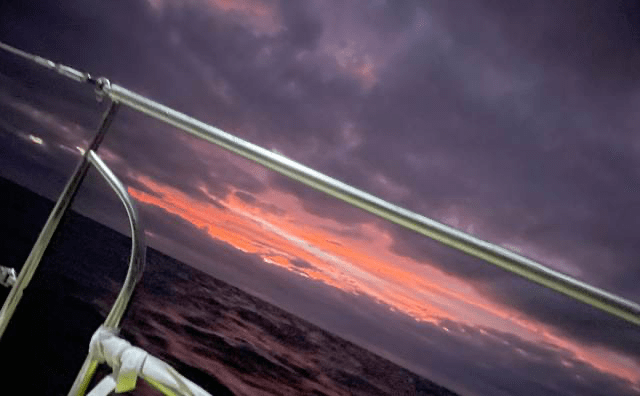
As I came around to the leeward side of Vava’u Island, the wind dropped to 25kts but still gusting over 30kts. At about 19:00, I approached Faihava Passage which is the entrance to Vava’u Island. At this point the wind is blowing 25kts, it’s pouring rain, it’s dark, and I have limited visibility. On top of that, a Tsunami alert was issued for the Pacific Ocean which included Tonga. Tonga itself had not issued an alert and the bay I am heading to is well protected and really not at risk. Still, with the weather, darkness, and now a tsunami alert, I decided to stay at sea and sail around until morning to enter. Forecasts are showing the rain and winds should reduce my morning.
Day 12– July 31st
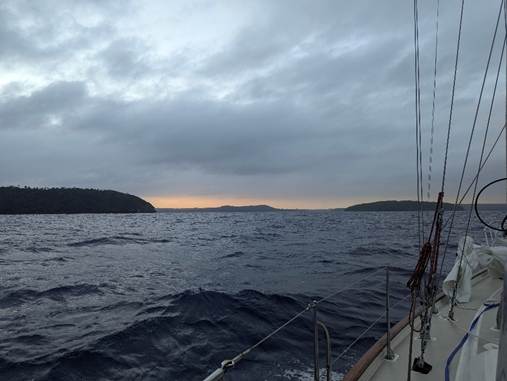
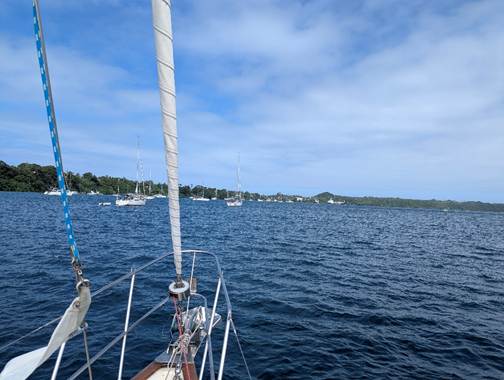
By 07:00, the winds had dropped, the rain had cleared, and the sun was up. After a long night of sailing back and forth in 15-20kt winds and 10ft seas, it seemed like heaven as I entered Faihava Passage and came into the shelter of the island and bays. I had a very uneventful sail into Neiafu and tied up at the customs dock to clear customs. It took about an hour to clear customs. By this time the wind had picked up and Quid Sea was being pushed up against the dock. With the help of several other boaters, I got Quid Sea safely off the customs dock and picked up a moorage. By 14:15 I was comfortably moored and finally able to relax and enjoy a well-deserved cocktail!
August 1st to August 7th
The next several days involved getting Quid Sea “hauled out” and put “on the hard”. This means pulling her out of the water and storing her on land while I prepare to head home to join Cindy.

I arranged to have Quid Sea hauled out at the Fava’u BoatYard. It’s one of only a few places in Tonga where this can be done. They Fava’u BoatYard has a large hydraulic lift trailer for boat haulout. Unlike travel lifts which lift the boats out by straps, this hydraulic lift trailer is placed under the boat while in the water and listed up with underwater straps and hydraulic arms and then pulled out of the water with a tractor.
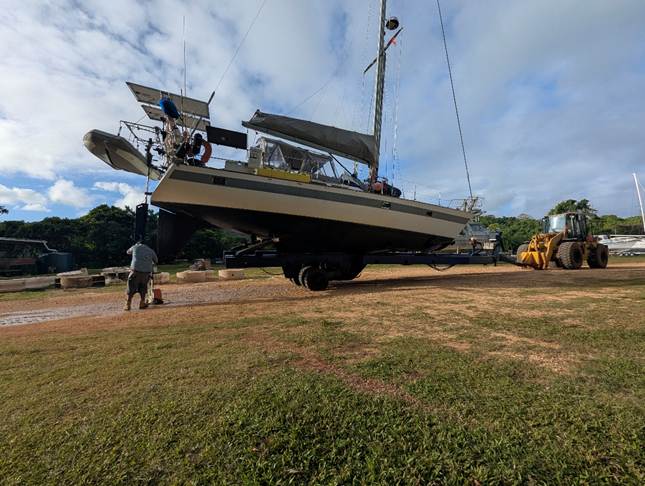
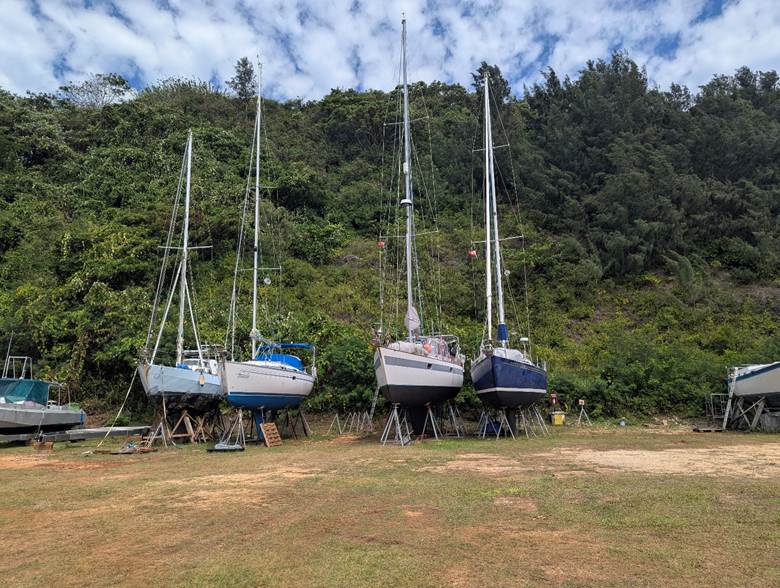
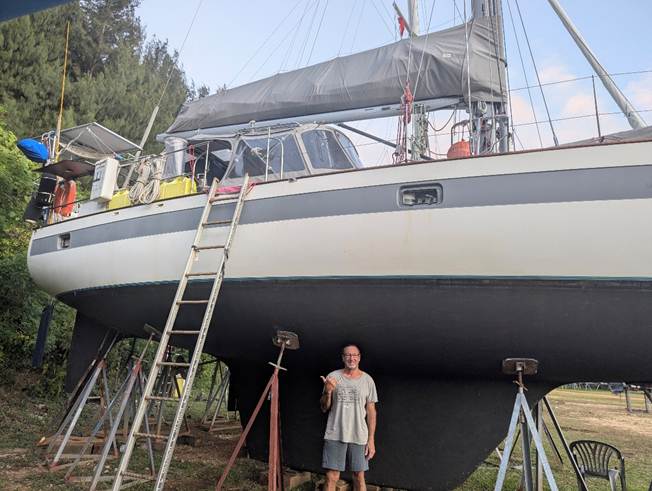
Quid Sea is safely tucked away on land. I left for home for a 6-8 week break to visit family and friends and take care of business items. Cindy and I will return to Quid Sea and Tonga in late September.













 SV Quid Sea - Sailing with Tracy and Cindy