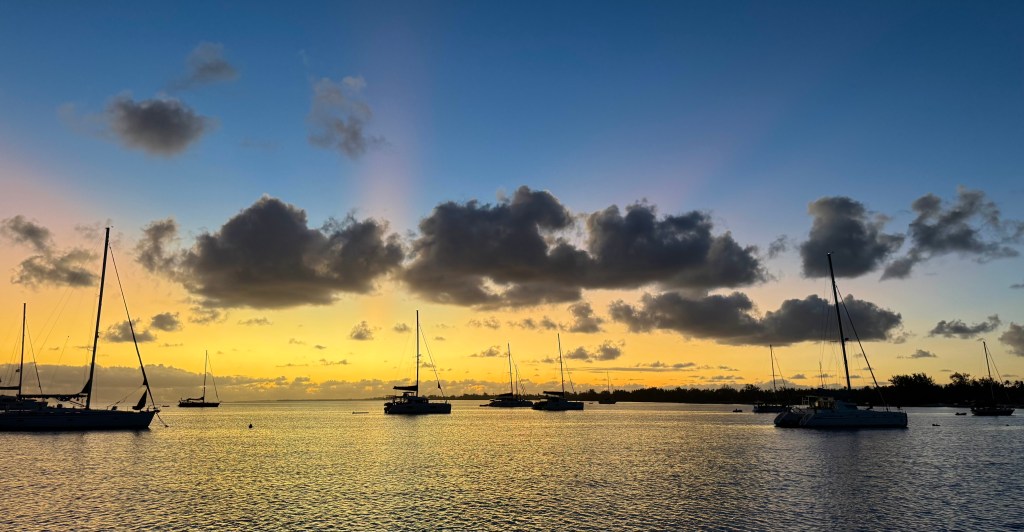
We ended up leaving Fakarava as scheduled on Sunday June 8th for better or worse. It was an interesting morning. We knew there was rain forecasted with some wind during our passage on Sunday, but didn’t look too bad. We raised the anchor around 11:00 AM and soon realized it was stuck on something, probably a rock or a bommie. Tracy did a free dive to check and ruptured his ear drum. In the process he discovered our anchor chain was wrapped around the tip of a rock. With his ruptured ear drum, he couldn’t put his diving gear on to go down to unwrap the anchor chain so we were thinking we would stay another day. We radioed our friends to let them know and Simon from New Zealand offered to put his diving gear on and see if he could unsnag our chain. By now it is raining hard. Simon dives, following our anchor chain to the bottom, unwraps it from not one rock but two, and in less than 10 minutes, he is giving us the good news. Since the anchor is up, we quickly start the engine and make our way to sea. In spite of these challenges, we end up being only 30 minutes behind schedule.
It is still raining as we make our way out of the Atoll. We timed it so we would be leaving at slack tide and going out with the current. All went well. The passage to Rangiroa is about 140 nautical miles and ETA is Monday afternoon. As we head out to sea, the wind is picking up and we are experiencing beam seas which are not very comfortable. The wind is now about 35 knots, and we decide it is too windy to raise the sails. I am seasick, and Tracy is uncomfortable. The high winds last for about 5 hours, but beam seas continue. It calms down during the night, the rain stops, the direction of the wind changes and we can sail again. We both start feeling better and can catch a few hours’ sleep, taking turns of course. The next morning is beautiful with sunny skies and light winds. We got through the Rangiroa pass around 2:00 pm during slack tide, riding a current of 3 to 4 knots. We were happy to find a mooring ball to tie up to instead of anchoring.
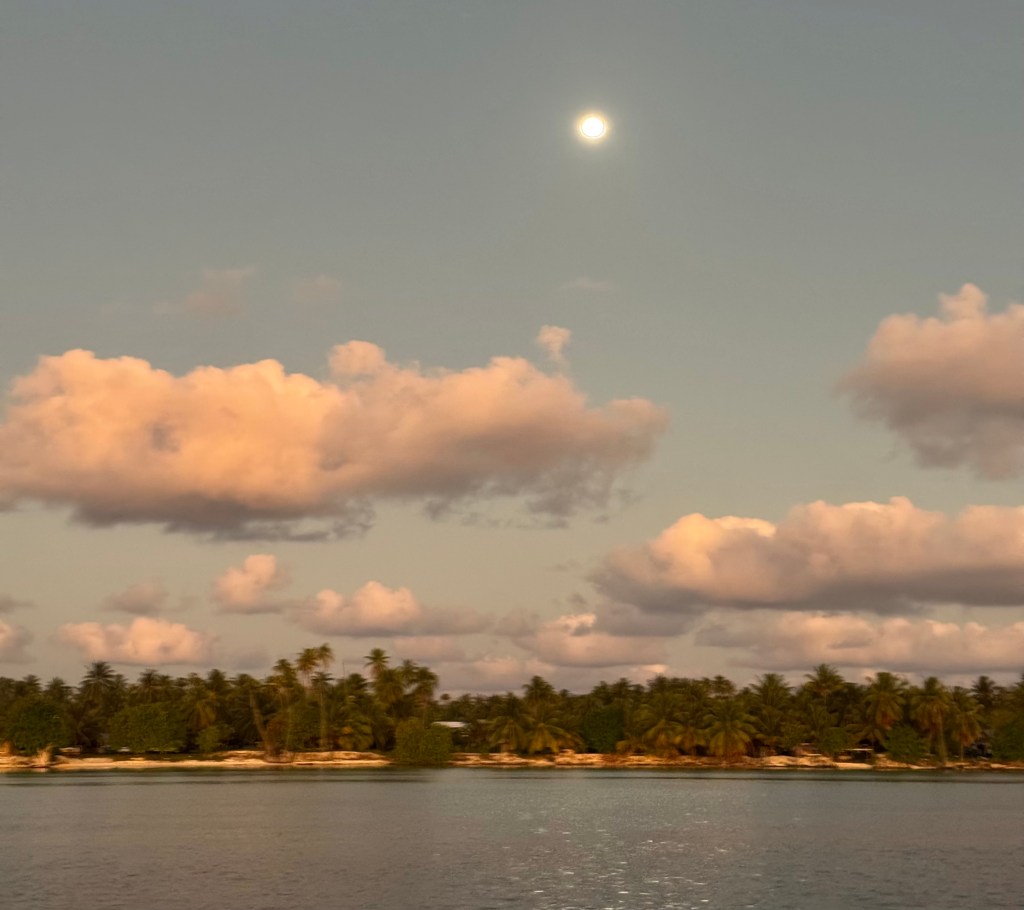
Rangiroa is in French Polynesia. It is in the Tuamotu Island group and part of a subgroup of islands called the Palliser group. It is home to about 2,500 people on almost 80 km2 (31 sq mi). The chief town is Avatoru, in the atoll’s northwest.
Because of their large size, and the existence of only two passes, each high tide creates a strong incoming current, while each low tide creates a strong outgoing current within the two passes. While flowing inward through Tiputa Pass, nearly 200 individual sharks will gather at the entrance to the pass, at a depth of 50 meters (160 ft). Led by the strong current, sharks can remain motionless. Divers are able to observe them without difficulty. Large manta ray, green sea turtle, and humphead wrasse are also seen. During summer (December-March), tiger and hammerhead shark are present. In January, large numbers of stingray gather in the Tiputa Pass, as do the hammerheads that feed on them.
It is believed the first settlers arrived on Rangiroa around the 10th century AD.[2] The first recorded Europeans to arrive on Rangiroa were Dutch explorers Jacob le Maire and Willem Schouten during their 1615-1616 Pacific journey.
During the 1950s, the economy of Rangiroa was driven by fishing and the production of copra. The inauguration of the Rangiroa Airport in 1965 allowed rapid development of the tourism industry as underwater diving facilities and hotels were built.
As in the rest of the Tuamotu Islands, the majority of the inhabitants are Christians, as a consequence of missionary activity by both Catholic and Protestant groups.
Pearl farming is done in more than 30 atolls of French Polynesia and is the main activity for numerous families in the Tuamotu archipelago. In Rangiroa, a few farms exploited about 1,000 acres (4.0 km2) of water surface in the lagoon loaned by the Tahitian government. The biggest farm, Gauguin’s Pearl[15] employed more than 50 local workers, with a strong impact on the economy of this 2,000 person atoll. A school dedicated to the pearl farming techniques and a research center on pearl oysters are also implanted on the atoll of Rangiroa, which make it a kind of pearl center for this industry.
Tourism is a major economic activity of the island: daily connections with Tahiti, an exceptional lagoon and passes which are good sites for scuba diving attract a steady number of tourists. These are accommodated in hotels and family-run guesthouses, a small number of which exist on the island.
Source: Wikipedia
Here are some fun facts about Rangiroa Atoll in French Polynesia:
- World-Class Diving: Rangiroa is renowned as one of the world’s top diving destinations, with legendary sites like the Tiputa Pass, famous for its strong currents and abundance of marine life, including various shark species like grey reef sharks, silky sharks, lemon sharks, and even hammerheads in season.
- Vast Lagoon: The atoll boasts one of the largest lagoons in the world, so large that the island of Tahiti could fit inside.
- “Vast Sky” Name: Rangiroa’s name in the local language, Tuamotuan, translates to “vast sky,” fitting its expansive lagoon and open ocean views.
- Unique Vineyard: Rangiroa is home to the only vineyard in French Polynesia.
- Dolphin Encounters: Tiputa Pass is known for dolphins that jump in the waves, especially in the late afternoon, offering a special natural spectacle.
- Abundant Marine Life: The atoll’s lagoon is teeming with diverse marine life, including dolphins, manta rays, sea turtles, sharks, and a wide variety of colorful fish.
- Pink Sand Beaches: Rangiroa offers excursions to stunning locations like the Blue Lagoon and Reef Island, which feature unique pink sand beaches.
- “Infinite Lagoon”: Rangiroa is often referred to as “the infinite lagoon” due to its immense size and breathtaking beauty.
- The “City of Sharks”: The waters around Rangiroa are a popular location for encountering various shark species, sometimes referred to as the “City of Sharks,” offering incredible diving experiences.
It turns out we were lucky to leave Fakarava when we did, in spite of the rough weather. We were told later by our cruising friends that Rotoava bay was hit by 35 knot winds and rain in the anchorage on Sunday. A catamaran slammed into Kallisti, our friends who helped clear our anchor during the storm and took off. Our other friends were moving around trying to secure a better spot and their anchor also was hung up on a rock. Kallisti ended up helping them too.
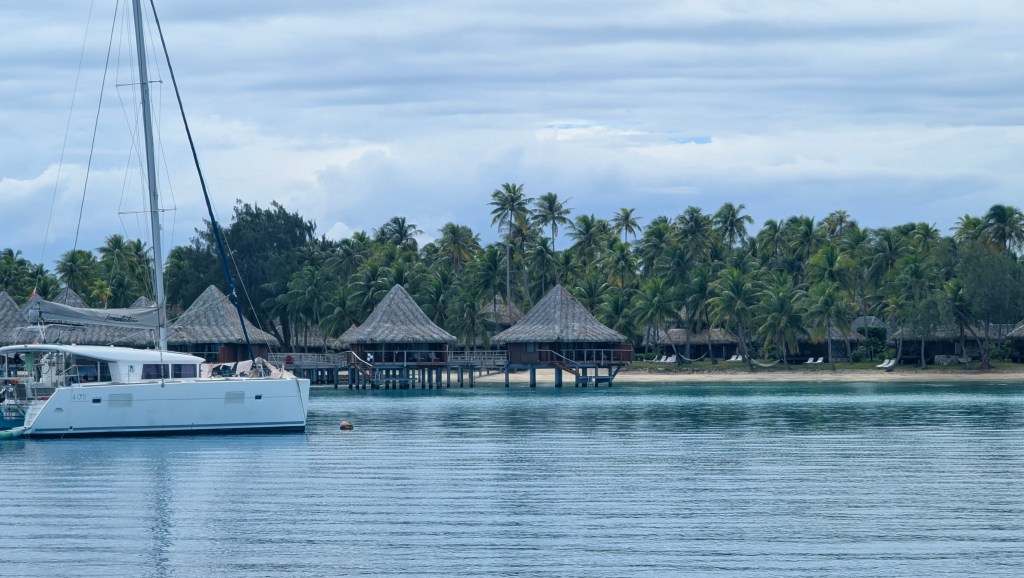

We were happy to get a secure mooring in Rangiroa and catch up on our sleep. Another cruiser (Terrapin) stopped by to say hello and we made plans to meet them the next day at the pointe with the hopes of seeing dolphins.
We rented bikes on our first day on shore and rode about 5 miles where they had a few markets or ‘magasin’ as they are called here. We stopped and had lunch on the way back and headed back to the boat. We met our friends from Terrapin to see the dolphins but alas they did not come by. Instead we ended up going to a beautiful resort for happy hour and that did not disappoint.
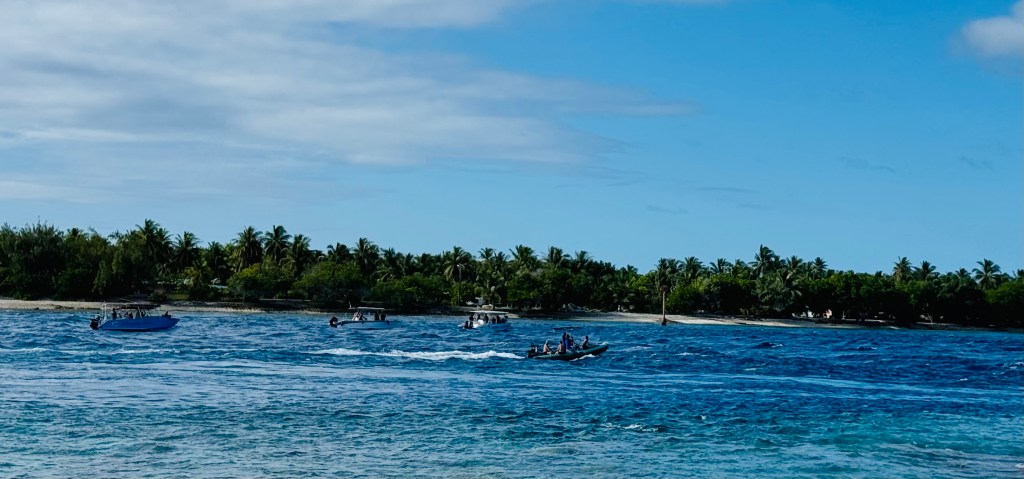
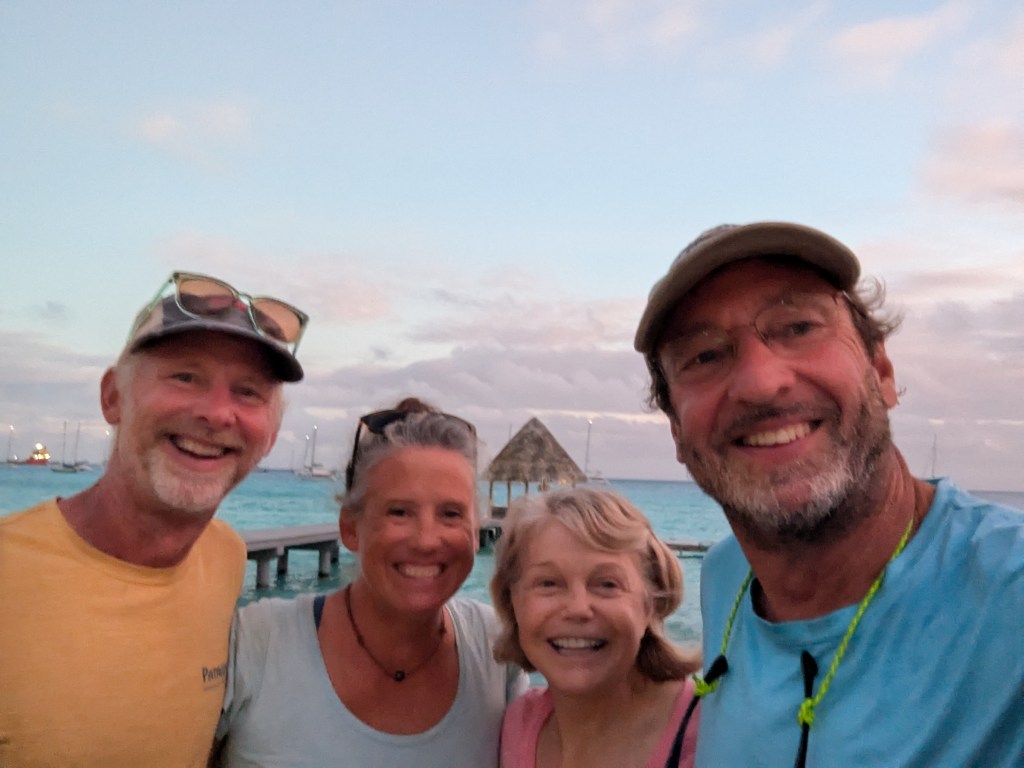
Rangiroa was not as eventful as we hoped. It is known for great diving and snorkeling but with Tracy’s ruptured ear drum, we crossed that off our list. We were also hit by a storm with rain and high winds that kept us on the boat for 24 hours. Once we saw a good weather window, we decided to head to Tahiti sooner than originally planned.
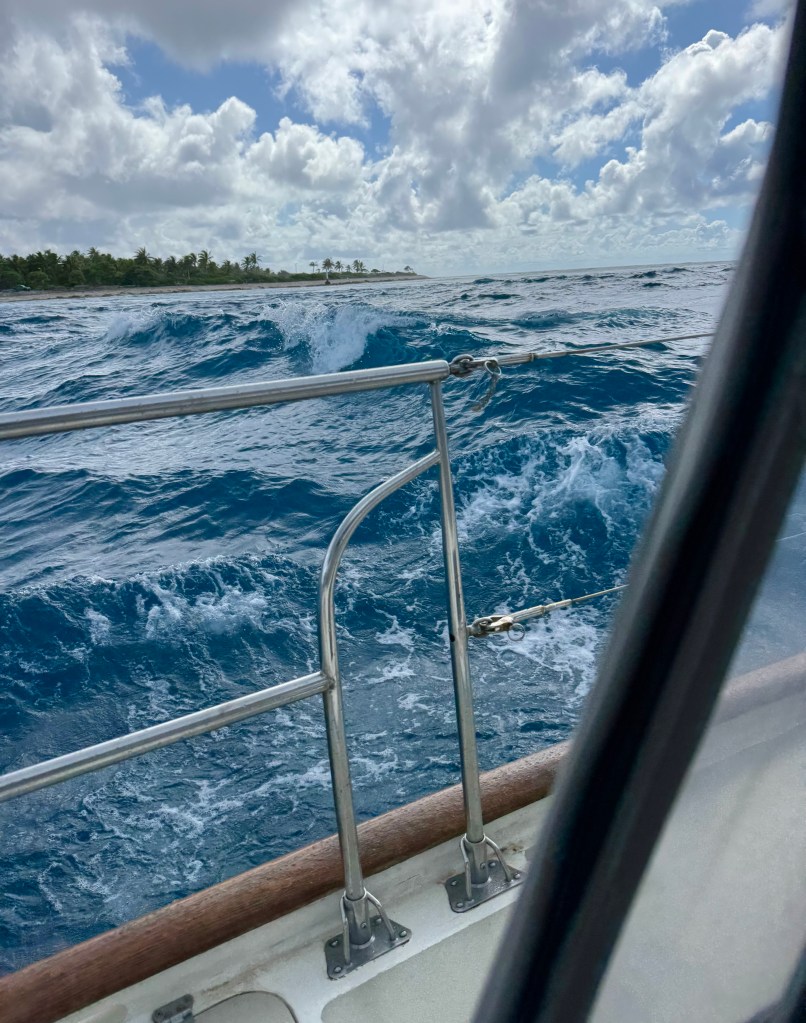
On Thursday evening, we met up with our friends from Terrapin to discuss our exit strategy through the pass. We planned to leave the next day, Friday, June 13th since the weather forecast looked good. We left on Friday around noon which was 2 hours before slack tide. We experienced 4 to 5 foot standing waves and took a couple over the bow but safely made it out of the Atoll. Fortunately, we ‘buddy’ sailed with Terrapin and another boat called Tui, making our way towards Tahiti. We anticipate arriving Sunday, June 15th, also Father’s Day.
Until next time…
 SV Quid Sea - Sailing with Tracy and Cindy