
We arrived on July 12th and enjoyed a beautiful ‘short’ motor sail that took us about 5 hours. We decided to run the engine while sailing to charge our batteries. Tracy discovered earlier that the batteries were running at low voltage and needed to be re-calibrated. The voltage was showing a lower rate of power than the percentage of charge for the batteries and they need to be in alignment.
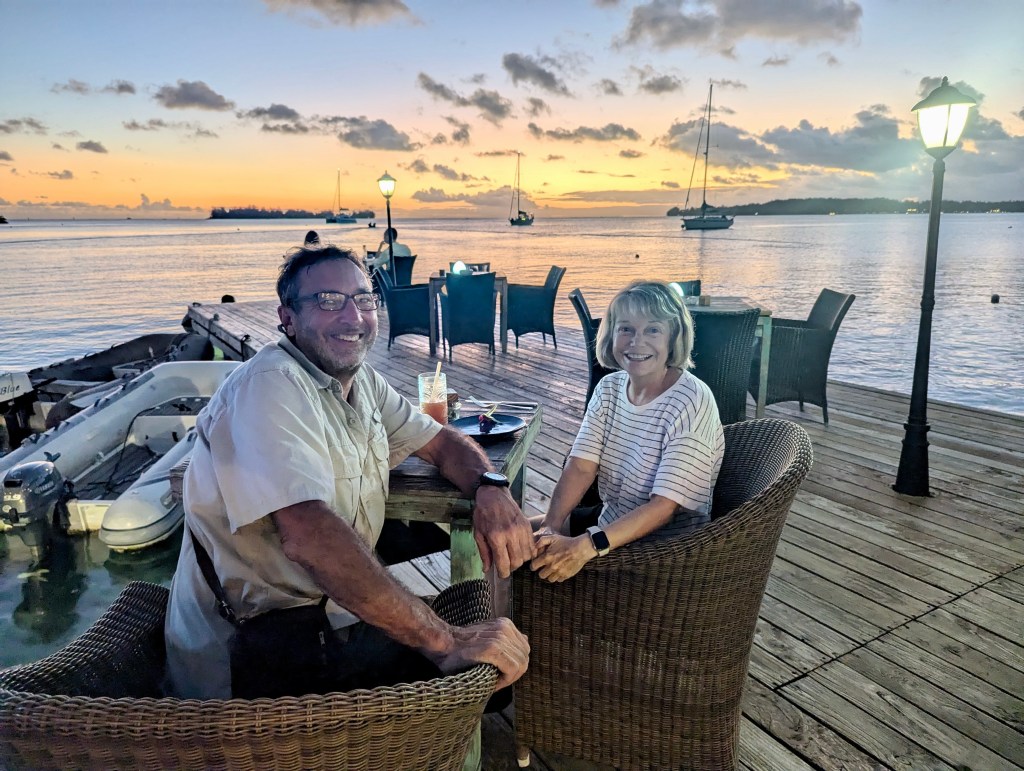
Bora Bora only allows boats to hook up to a mooring ball as opposed to anchoring. They charge $40 per day eliminating the free anchoring we’ve been enjoying over the rest of French Polynesia. We understand as this provides revenue for the island and will deter boats from overstaying their welcome. It also helps protect the coral from damage by anchors. Part of the fee includes a secure mooring ball and the collecting of our trash. We are moored right in front of the Bora Bora Yacht club which is not really a yacht club but is a nice restaurant. On our first day we took the dinghy in to explore the area and later went to dinner to at BBYC.
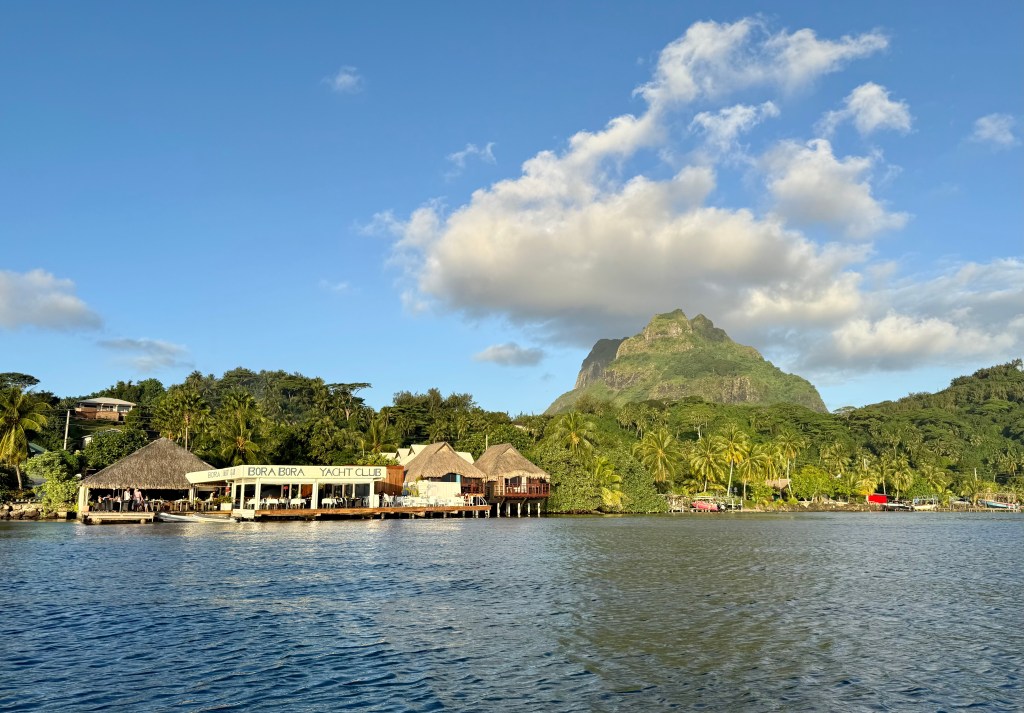
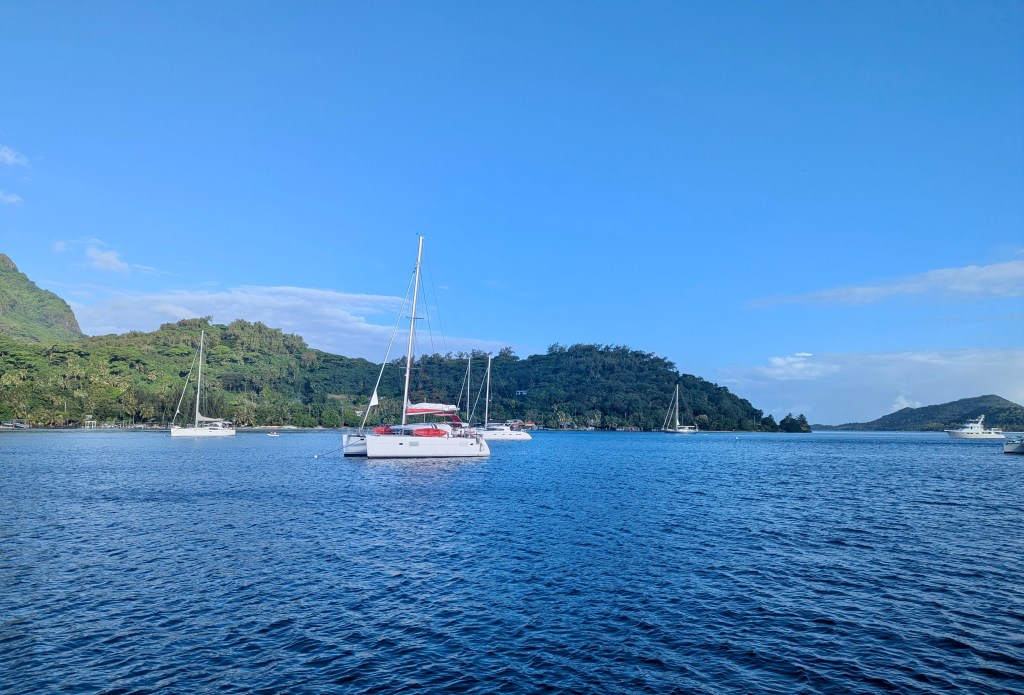
Bora Bora is a tropical island lying in the Society Islands of French Polynesia. A territory of France, French Polynesia has 118 islands lying in five island groups. They’re spread across an area the size of Europe.
Information about Bora Bora
• Bora Bora’s unique and sensational geographical formation is the remnants of an extinct volcano that is still above water.
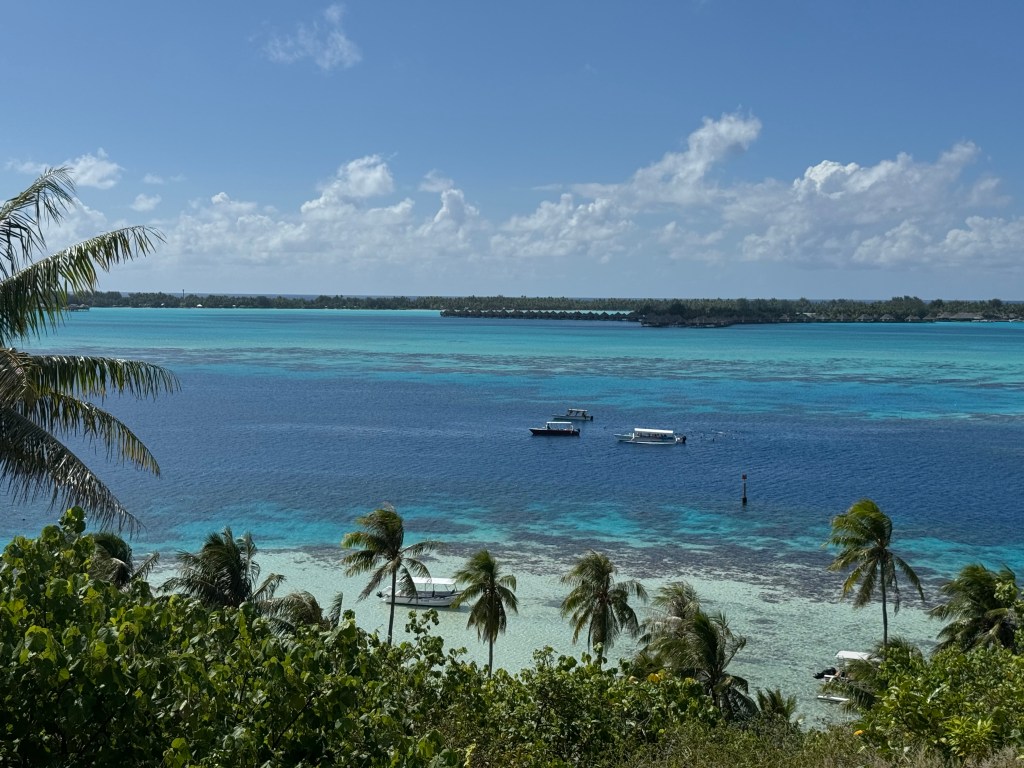
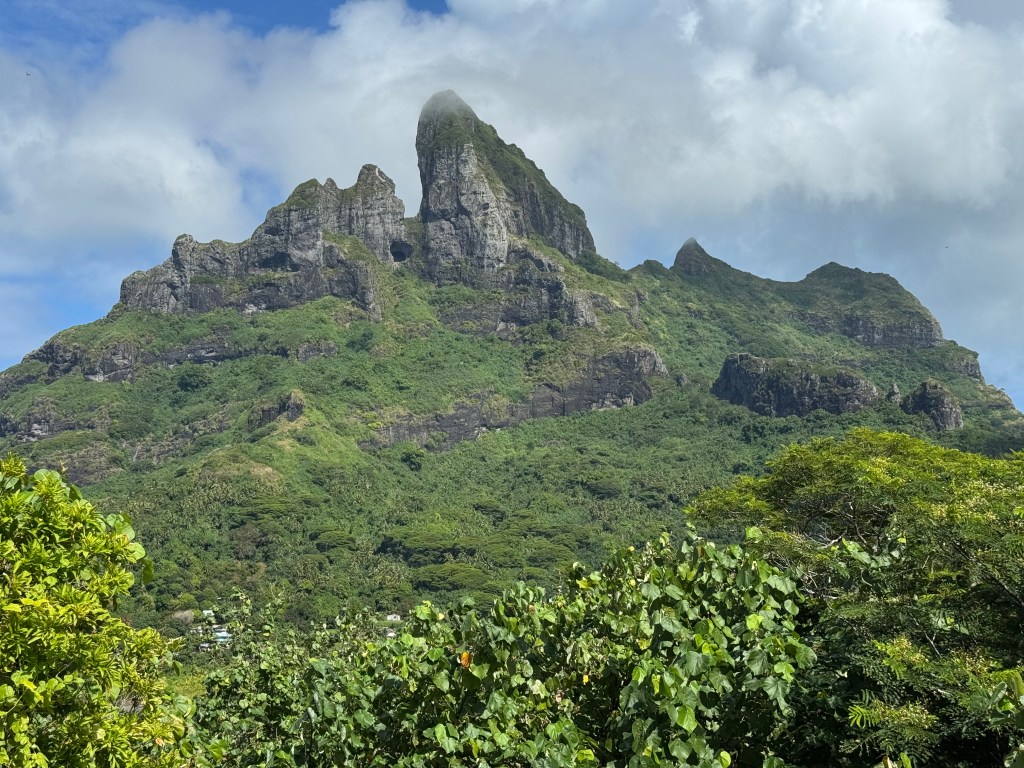
• The main island of Bora Bora is surrounded by a ring of sandy, coral islets called motus. Luxury resorts are set on these motus, and most have incredible views across the blue lagoon to the black-rock peak of Mt. Otemanu which rises from the lush green slopes.
• The main language spoken is French and the islanders speak Polynesian at home. You can always find someone speaking English in the places frequented by tourists.
• The French influence can be experienced in the cuisine and some chefs create exotic gourmet dishes combining island ingredients.
• Bora Bora has several small villages. Vaitape, the main one, located on the western side of the main island, has a post office, banks, and a variety of small shops.
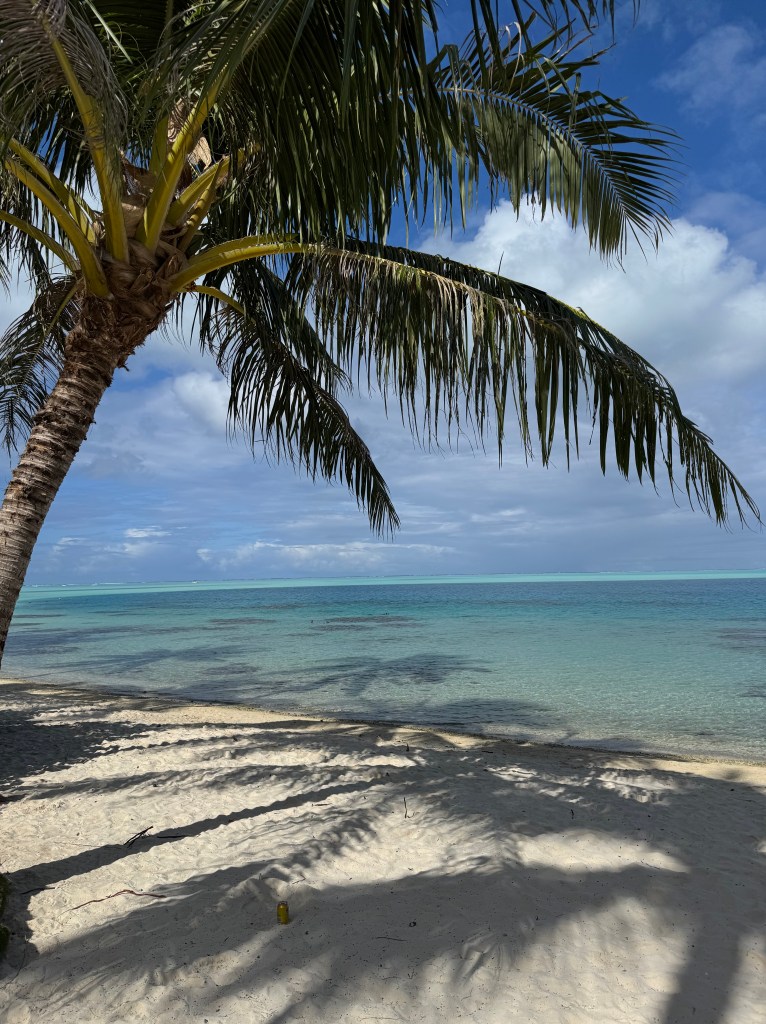
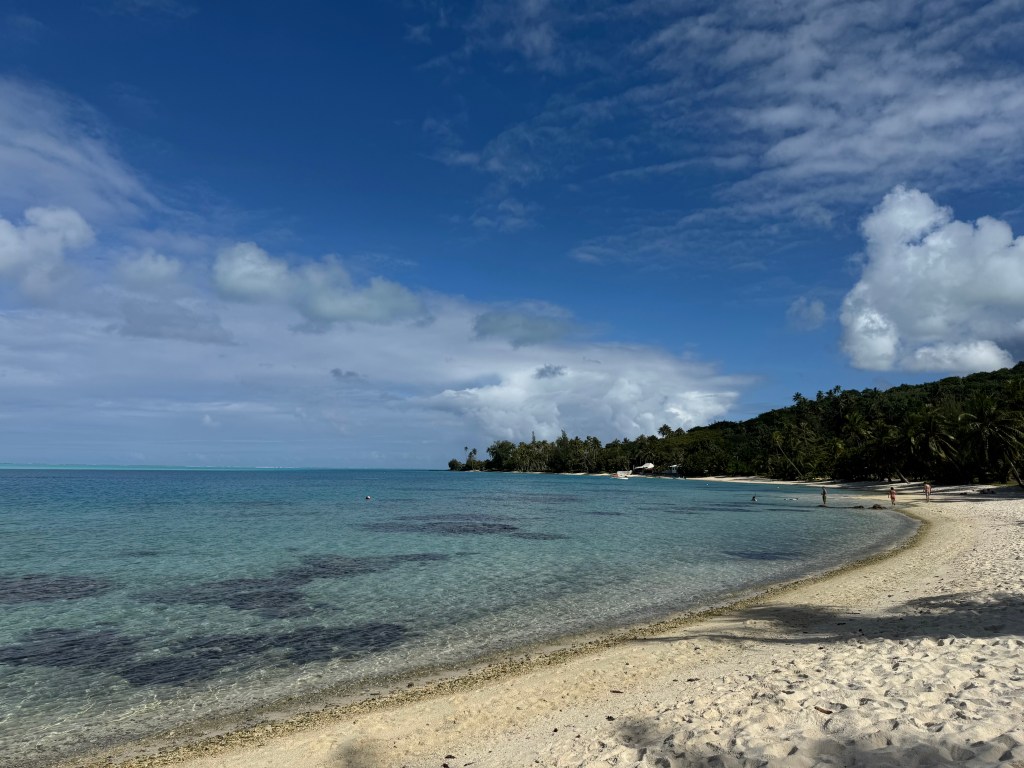
• Bora Bora has extraordinary white sand beaches, edging the lagoon, including one award winning 2 mile stretch of public beach.
• The Bora Bora lagoon only has only one pass opening to the ocean, which is what makes this lagoon such a warm, calm place to swim and snorkel. The water temperature averages 28 degrees Celsius.
• Bora Bora’s airport is on a small island! For safety reasons planes can only land in daylight. Unless you fly in by helicopter, everyone must take a boat to get to their hotel.
• Bora Bora’s main form of transport is boat.
Source: Bora Bora Island Guide
July 13th, we took the dinghy to town and located the ‘gendarmerie’ to begin our check out process from French Polynesia. We also found a couple of grocery stores for provisions and a great place to have lunch.
Gendarmerie is a police force that is part of the armed forces in France and some other countries where French is spoken. It has law enforcement duties among the civilian population.
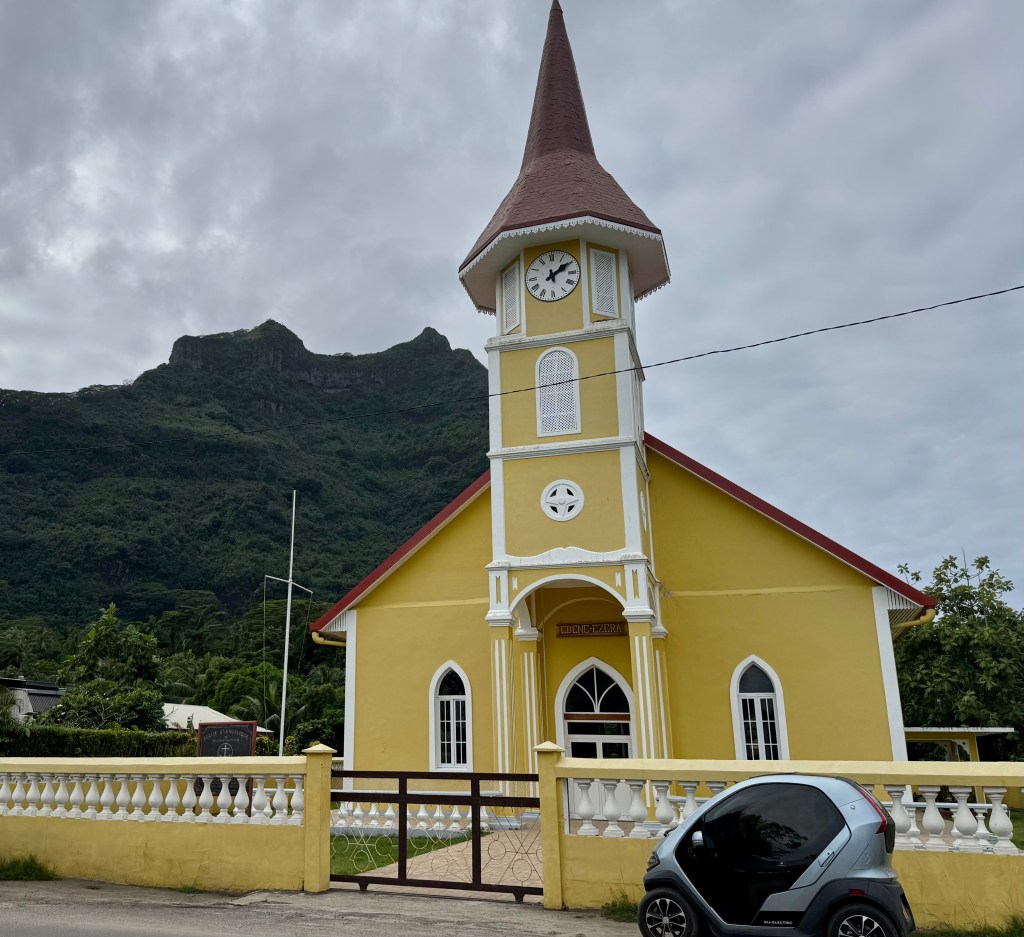
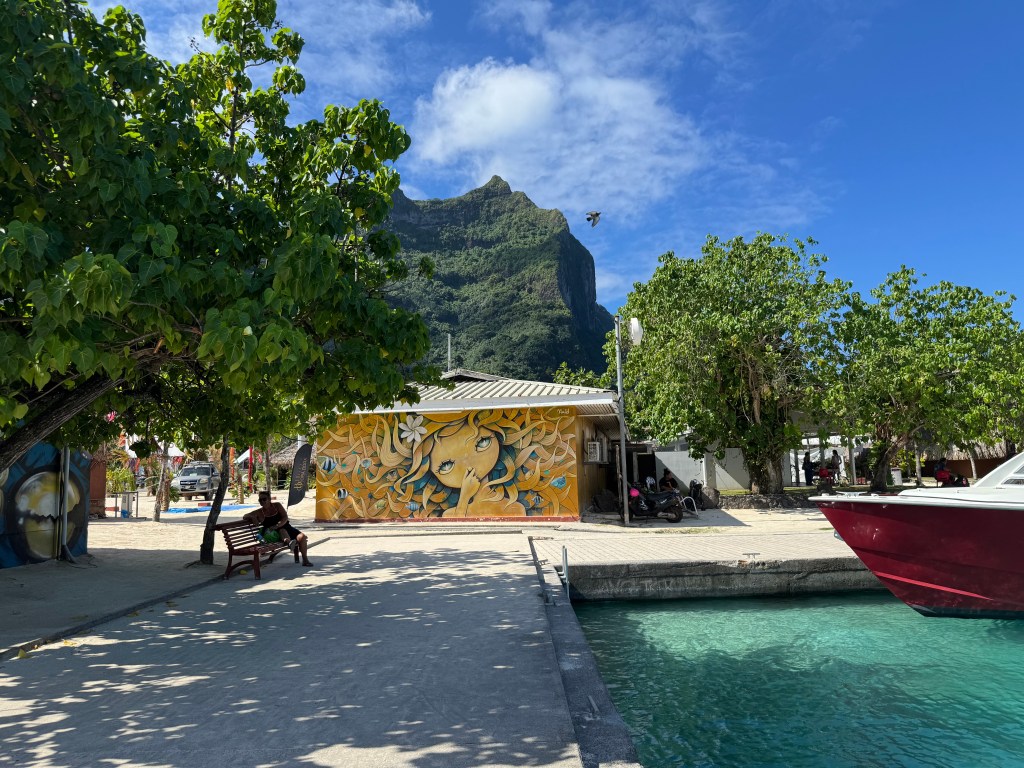
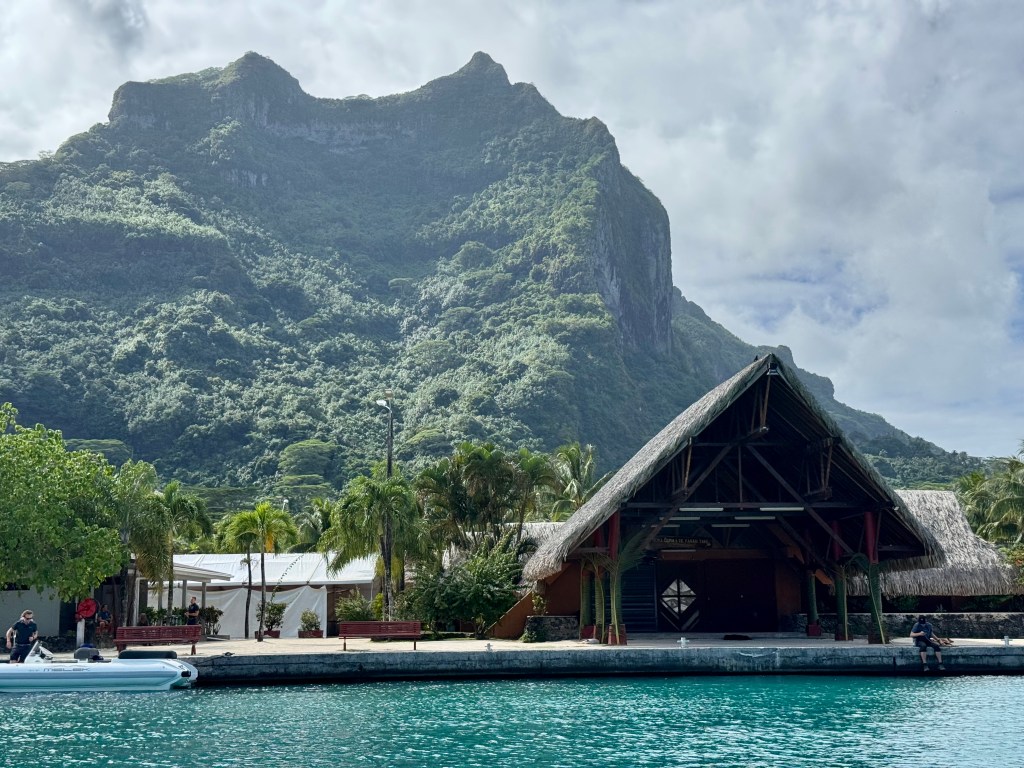
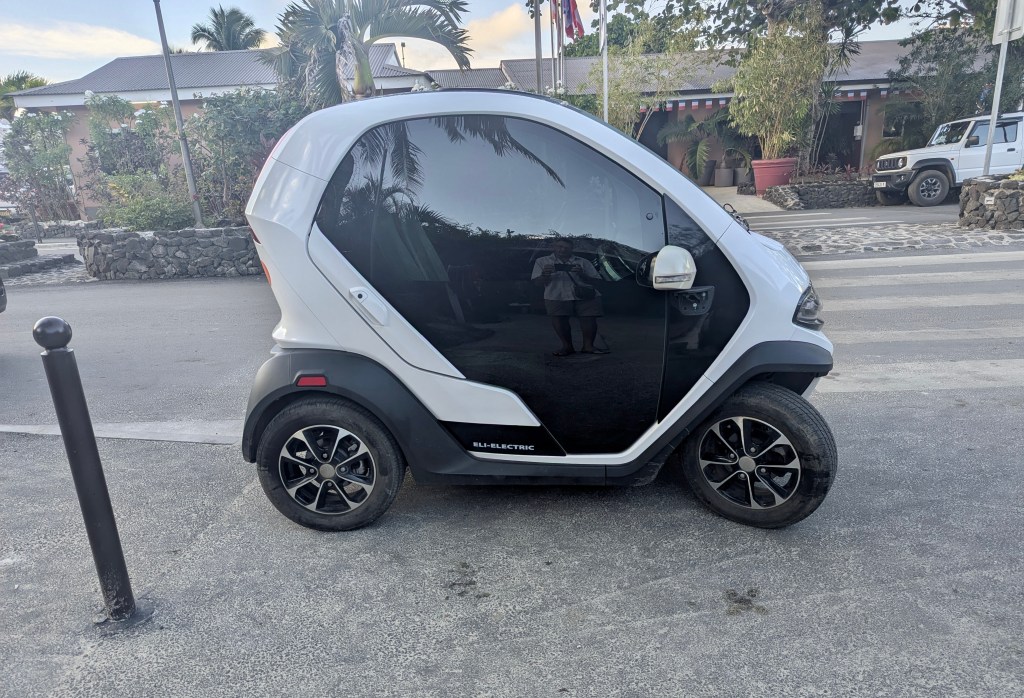
July 14th, we rented a car for the day and drove around the island. We enjoyed finding a beautiful public beach but the most interesting site was hiking up to the cannons which were positioned to help the US during World War II.
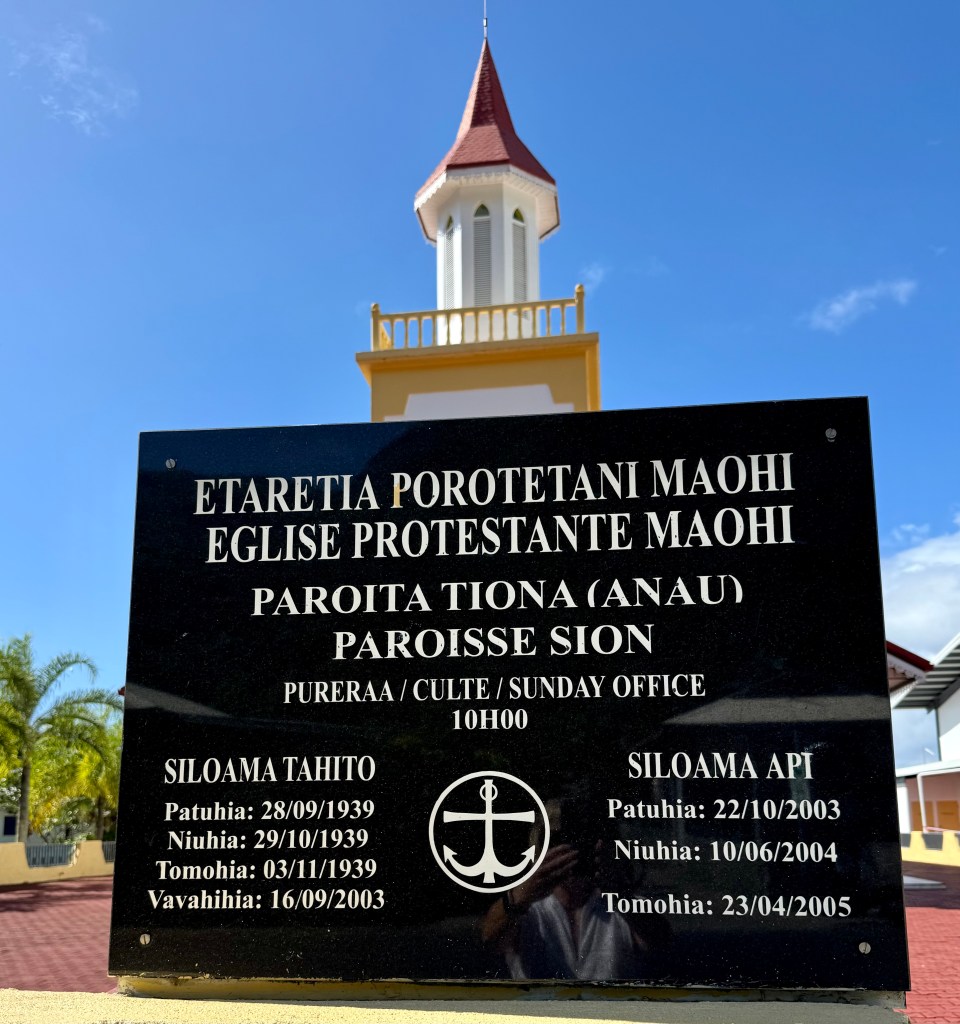
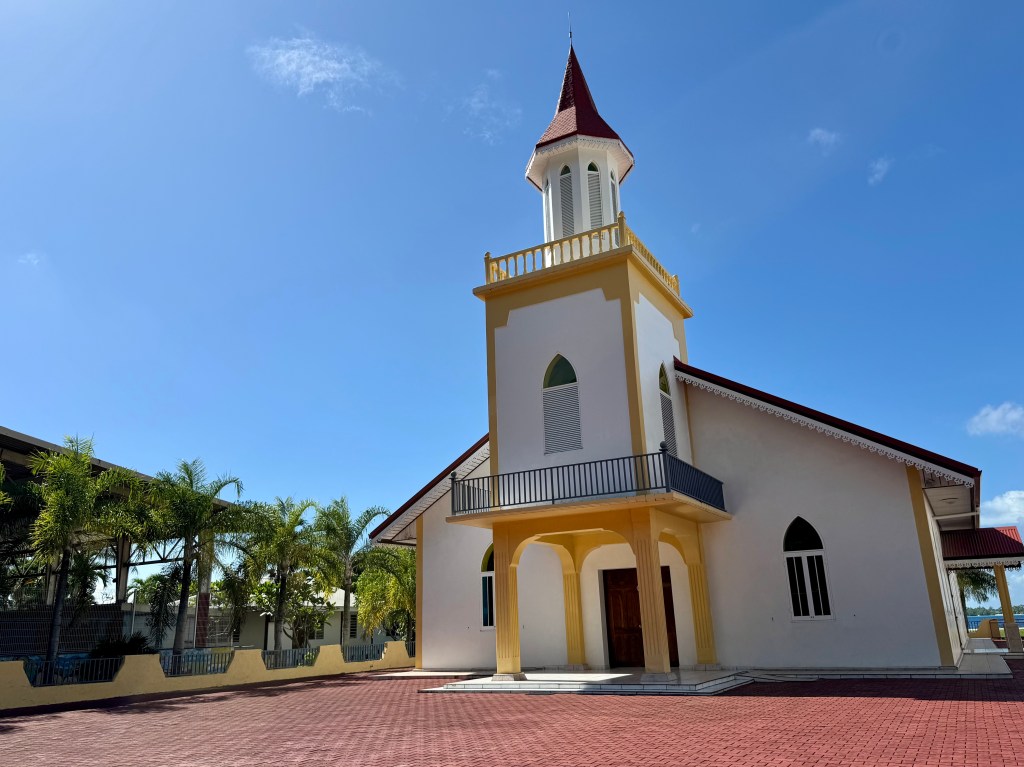
The first missionaries arrived in 1797. After 1815 the majority of the population identified themselves with Christianity, and formed this national Protestant church which spread from Tahiti to the four archipelagos. The official founding date of the church is 1815.
Source: Wikipedia


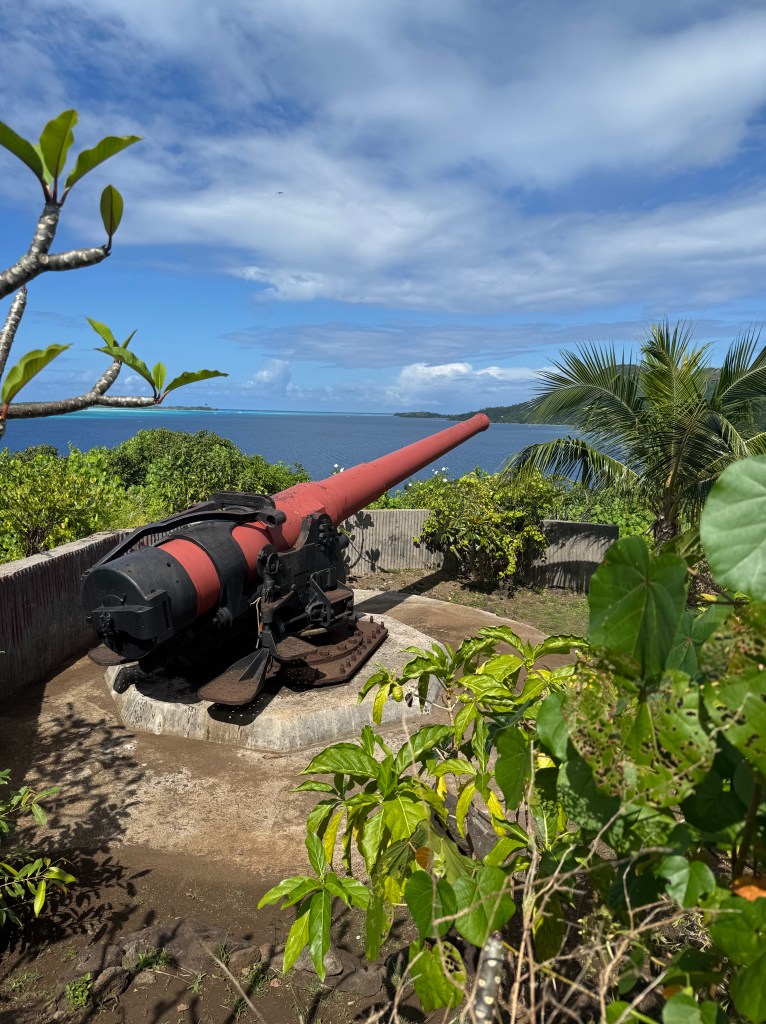
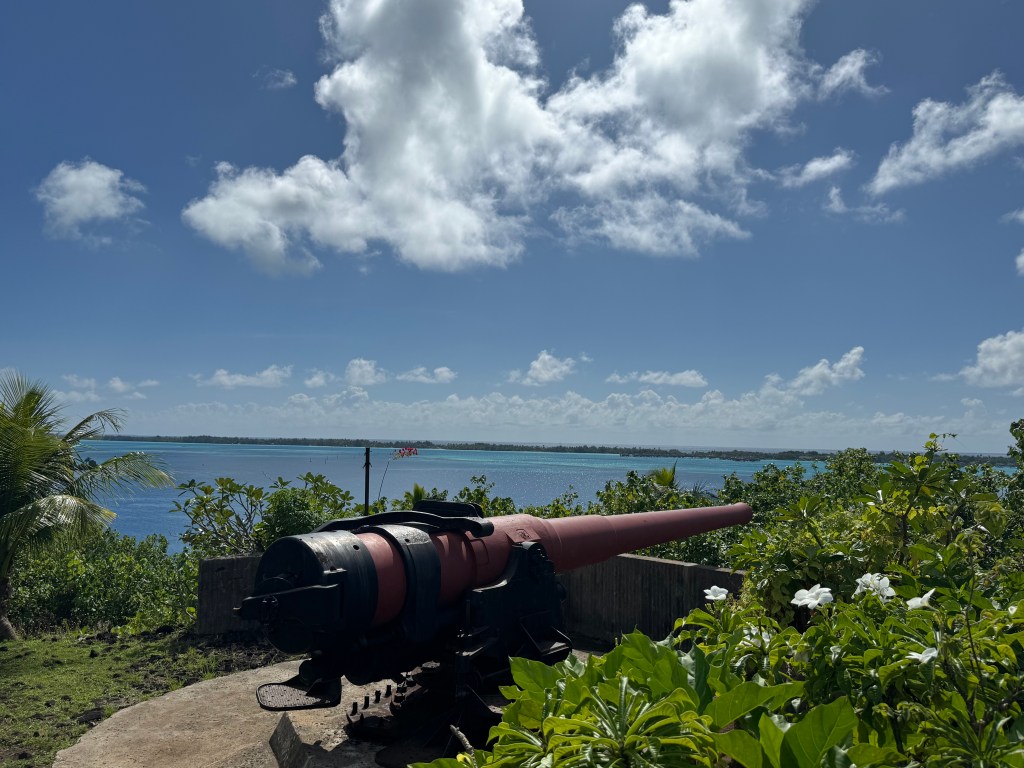
Bora Bora and World War II
On December 7th, 1941, the Japanese air force attacked the US Pacific Fleet at Pearl Harbor in Hawaii, and the United States entered the Second World War. The US Navy needed a refueling depot between Australia (the last bastion of resistance to the Japanese offensive), and the Panama Canal. The strategic position of Bora Bora, the deep-water bay at Faanui and the fact that it had only one easy to control pass, made it the ideal candidate. In 1942, the Americans launched Operation Bobcat, and 3,500 US military personnel arrived in Bora Bora.
Canons that can still be seen today were positioned at strategic points to defend the island from an eventual Japanese attack, and the enormous logistic task of installing the base began. Roads and a quay had to be built, a fuel depot installed, and an airstrip constructed on one of the motu. (The airstrip remained the only international airport in French Polynesia until 1963.) Bora Bora was a tranquil little South Sea Island of 1,200 souls at that time, and suddenly 3,500 military personnel arrived with Admiral Tuner’s fleet of destroyers, cruisers, cargo ships and transport vessels. The base remained in Bora Bora until June 1946. A total of 1,000 ships were refueled at the military base on the “Pearl of the Pacific.” Today, vestiges of the American presence, including the canons, can still be see at various sites around the island.
The American presence in Bora Bora inevitably had an enormous influence on the local population. The entire face of the island was changed, with impressive new infrastructures, including an airport and a quay. Fortunately, the anticipated Japanese attack never materialized, so the canons never had to be fired in anger. However, their incongruous presence on this beautiful South Sea paradise is a reminder that nowhere is completely safe from tyranny. Remember, when you go hiking in Bora Bora, as with everywhere in The Islands of Tahiti, set off early to avoid the hottest part of the day, wear some kind of headwear and take plenty of water with you.
Source: TahitiTourism.com
We enjoyed wonderful sunsets in Bora Bora most nights. It never gets old!
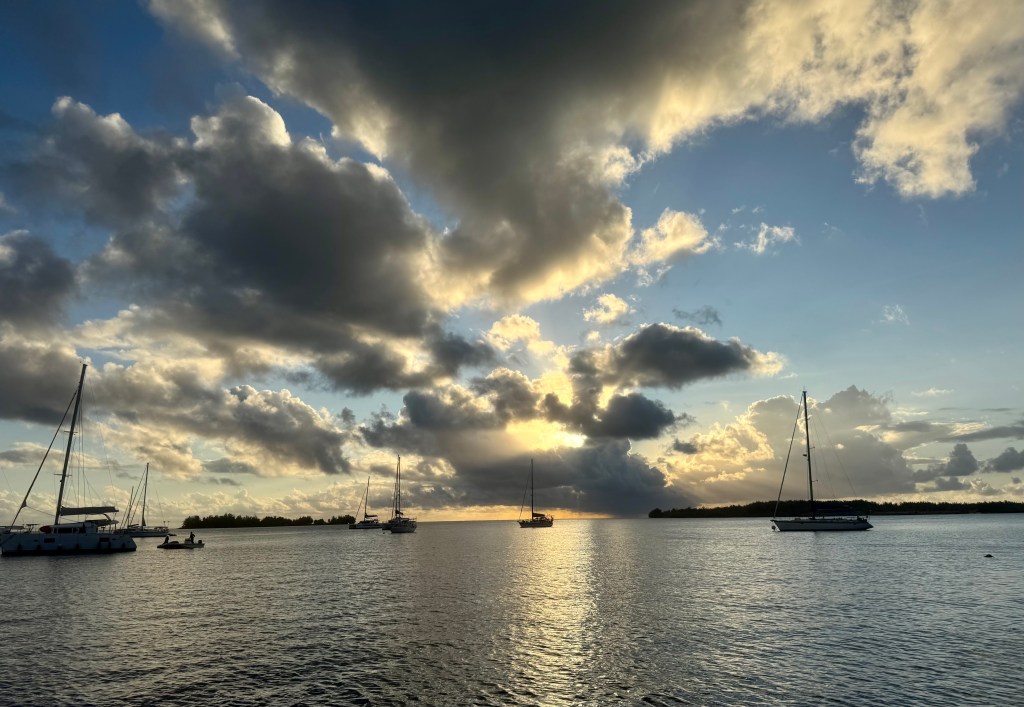
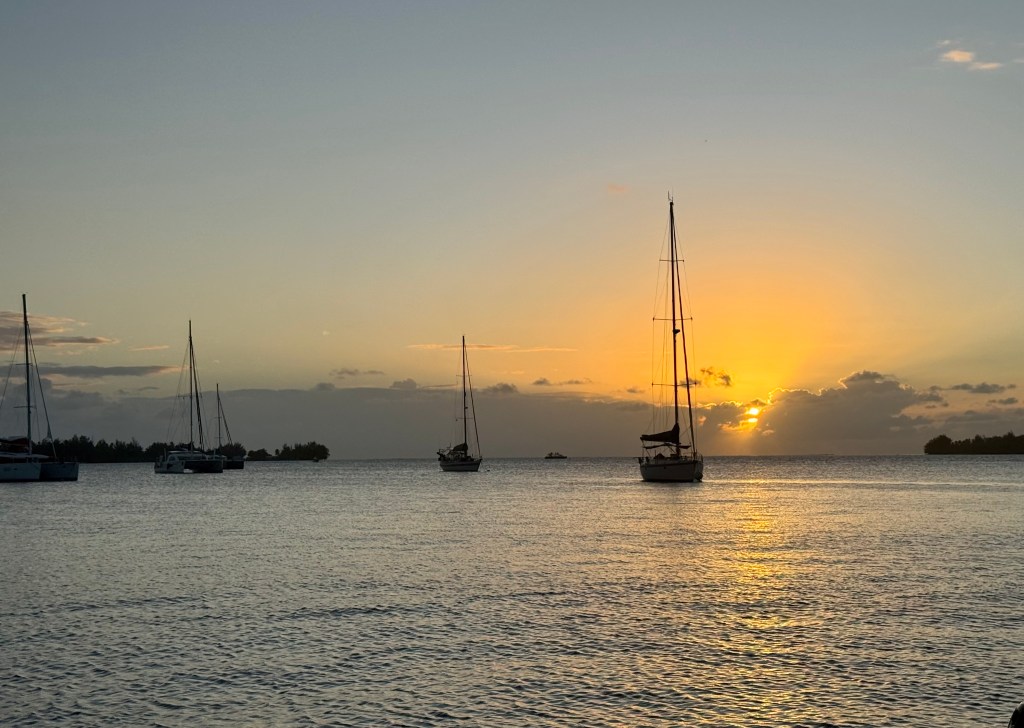
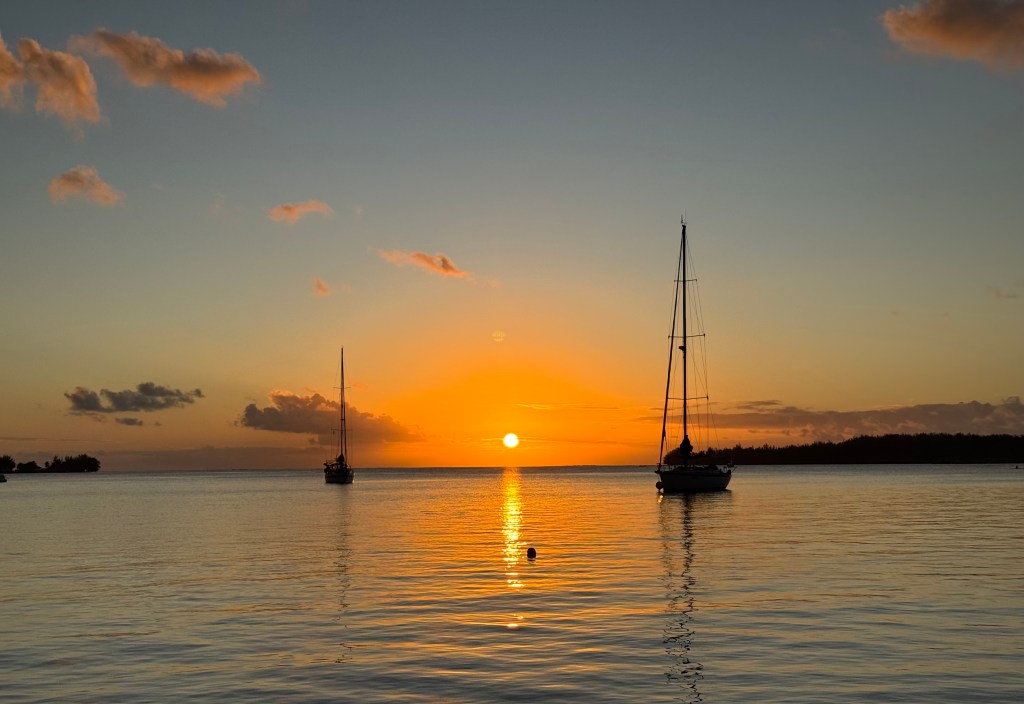
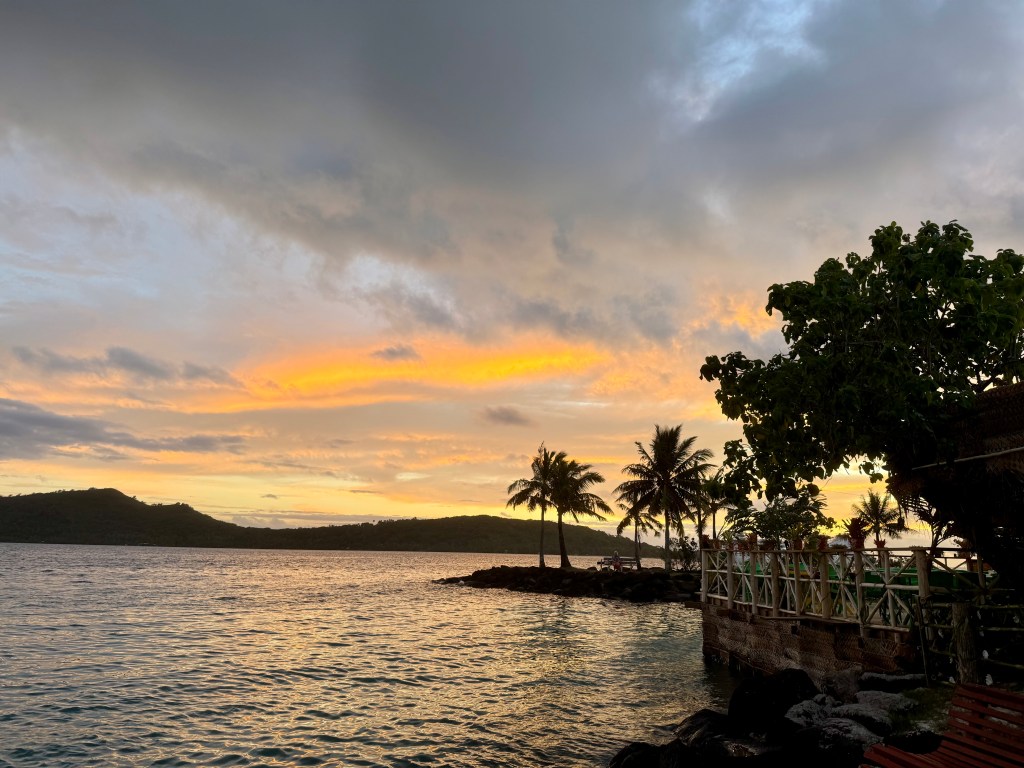
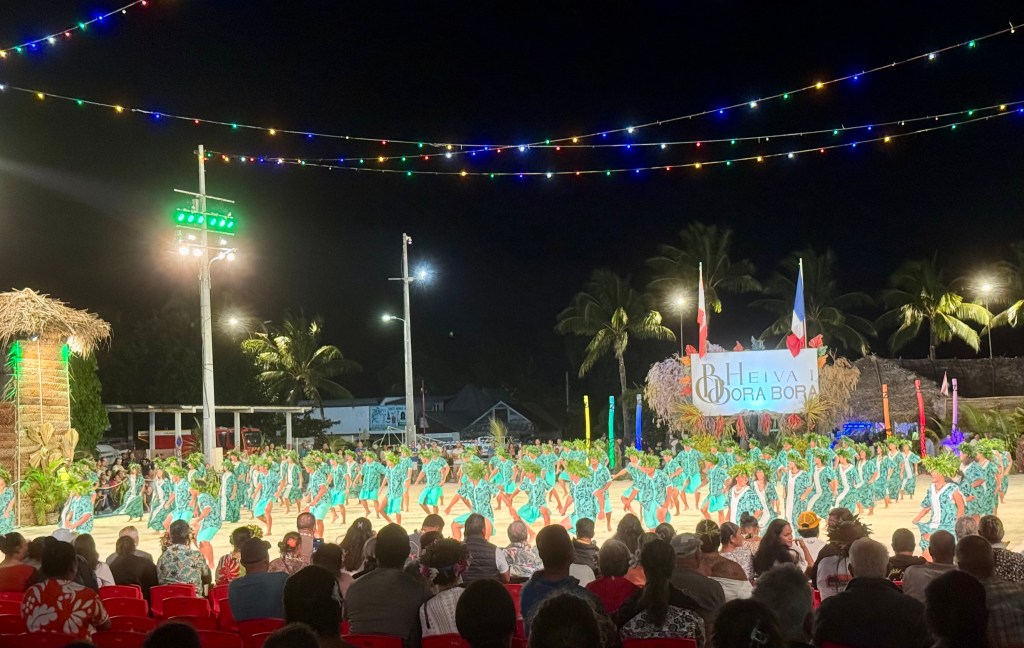
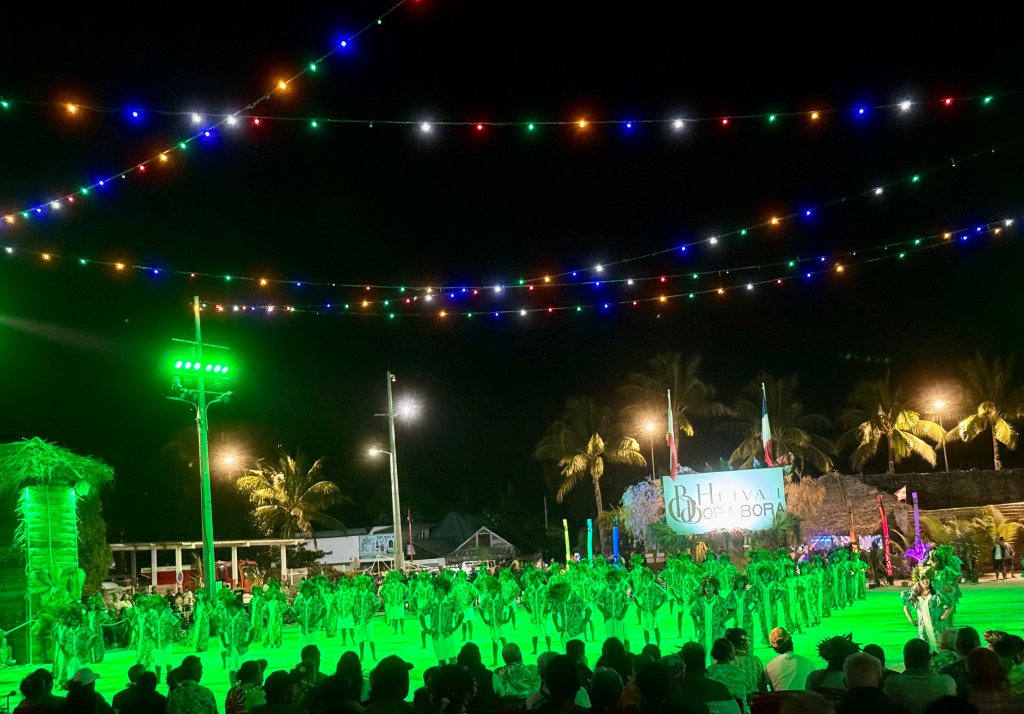
July 16th we did work on the boat during the day and went into town for a Heiva cultural event. We met a few cruising friends and had dinner together before the event started.
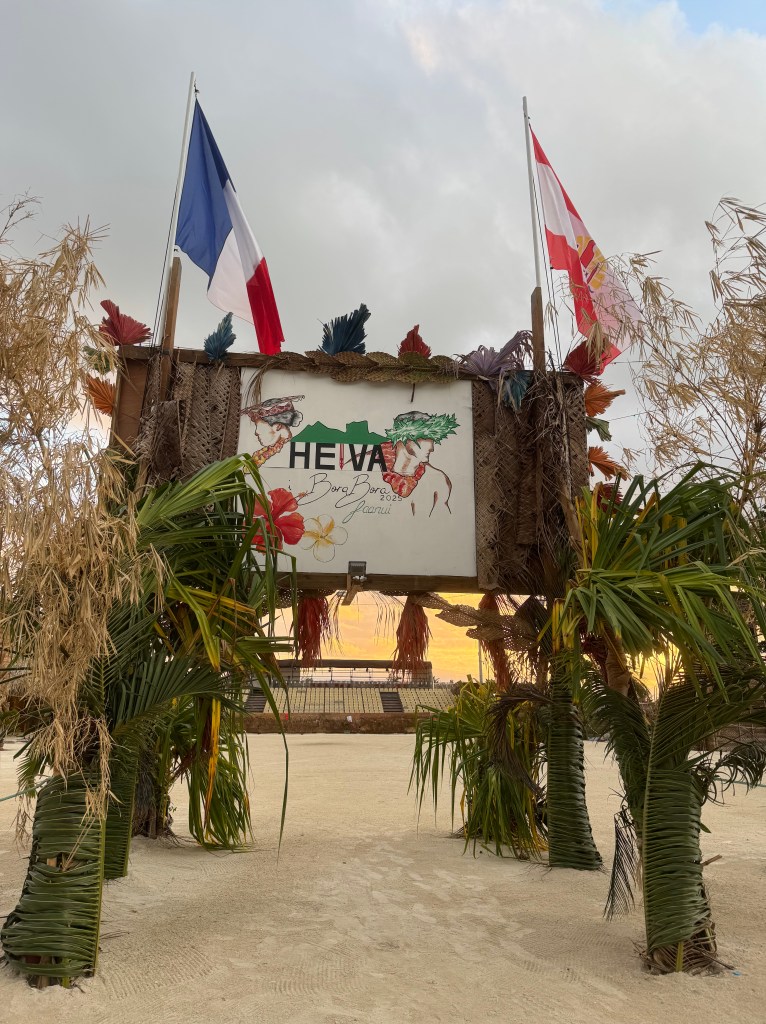
What is Heiva i Bora Bora?
From June 27 to August 3, 2025, the island of Bora Bora is transformed into a living theater of dance, song, music and traditional sports. The Heiva i Bora Bora is an annual celebration that brings together the island’s six villages to share and preserve their cultural heritage.
The most colorful cultural experience in Bora Bora is surely Heiva i Bora Bora, the annual festival of song and dance. The Tahitian word Heiva (hei meaning to assemble, and va meaning community places) is also known as “The Celebration of Life.”
Taking place each year (mostly in July), Heiva occupies the square of Vaitape at Place Tu Vavau and is known for its soul-stirring music, dancing, singing and sporting events that highlight the beauty and culture of the Polynesian people of French Polynesia. The competitions of Heiva highlight ancestral traditions and legends, where participants are judged by a group of experts who specialize in dance, traditional percussions and musical compositions, singing and lyrics, all set to live music performances.
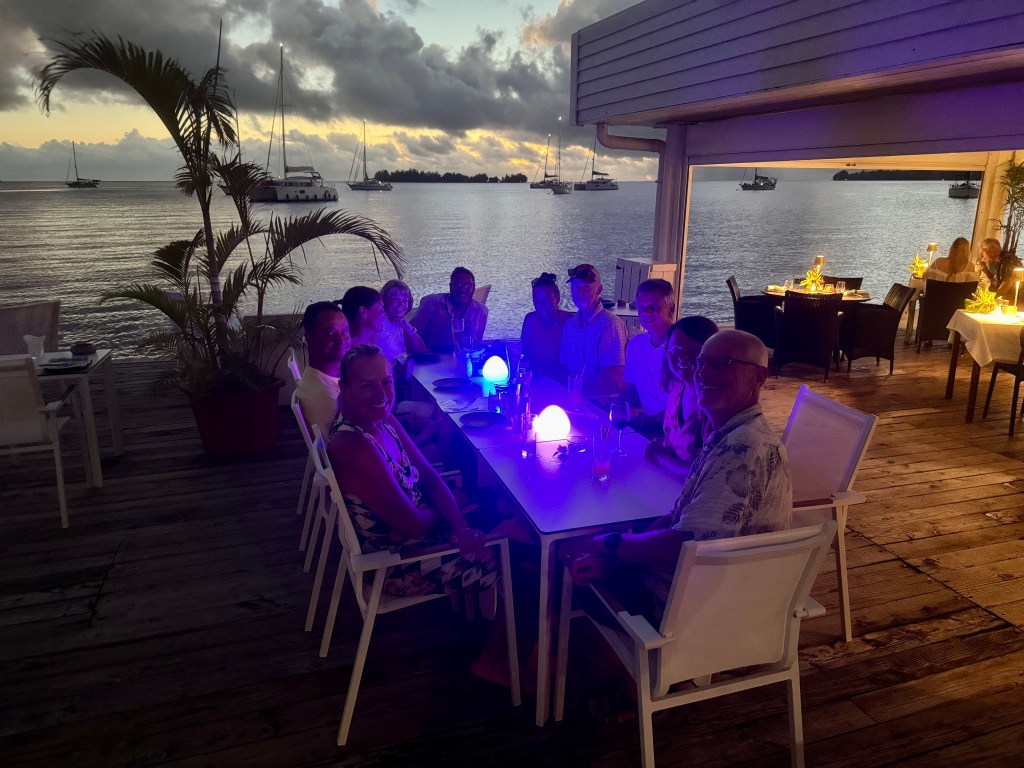
We continue to enjoy connecting with our cruising friends in Bora Bora. We met a couple of new cruisers, both from Sweden. We all met up for dinner a couple of the nights during our stay in Bora Bora. We also got to know one of the waiters, named Albun (sp?) who is from France but has been traveling and before Bora Bora, worked in Reunion Islands, and Argentina. France will pay their citizens a bit more to promote working in other French territories. He spoke great English and shared a few stories from his travels. He said it is great to travel alone because it forces you to meet people, and you acclimate quicker. He’s fallen in love with Bora Bora and plans to stay.
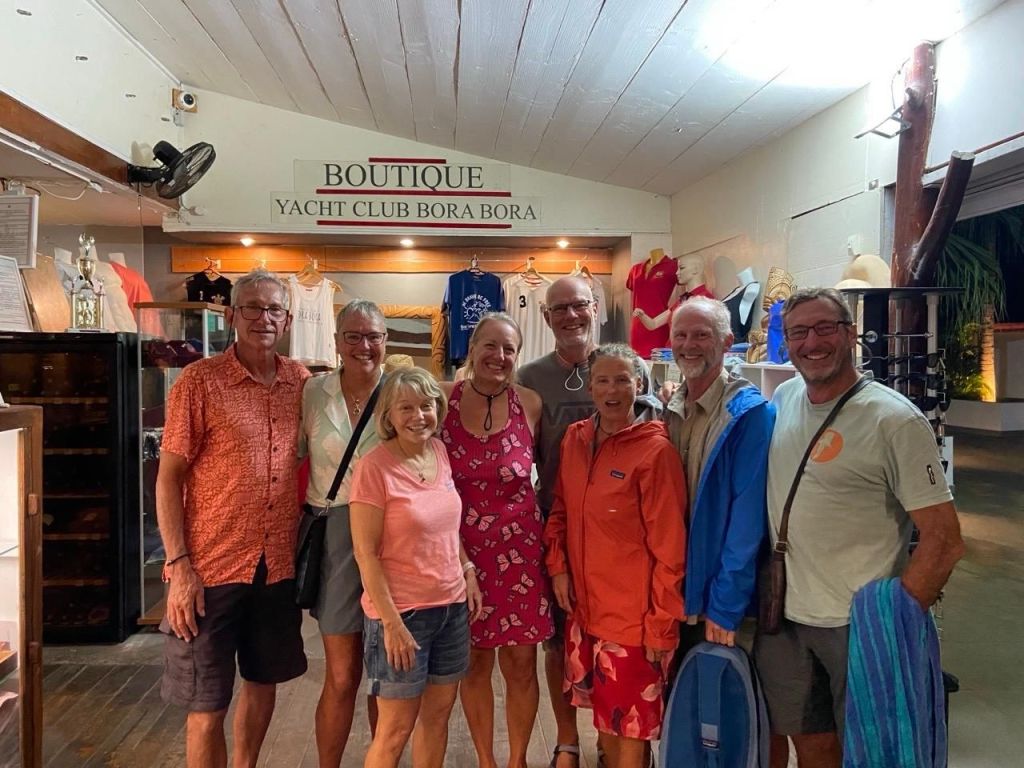
We loved Bora Bora and wished we could have stayed longer to explore other areas. All the islands we visited in French Polynesia were wonderful and each one a unique experience. Two of our favorites include Bora Bora and the Atoll, Fakarava.
As I wrap up this post, I have an update. We decided to take a pause and fly home for a few months. I left on the 17th of July and Tracy is making his way to Tonga doing a solo sail. While it’s worrisome that he is alone, it is something he has wanted to do for a while. He left Bora Bora on July 19th and should arrive in Tonga within 9-11 days, depending on weather. Tracy’s flight home is booked to leave Tonga on August 7th. We plan to head back and join Quid Sea around the end of September and then on to New Zealand.
Tracy is documenting his passage and we will share in the next blog. Cheers!
 SV Quid Sea - Sailing with Tracy and Cindy
Hey – It’s your neighbors Ginny & David. This trip is amazing looking. You guys look so happy and we are totally jealous. Could we get the number to your person that takes care of your rental of your house. Just want to check on something and make sure. Safe Travels!
LikeLike