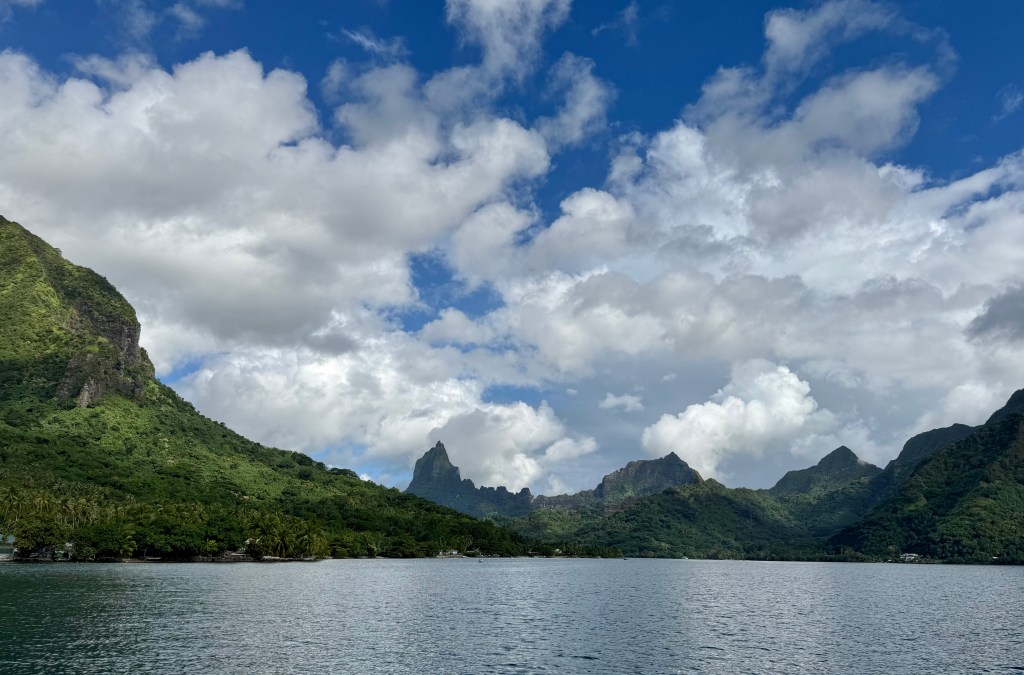
We left Tahiti and headed to Mo’orea on Thursday, July 3rd, the same day the kids left. It was about 5 hours, and it was a bit rough but helped that it was a short trip. We are quickly facing the end of our time in French Polynesia and planning to experience a few more destinations before our check out in Bora Bora. These will be briefer stays but hoping to prolong our adventure in FP by seeing as much as possible.
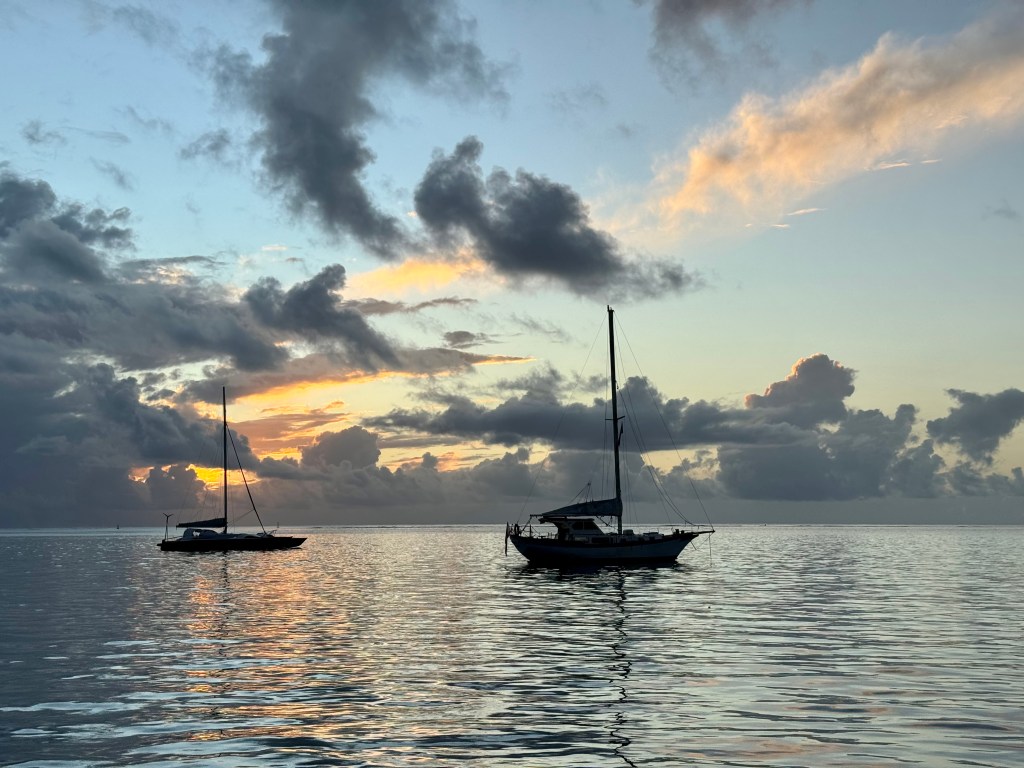
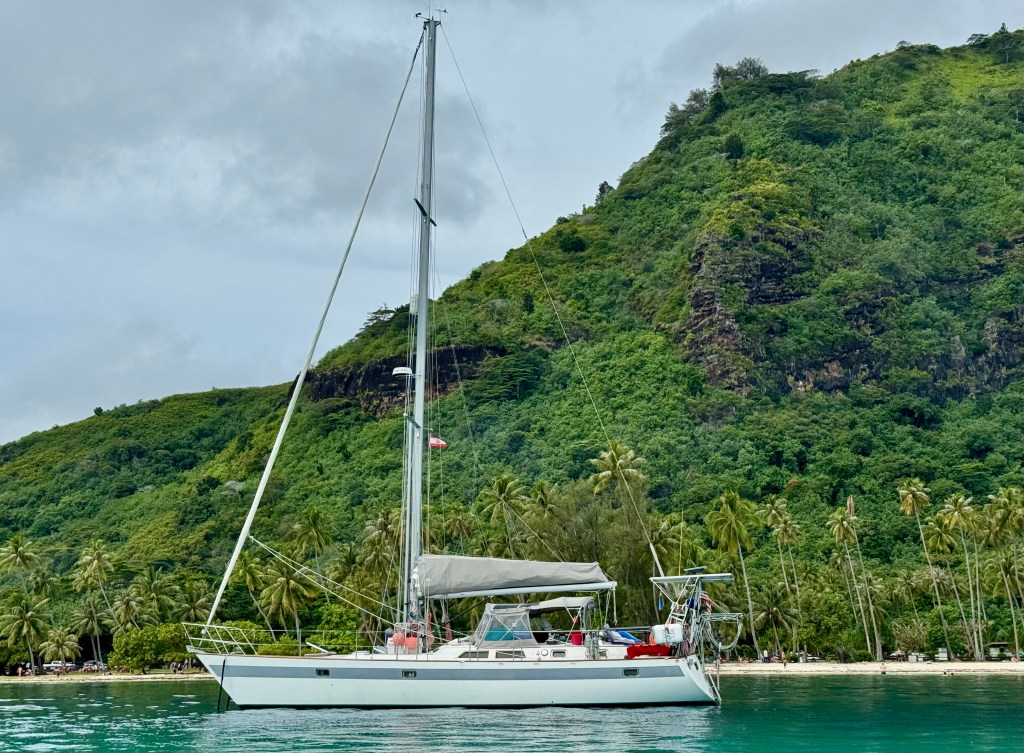
We arrived in the afternoon of 7/3 to lots of sunshine in a beautiful bay and anchored close to a public beach called Plage de Ta’ahiamanu.
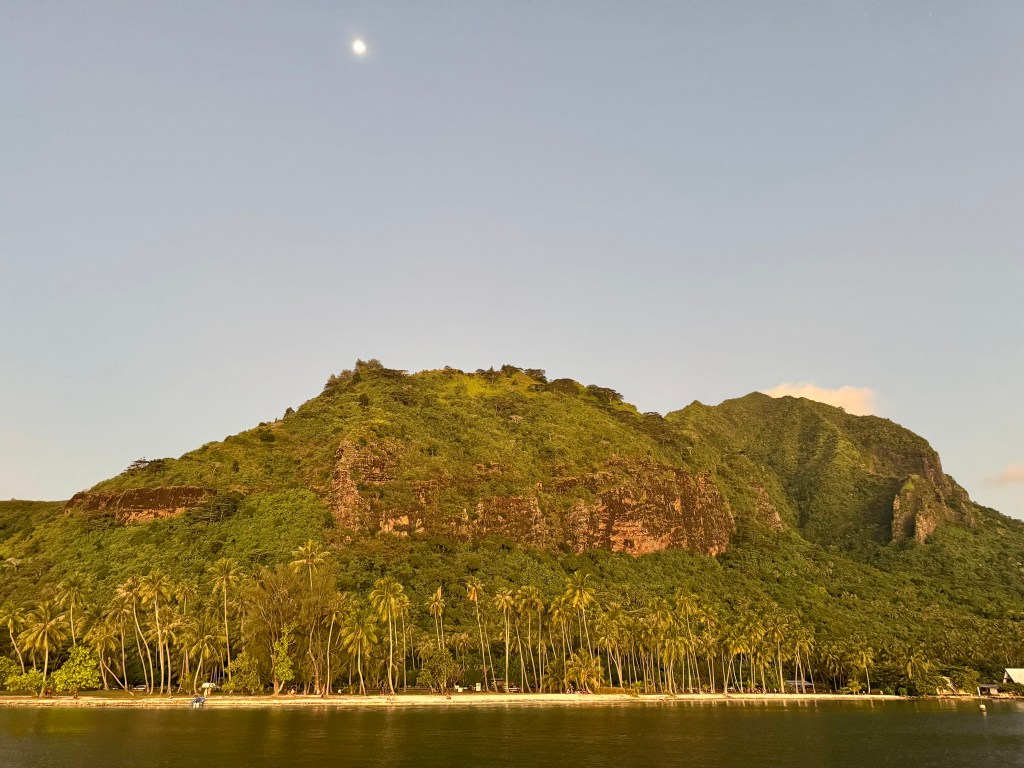
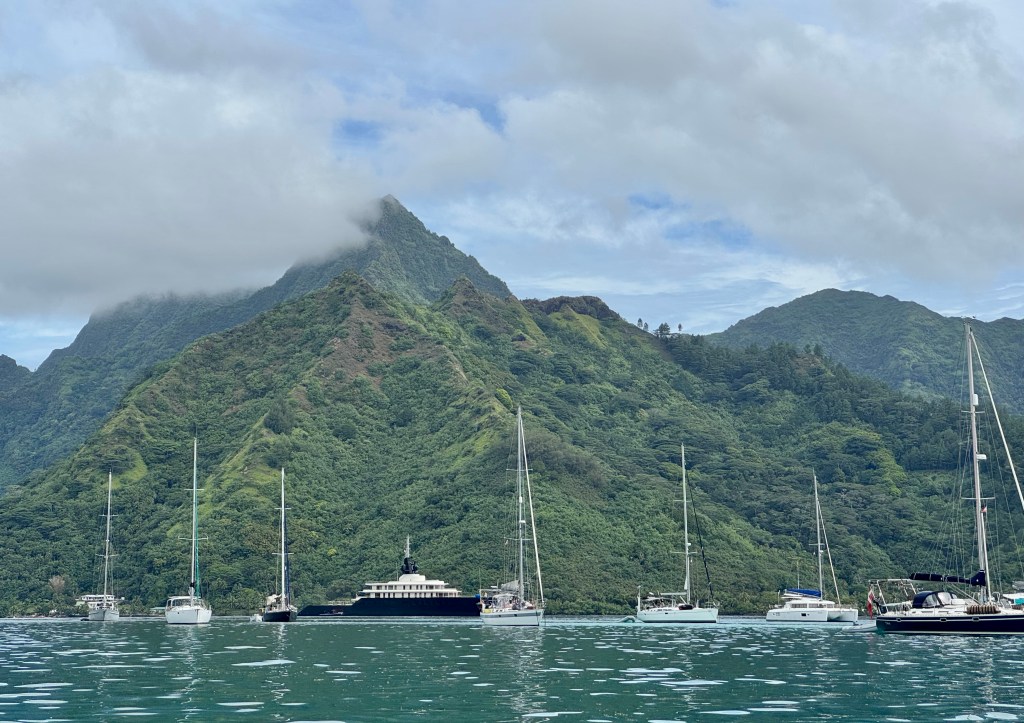
Mo’orea is tropical paradise not to be missed. Known as the sister island because of its proximity to Tahiti, Moorea, like Bora Bora, Raiatea and Huahine, is in the Society Islands. The distinguishing feature of the destination is its two large bays, Cook and Opunohu, which are separated by Mount Rotui and give the island its trident form. Formerly called “Aimeho” or “Eimeo”,
Moʻorea is an atoll whose main island consists mainly of igneous rocks. The island, like neighboring Tahiti, formed as part of the “Society Chain” from a hot spot on the Pacific Plate and is between 1.5 and 2 million years old.
The population for the commune of Mo’orea-Mai’ao, which includes Moorea and the smaller atoll of Mai’ao, had a population of 18,201 according to the 2022 census. Of this, 17,858 individuals resided on Moorea itself.
The main source of income is the tourism from the decade of 1960. An American company constructed in 1961 the Bali Shark Hotel, the first hotel of luxury of Moʻorea, in the north coast, near the town of Maharepa. Since then, the tourism has continuously increased, so that at the present time – according to affirm some guides of trips – Moʻorea has even more tourist hotels than Tahiti. The hotel complex are located mainly on the north and northwest coast. Most of the beaches on the northwest coast belong to hotels and are not open to the public. On the northeast coast, in Temaʻe, near the airfield, there is a public beach.
Until the end of the 20th century, coffee was still grown on Moʻorea. Due to falling coffee prices, this is no longer profitable and the cultivation of agricultural export crops has shifted to pineapple and Tahitian vanilla. Some small family farms continue to produce copra in the traditional way. Breadfruit, yams, taro, sweet potatoes, bananas, coconuts, and other tropical and subtropical fruits are grown for home consumption and hotel kitchens. Fishing continues to play an important, though declining, role in the island’s economy. Source: Wikipedia
We opted not to get a car in Mo’orea since Tracy and the kids had already explored some of the key areas of interest. So we settled in, enjoying the scenery and contacted our cruiser friends from Polaire Bear and made plans to go to lunch the next day. Unfortunately, a front rolled in and kept us on the boat for a day and we had to postpone. On Saturday the weather improved and we left in our dinghy to find our lunch spot. It was a unique place on the water where we could tie up and enter the restaurant from the beach.
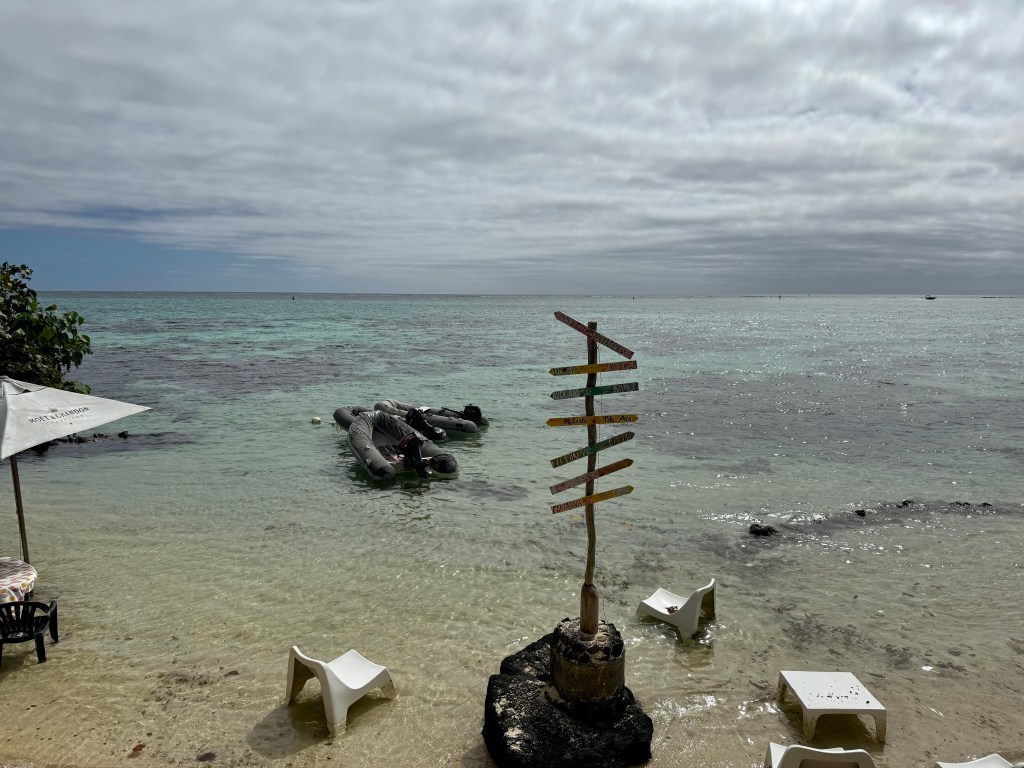
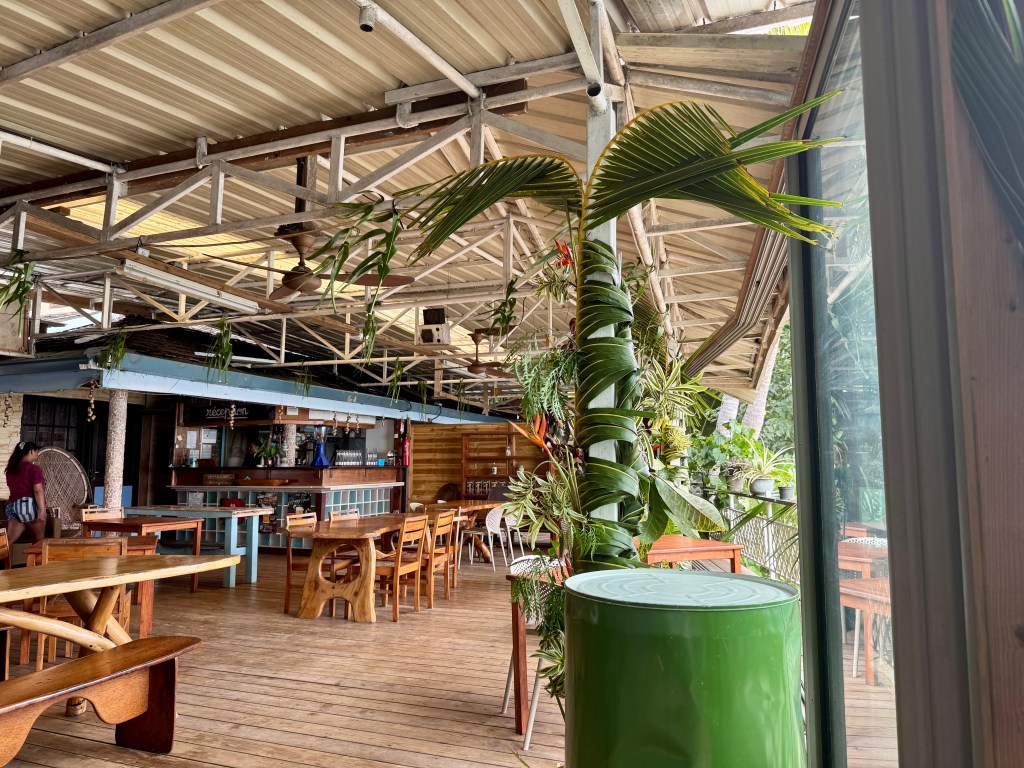
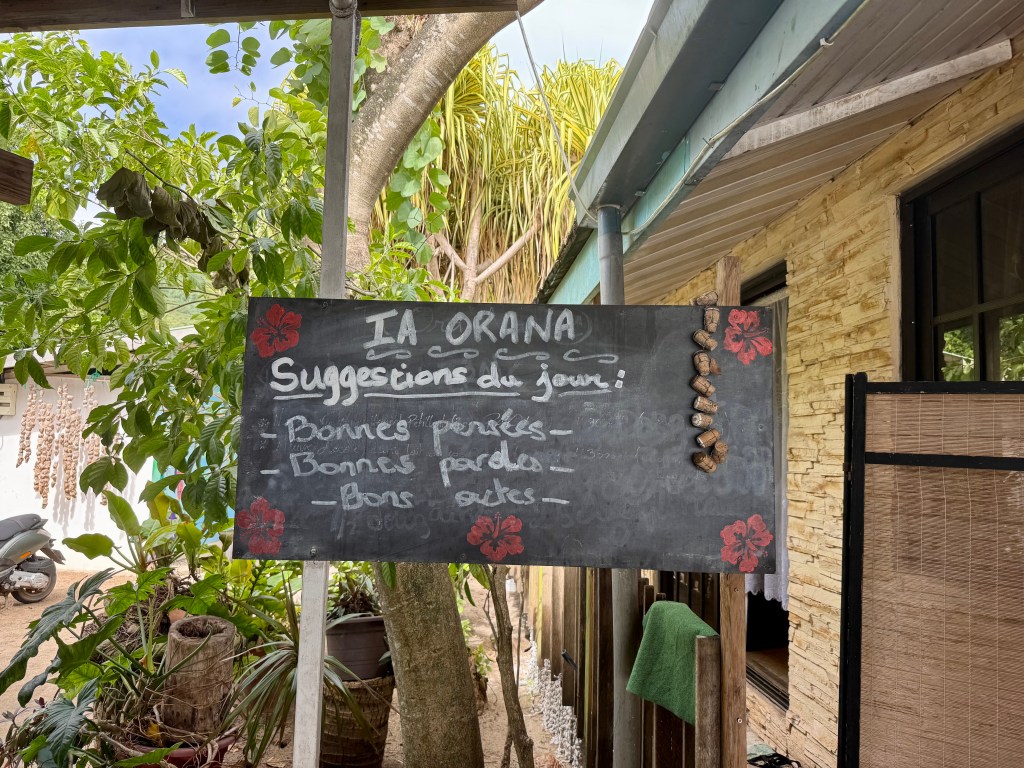
Restaurants greeting sign: Hello! Suggestions of the day: Good thoughts, Good words and Good deeds.
The next day we went to shore on our own to explore and ended up at the Hilton resort for a drink and walked around the grounds. It’s beautiful hotel and we found out they have bungalows over the water for only $1200 a night. Yikes!
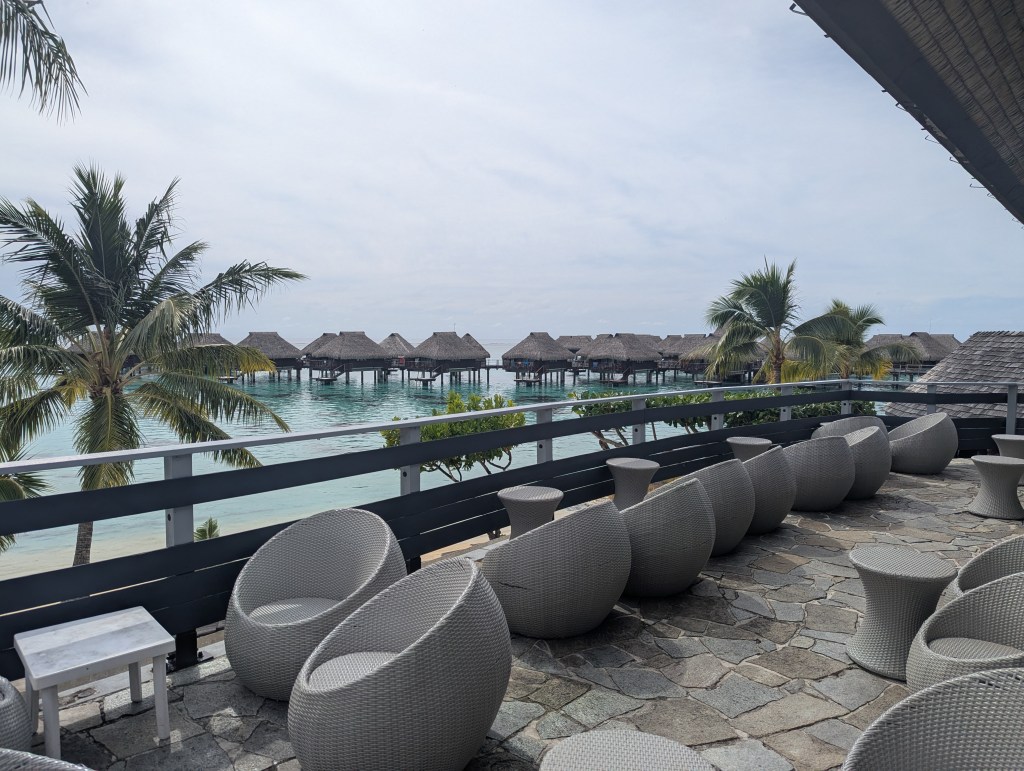
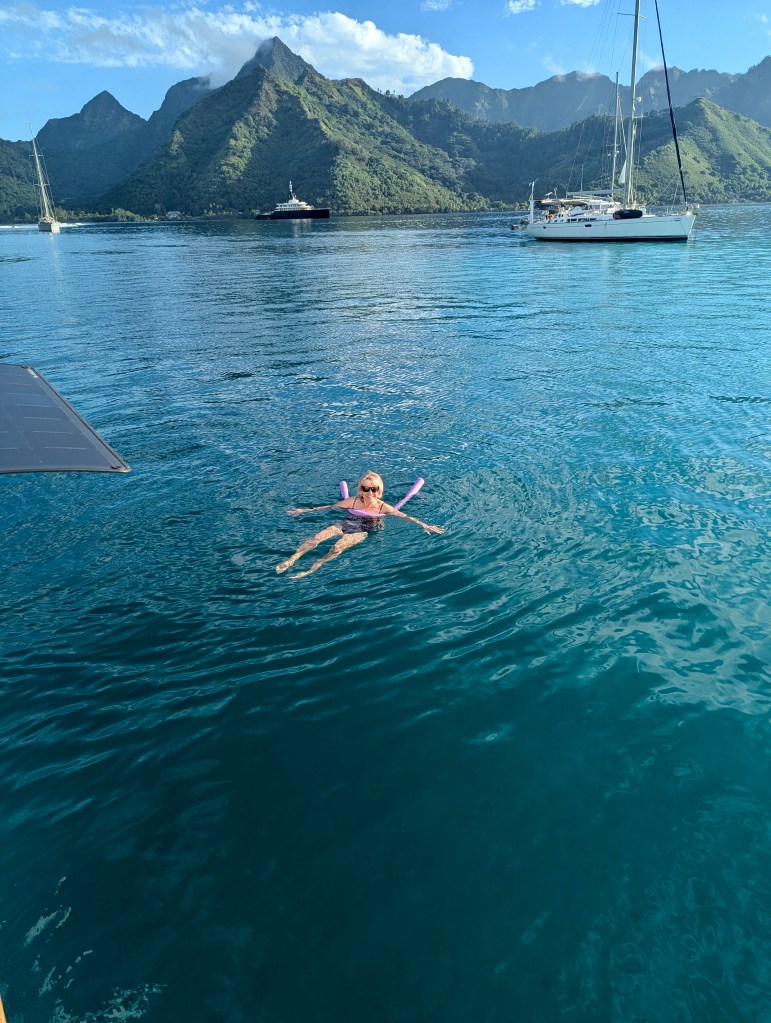
We walked back toward the public beach and went to a local poke bowl and smoothie restaurant. There was a long line, so we assumed it was good. We both got tuna poke bowls to go and headed back to the boat. After eating and relaxing we both went for a swim off the back of the boat.
Raitaea
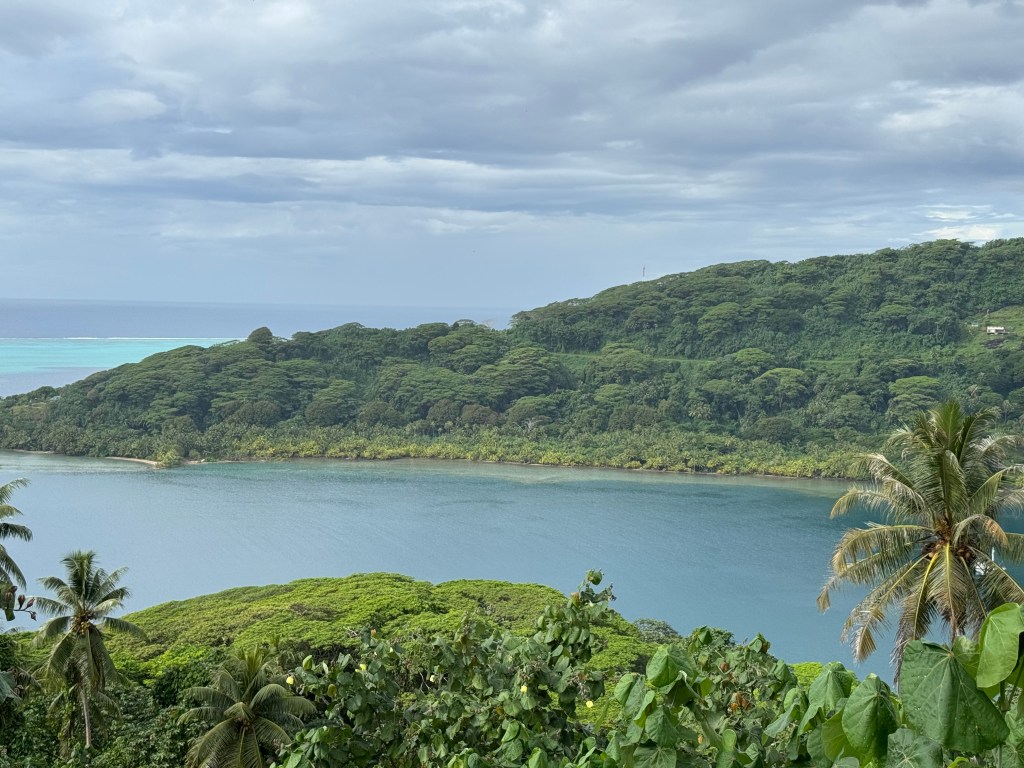
We left Mo’orea on July 7th, and headed to Raiatea. This was approximately a 16 hour passage and we left about 1:00 PM to ensure we don’t arrive in the dark. It was again a rough crossing with confused seas and winds. We didn’t sleep much but felt better as soon as found a place to drop anchor. We arrived about 10:00 AM on July 8th in Opoa Bay. We napped and took it easy our first day.
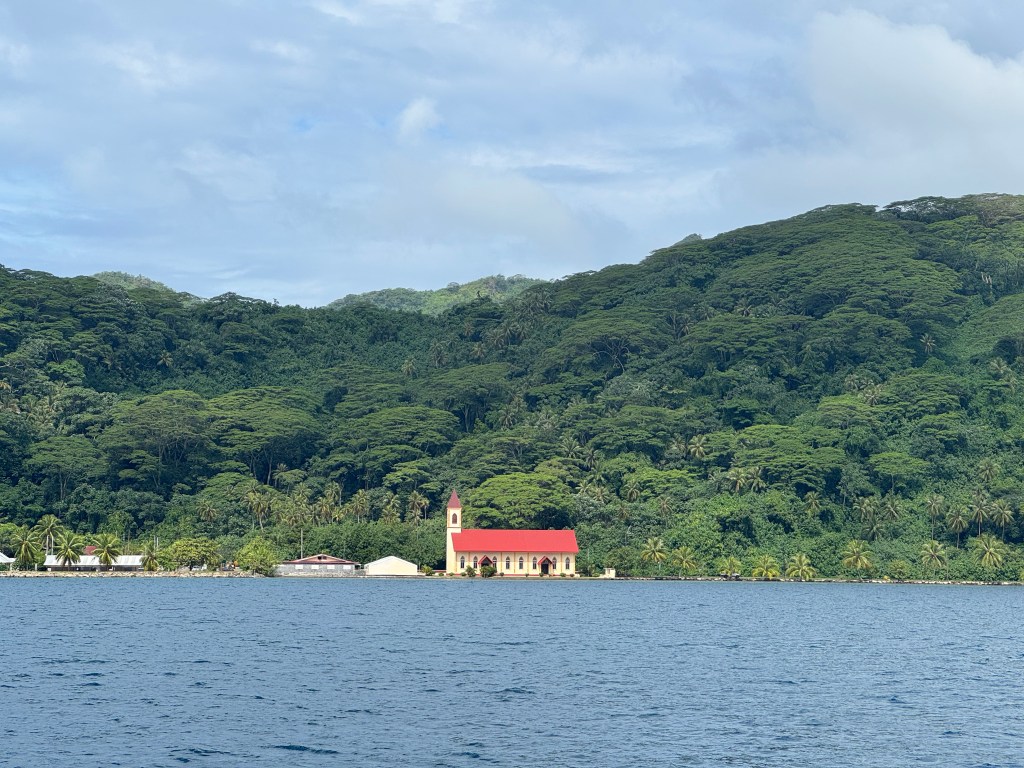
Raiatea, meaning “faraway heaven” and “sky with soft light” is a volcanic island in French Polynesia. It’s the second largest island in the Society Islands and holds significant cultural and historical importance, being considered the center of religion and culture in French Polynesia for over a thousand years. It’s also known as the “Sacred Island” and the “Birthplace of Polynesia,” according to Tahiti.com.
The island of Raiatea, part of French Polynesia, has a population of approximately 12,500 people. It is the largest and most populated island in the Leeward Islands. Raiatea is the second-largest of the Society Islands.
The next morning (July 9th) we went to shore to visit a UNESCO World Heritage site called Taputapuatea in Opoa Ra’iatea. We did a hike up to the top and saw great views. After the hike we walked around the various cultural sites.
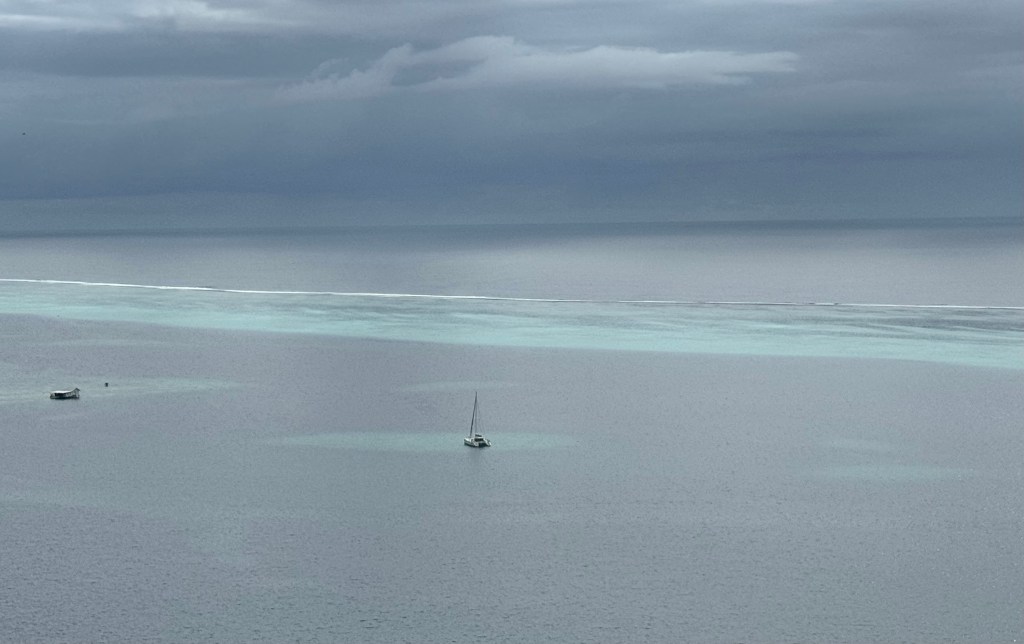
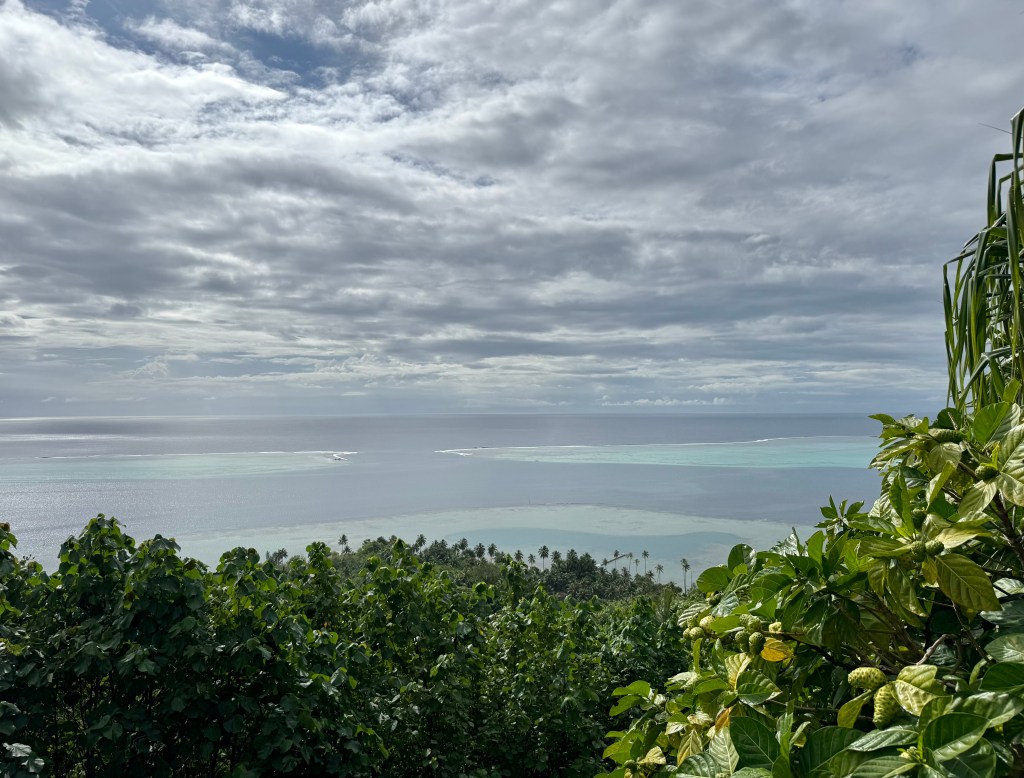
Taputapuātea is located at the centre of the “Polynesian Triangle”, a vast maritime area dotted with small remote islands between Hawai’i, Easter Island and New Zealand. A large oceanic territory called Te-Moana-Nui-O-Hiva, inhabited by the ancient Ma’ohi civilization. It is believed to be the last region to have been settled by human soicieties about 1000 years ago. A religious, intellectual, cutltural and political crossroads bringing together all the archipelagos of the Polynesian Triangel and beyond, Taputapuatea was the center of expansion and convergence of networks of lineage and sovereignty extending on a considerable scale, for centuries.
The remains of the site “Tahua Marae Taputapuateai Opoa” form an ancient religious, cultural and political ensemble that played a vital role in the immemorial history of the Ma’ohi people; it stretches over 14.82 acres, located between land and sea, on the tip of the Matahiraitera’I peninsula. Emblematic of the marae of the great chiefdoms who genealogies date the most ancient ones back to well before the 10th century, the history of this high place begins with the cosomongic myth and the creator god of the ma’ohi universe, Ta’aroa-Nui, and takes us to its last period with the god ‘Oro, whose cult was widely spread in Eastern Polynesia. Many marae Taputapuatea were founded on important islands in this vast oceanic expansion network, from an original stone of Taputapuatea i Opoa.
Marae
Marae are sacred, ceremonial and political paces of worship, of which the first mythical one was built by the Great Creator Spirit of Ta’aroa-Nui. The last marae constructions by the Ma’ohi people date between the 14th and 18th centuries. In the Society Islands, Marae generally have a quadrilateral paved courtyard, with a rectangular platform called ahu standing at one end.
Taputapuatea cultural landscape
The archaeological site “Tahua Marae Taputapuatea I Opoa” is at the heart of the Cultural Landscape inscribed on the World Heritage List. The entire property is bounded by natural elements carrying symbolism, and extends from the Te-A’e-Tapu Summit to beyond the Te-Ava-Mo’a sacred pass, including the Toa-Hiva and Toa-Tapu bays, the Fa’a-o-Hiva, and Fa’a-o-Hotopu’u valleys and the famous Matahiraitera’I Peninsula which harbors the large marae on it tip.
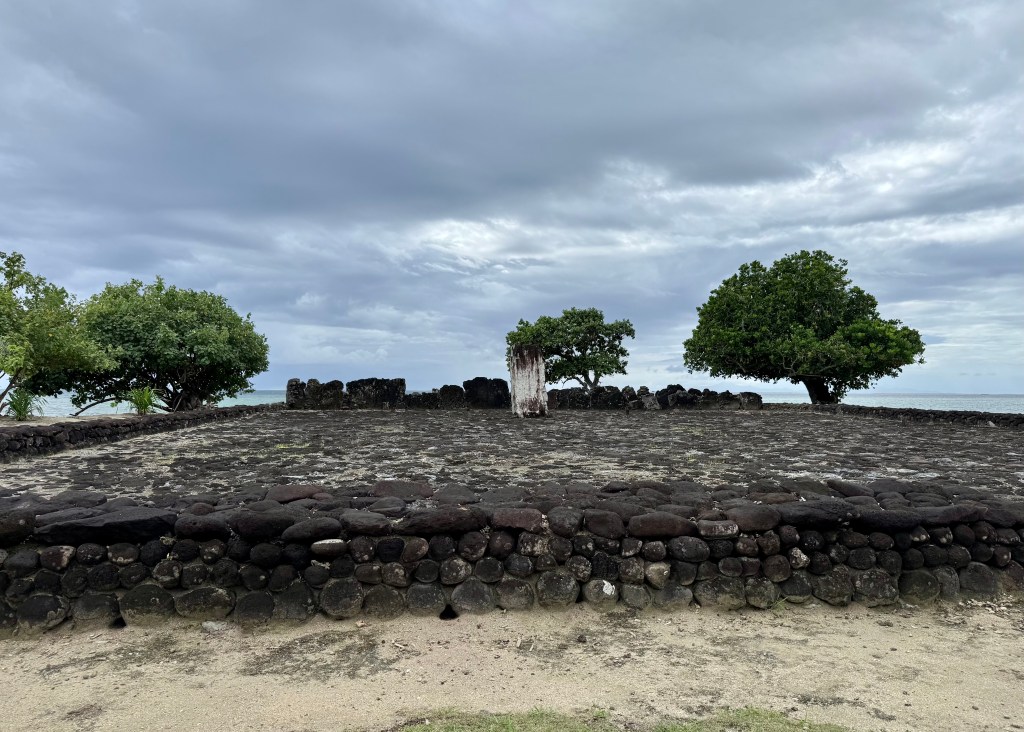
The marae Hauviri was the investiture temple of the paramount chiefs of the Tamatoas’ great lineage that would rule the Leeward Isalnds until Christianization.
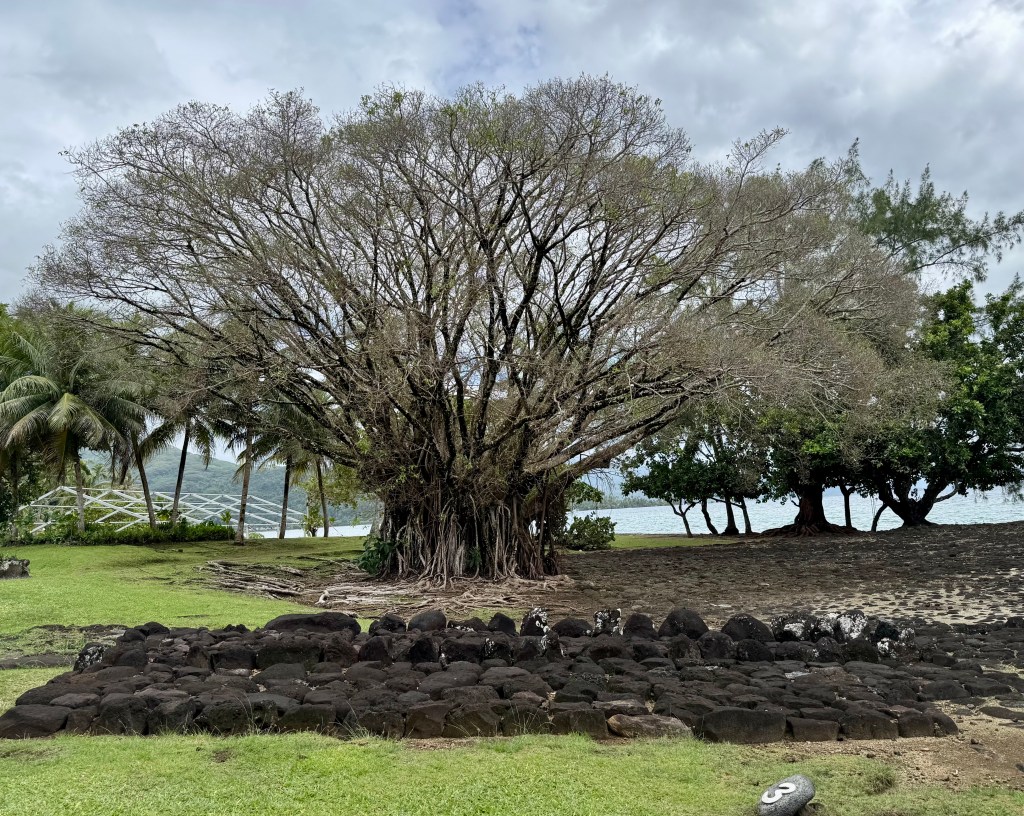
The marae of the Tau-‘aitu or Hititai was where ascetic priests consecrated the rites of the rahui watched over the image of the god (to’o) and fed the two guardian sharks of the sovereigns. Human sacrifices were perpetrated on the Ofa-i-tapu-ta’ata’ stone placed in front of the courtyard.
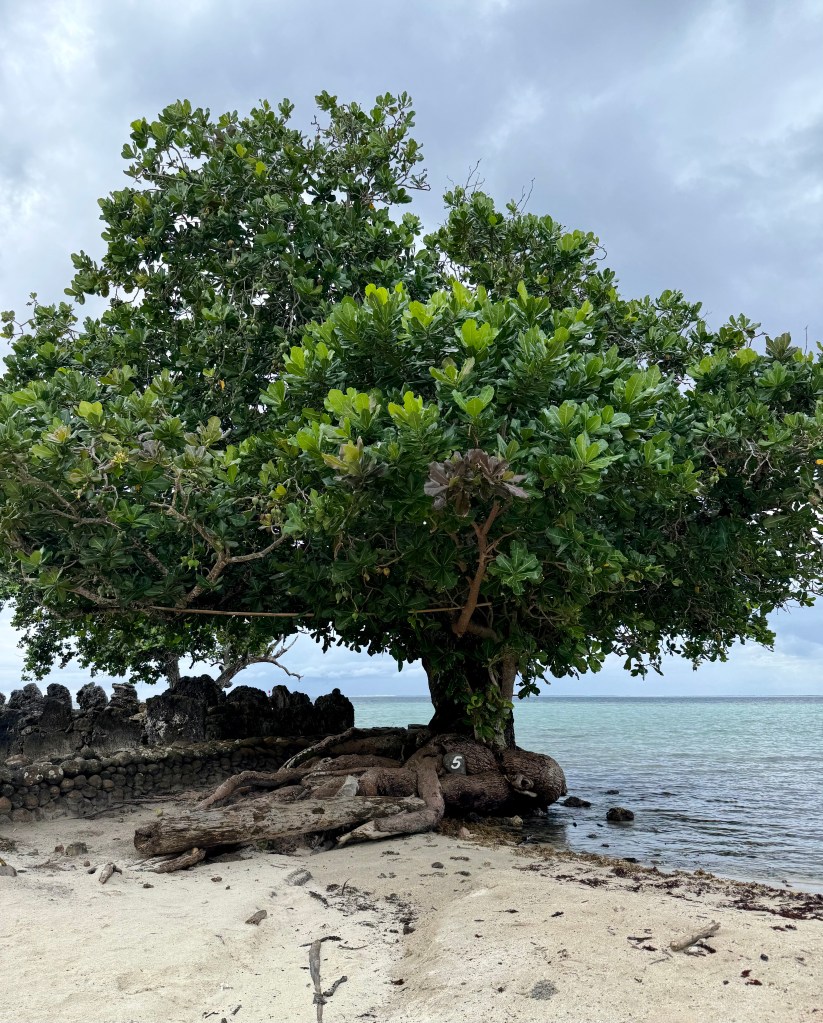
The Taura’-tapu Beach was where the large canoes of the allied or younger chiefdoms, invited to major inter-island gatherings or returning to their origins, besides their elders to renew alliances or share and acquire knowledge, drew up.
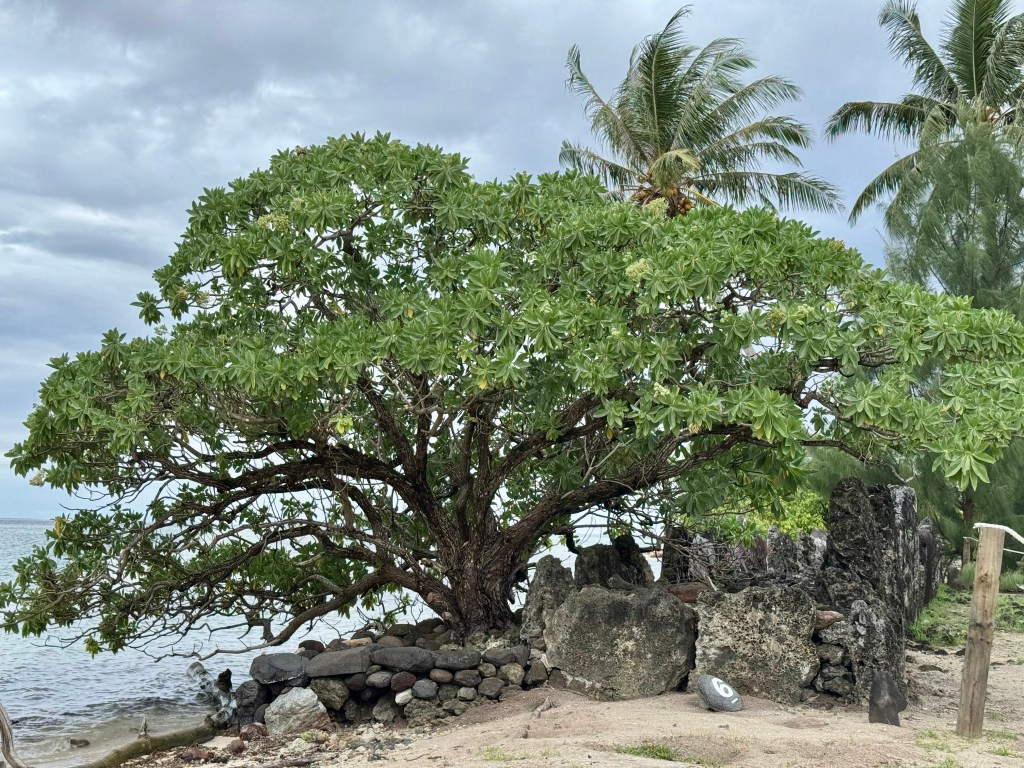
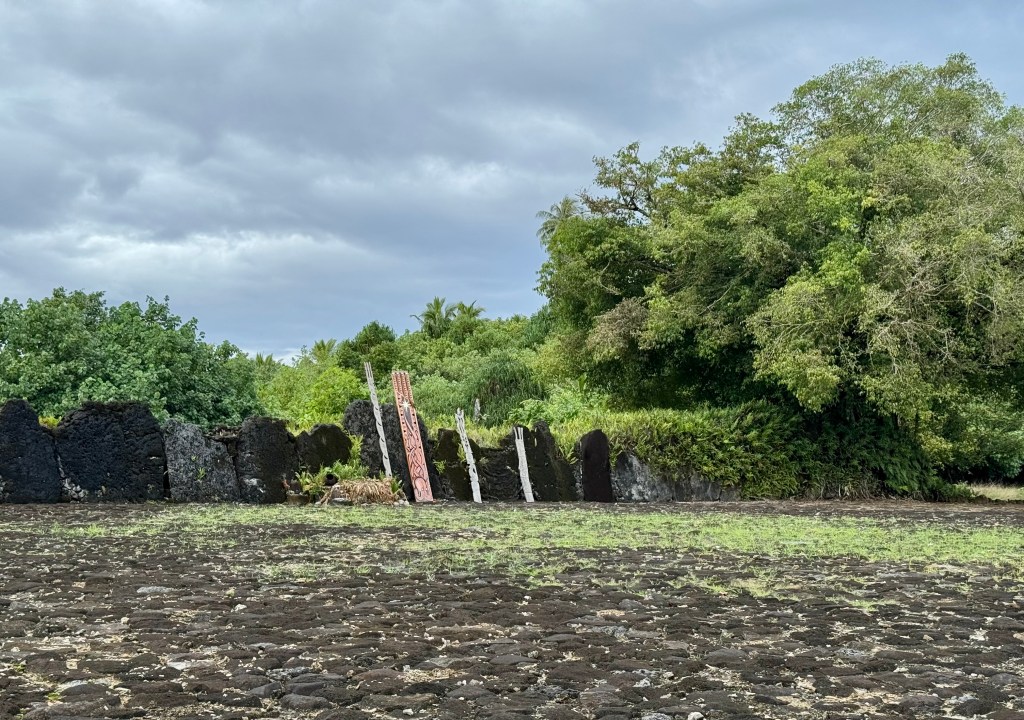
The great marae Taputapuatea is the most emblematic and deified element of the site. Erected in primordial times as a founding marae by the creator god Ta’aroa, it would be dedicated to the god of peace and war.
Raiatea
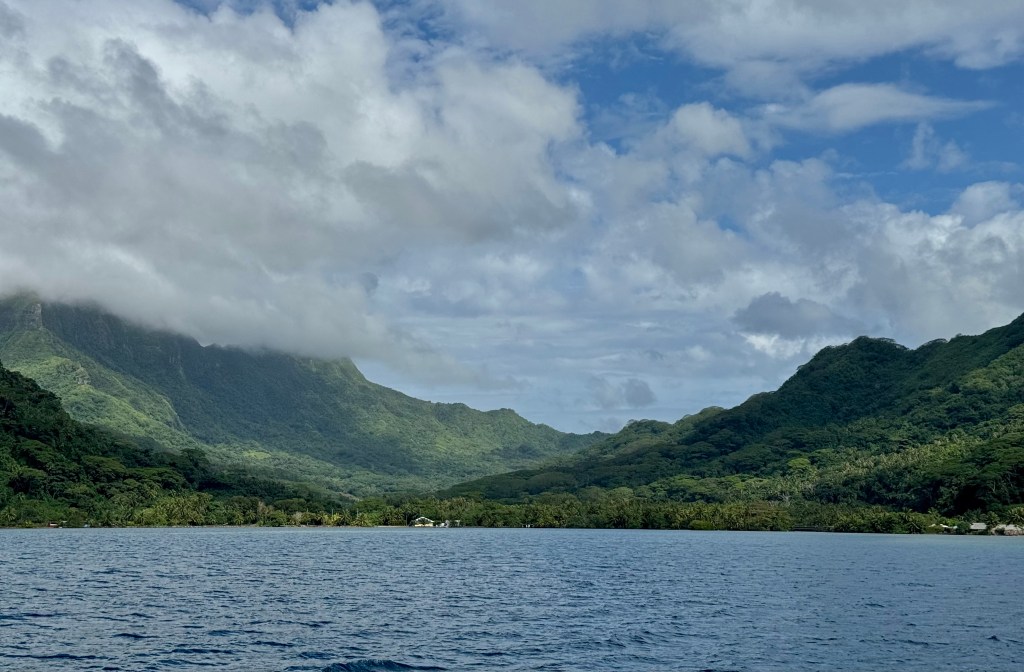
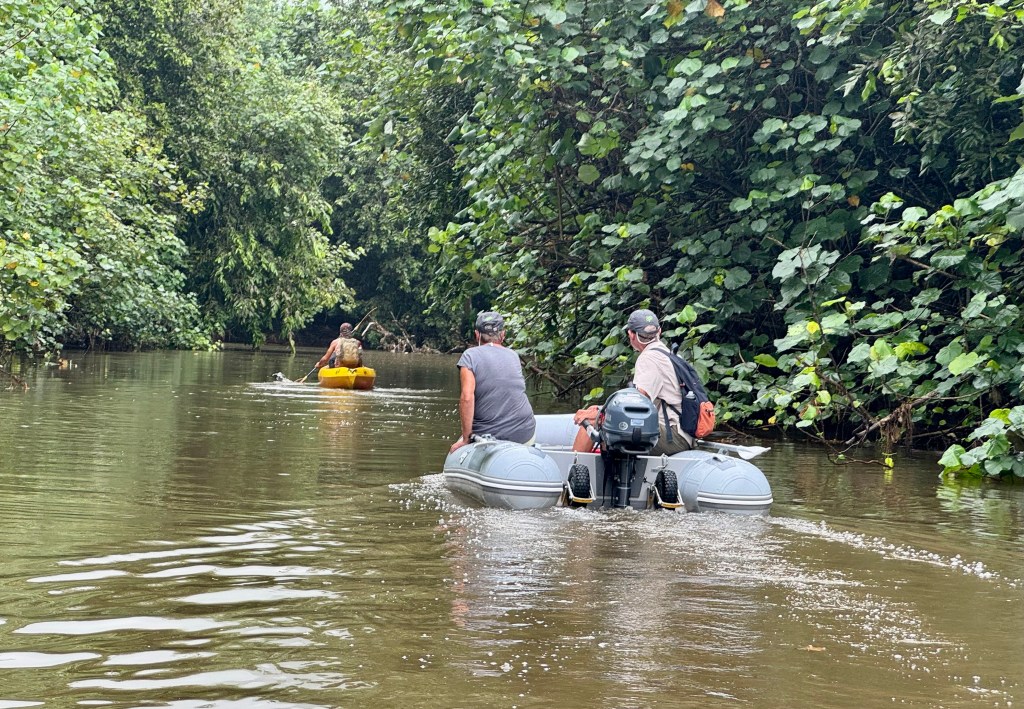
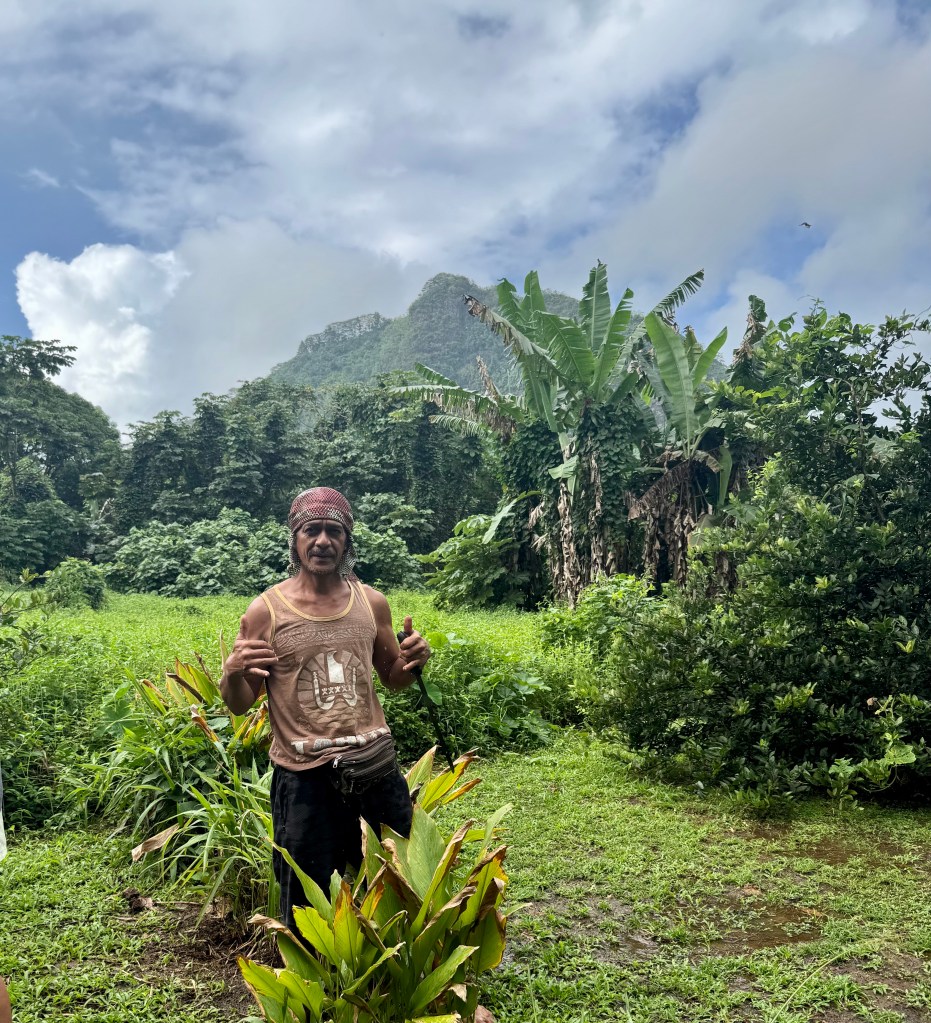
We left for another anchorage soon after our UNESCO tour and headed to another spot on Raiatea called Faaroa Bay. It only took us an hour to get there. We met up with cruiser boats, Kallisti and Polaire Bear and took a tour of fruit farm hosted by Andre. He met us in Faaroa river traveling by Kayak and we were traveling by dinghy.
The river is located on the eastern side of Raiatea, flowing into Faaroa Bay. It is the only navigable river in French Polynesia. The river winds through the lush interior of the island, offering a scenic route through dense tropical vegetation.
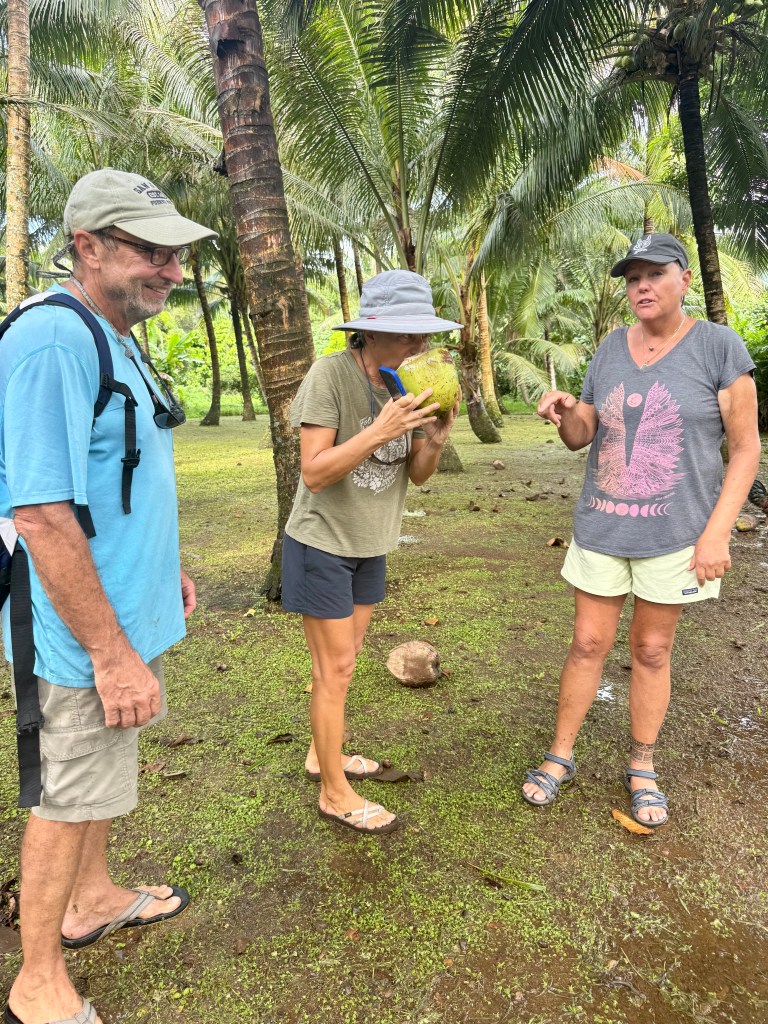
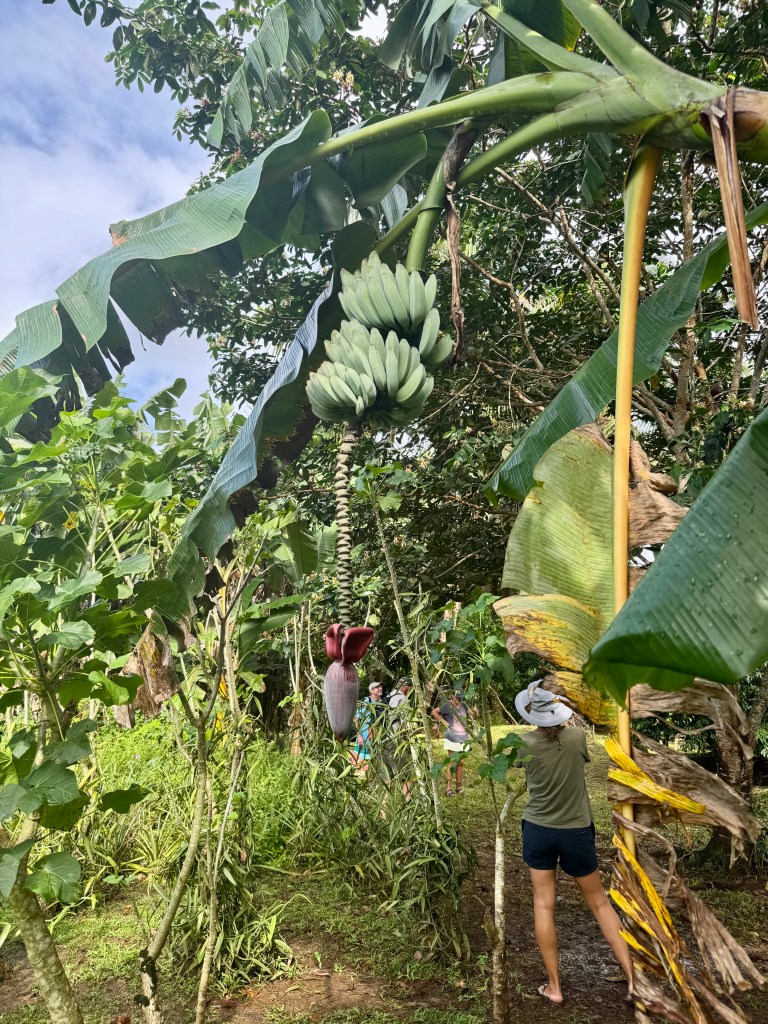
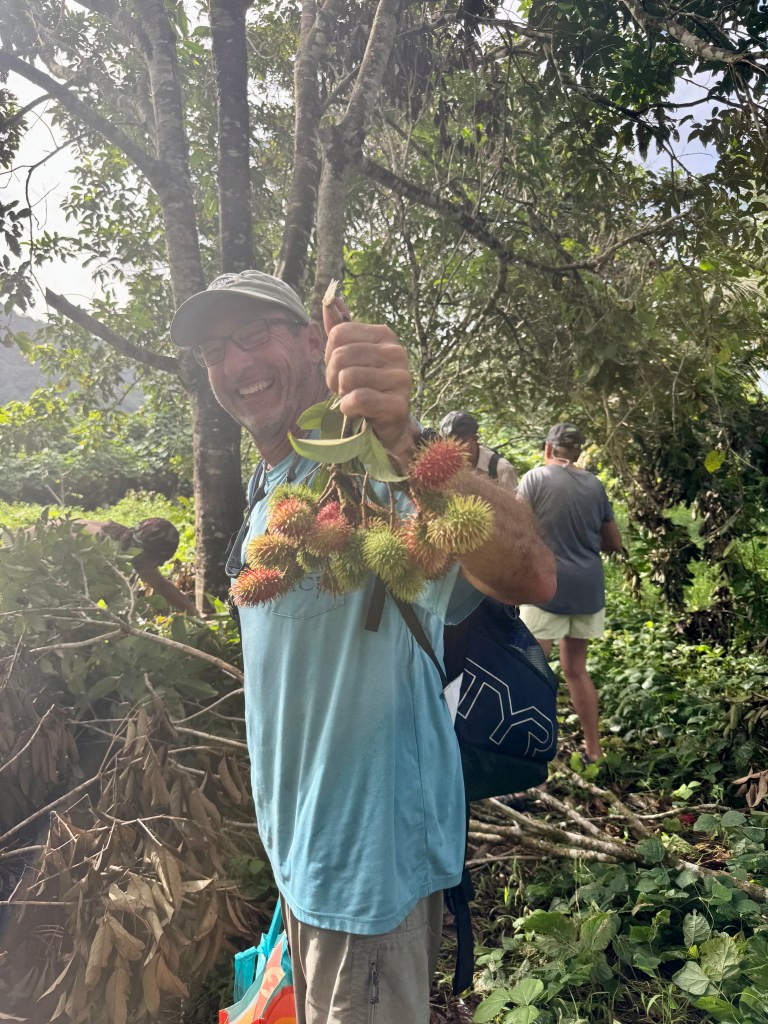
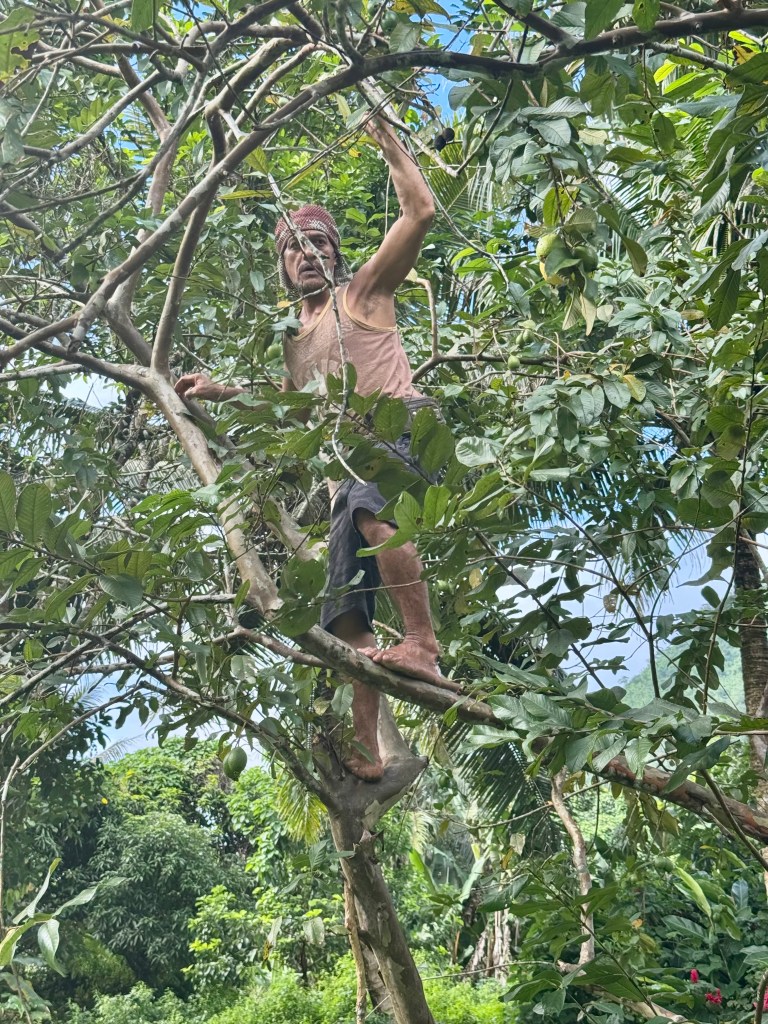
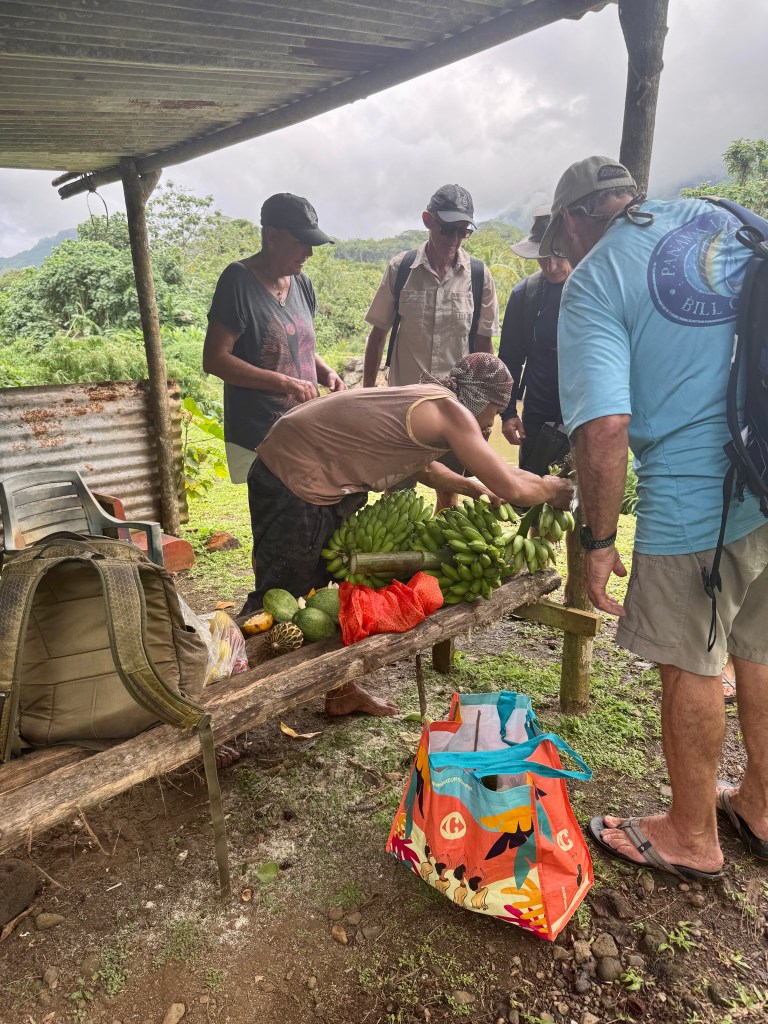
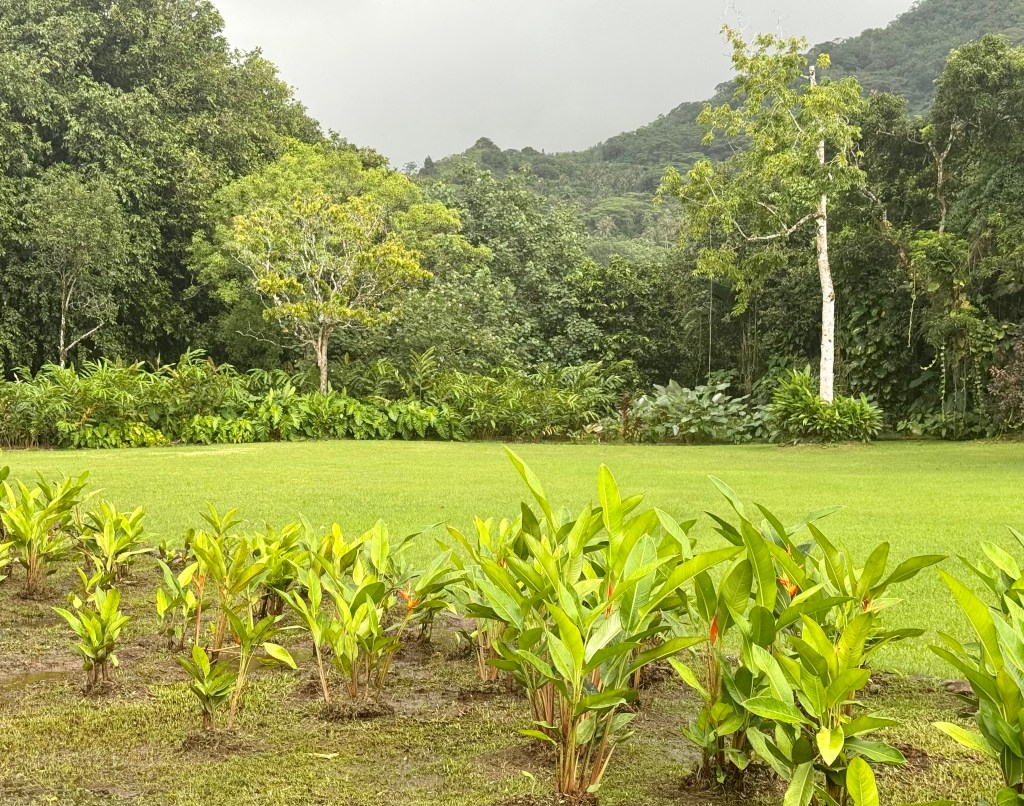
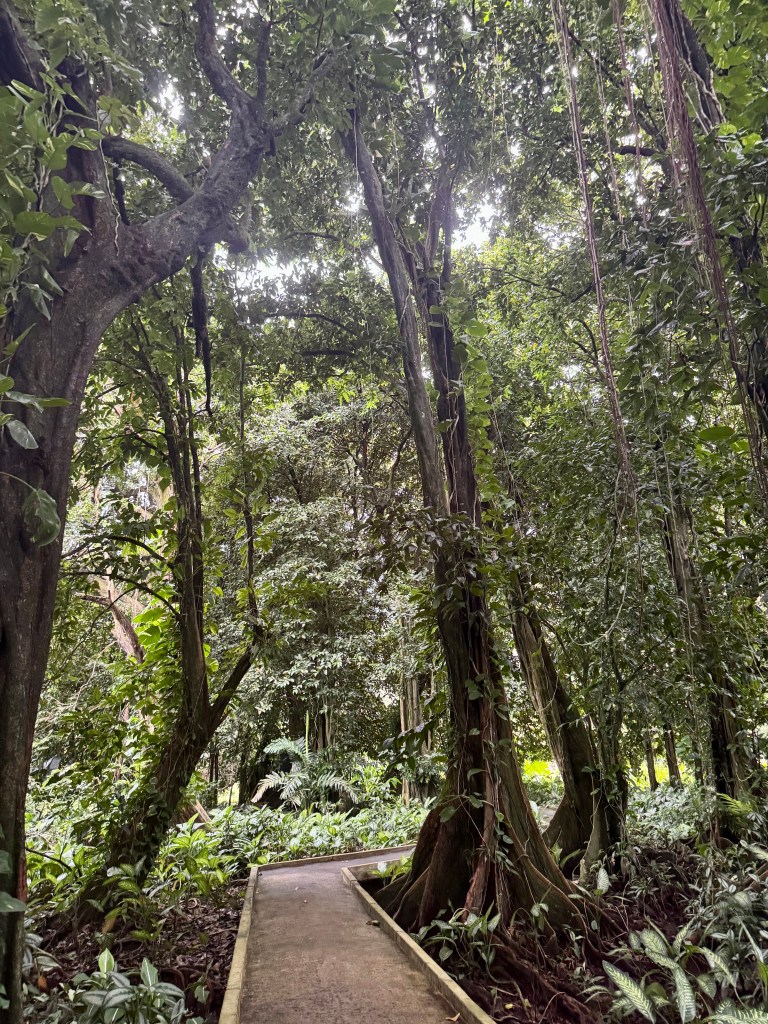
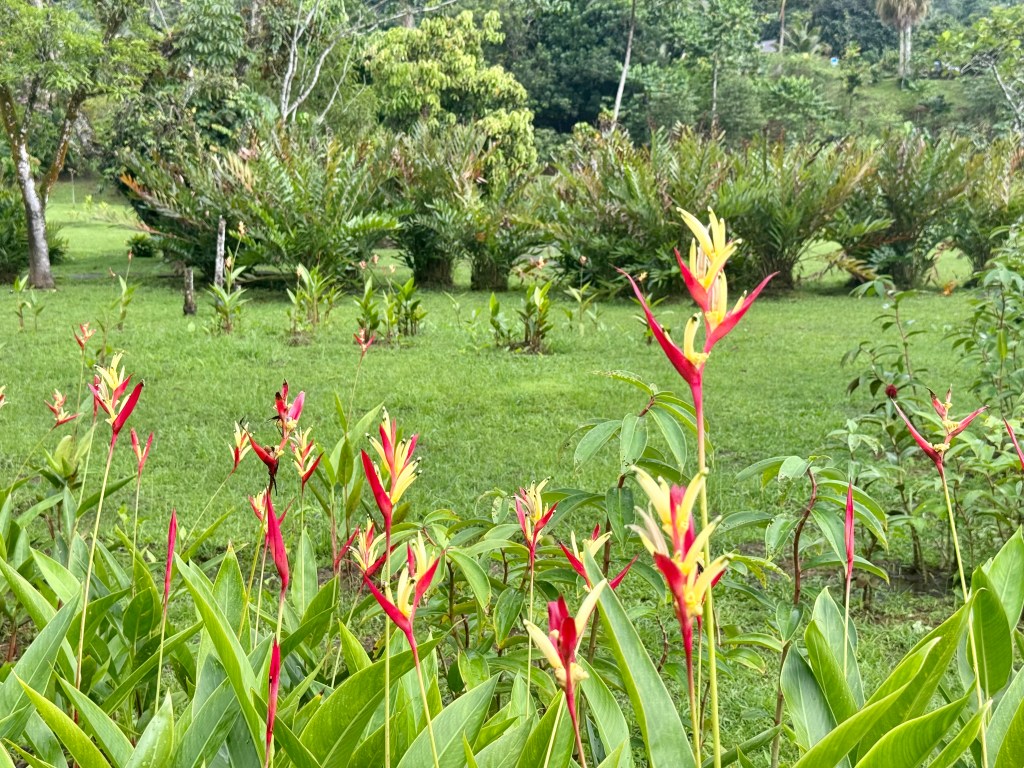
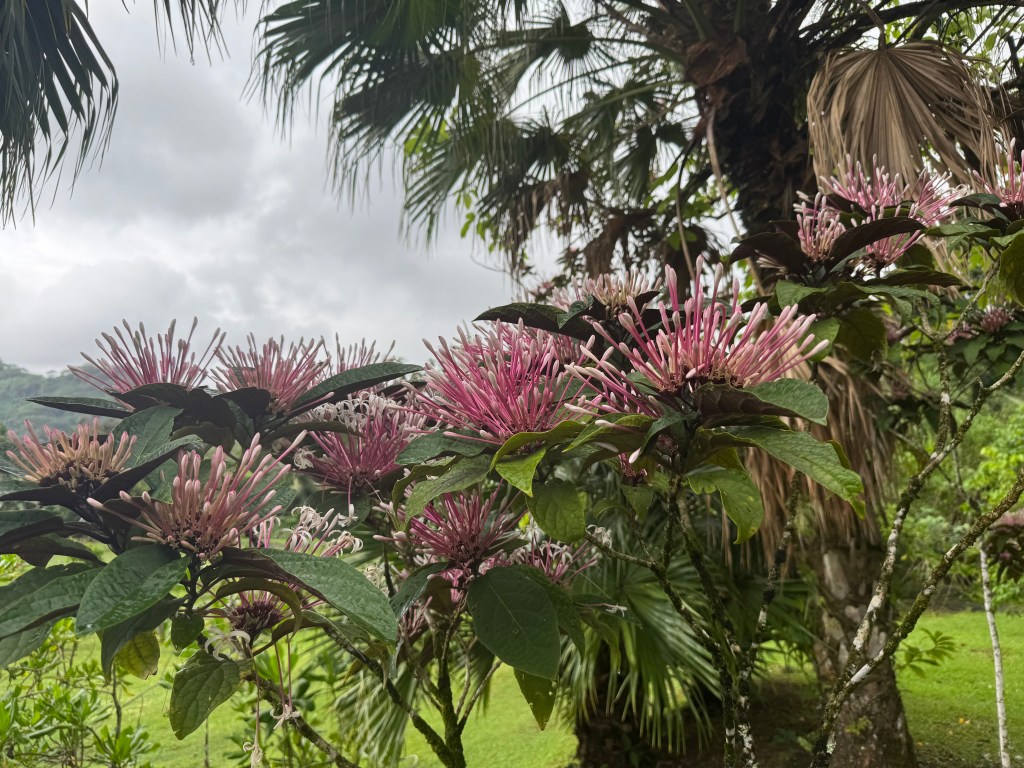
Andre was waiting for us and eager to help us ashore. His farm boasted star apples, lychees, bananas, coconut, passion fruit, guava, green beans, vanilla beans, turmeric, breadfruit, Polynesia papaya’s seedless variety. . pampelmousse, rambutan (Lychee’s fuzzy cousin), abiu which looks like a lemon, He provided samples and he climbed the trees to harvest the fruit as needed. We ended up with several bags of fresh fruit which we split among the 3 boats. After touring the fruit farm we went across to the other side of the river and walked through a lovely botanical garden.
Later on, we all met on SV Polaire Bear to divy up our fruit and enjoy happy hour.

Taha’a
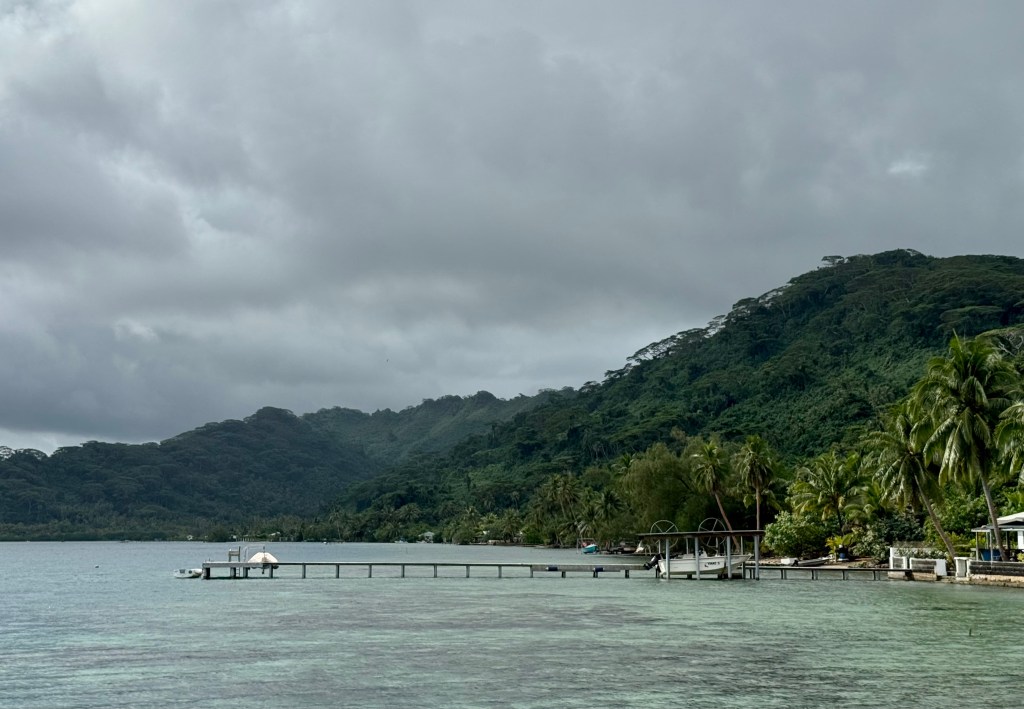
We left July 11th and headed to Point Toamaro on the Island of Taha’a. We enjoyed a beautiful sail that took us approximately 2 hours. We are only here for one night and glad we were able to make it even if our stay is short.
Taha’a is also known as the Vanilla Island. Its fertile land and climate produce what chefs and gourmets around the world think is the tastiest, most fragrant vanilla on earth. Tahitian pearls are also produced in Taha’a.
The island offers a more laid-back and authentic Polynesian experience compared to some of its busier neighbors.Visitors can enjoy breathtaking views of Bora Bora on the horizon, especially during sunset.Taha’a is surrounded by a coral reef, creating a calm lagoon perfect for water activities such as snorkeling and kayaking.
Taha’a, formerly named Uporu, has a rich cultural heritage, with ancient Polynesian marae (temples) and traditions still present on the island. An ancient tradition called “rock fishing” (tautai-taora in the local language) was once popular on Taha’a and is still practiced during the October festival.
The local economy is based on fishing, vanilla and pearl farming, and tourism,
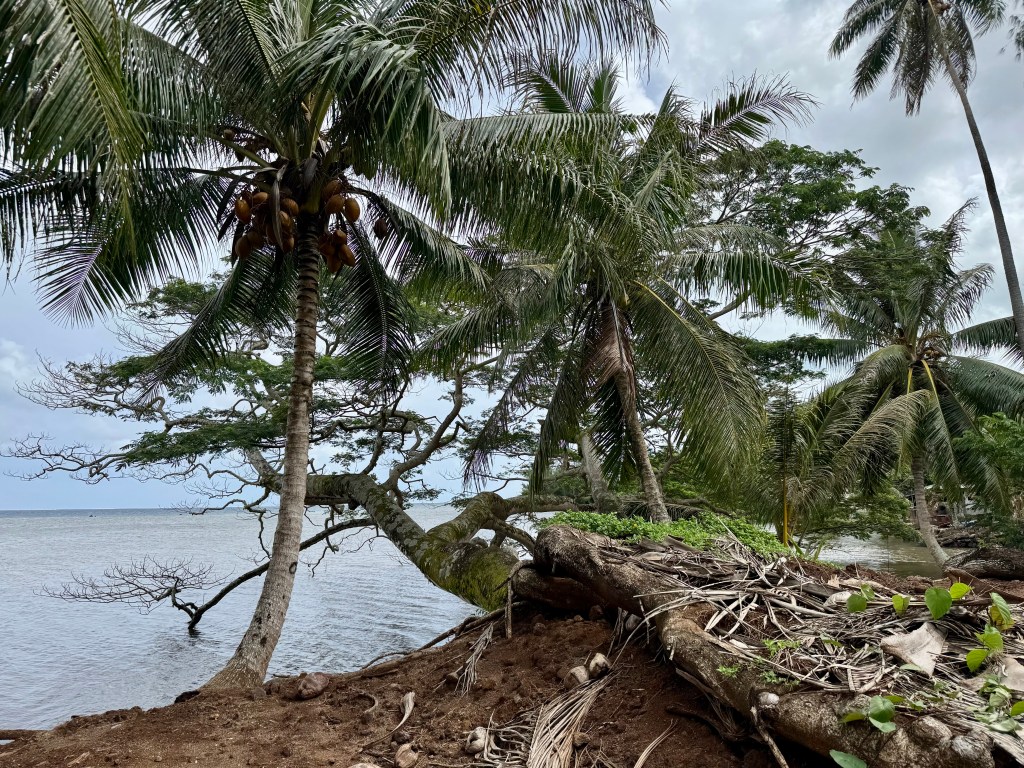
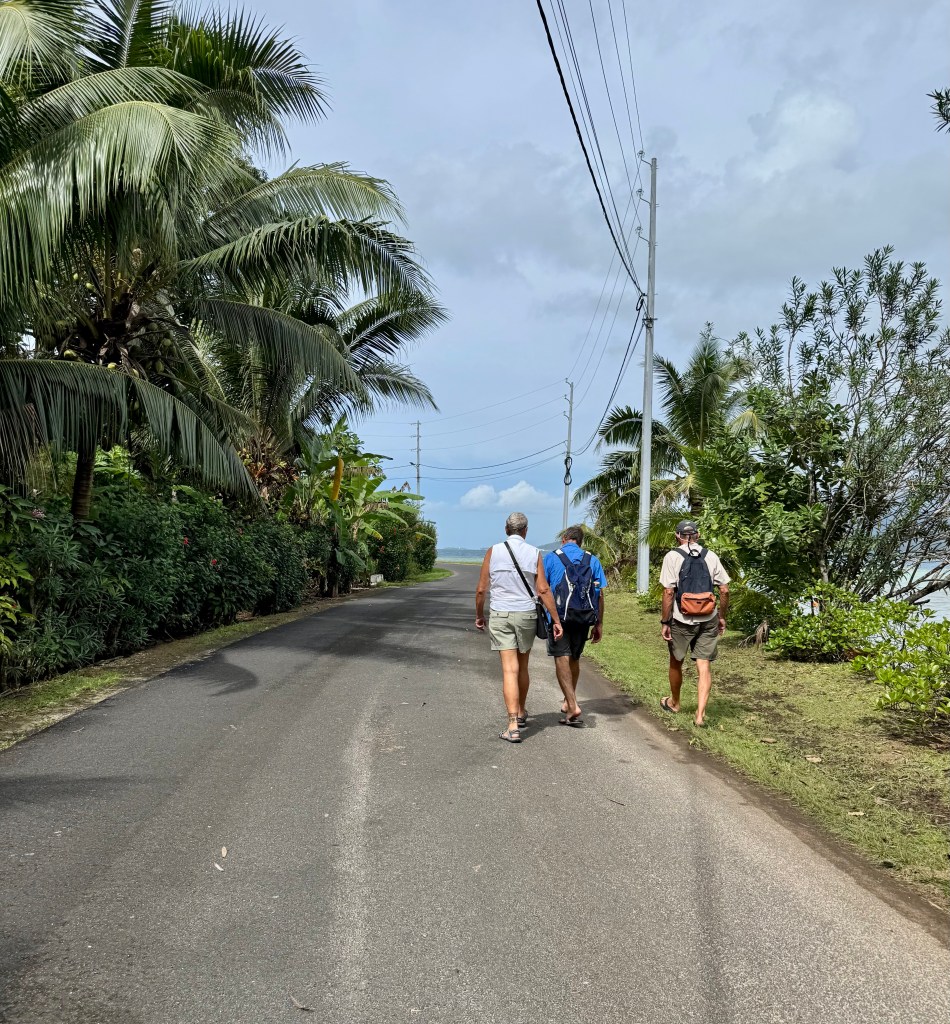
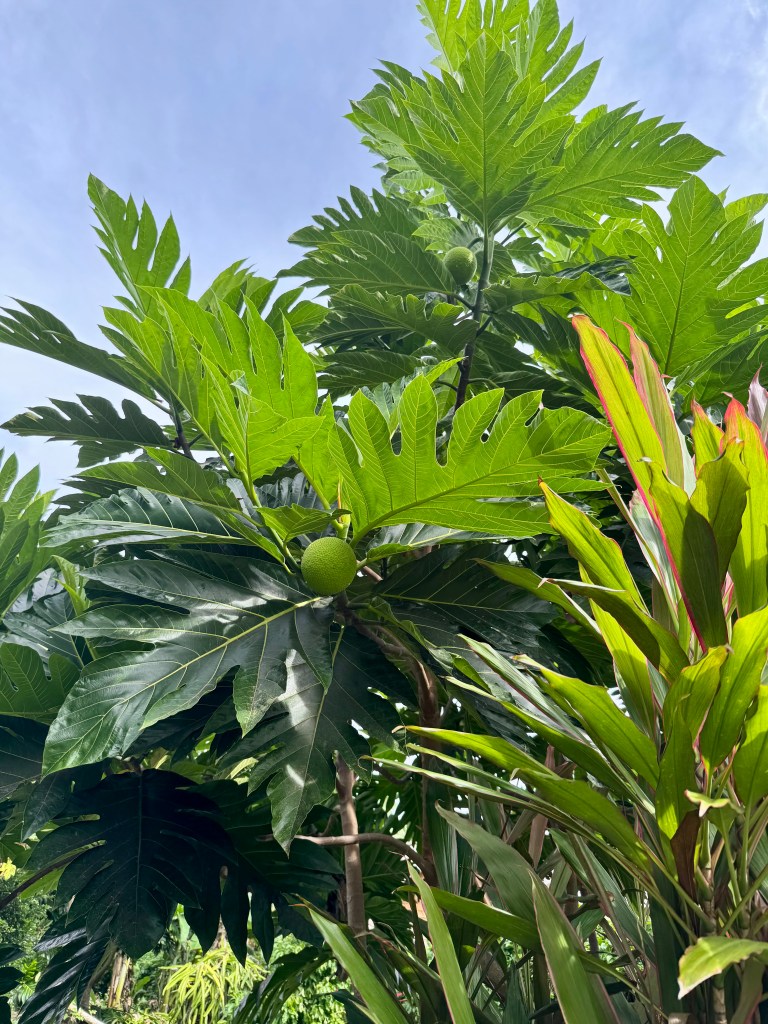
We signed up for a Champon Pearl Farm tour in the afternoon.
Champon Pearl Farm is a family-run pearl farm that has been in operation for over 20 years.Originally founded by Bernard and Monique Champon, the farm is now gradually being taken over by their children, Aymeric and Maeva. Aymeric, who has managed the production side of things for over 15 years, has now acquired a certain expertise and still maintains the same goal of prioritizing quality over quantity. Maeva, after a master’s degree in environment, is in charge of various projects in partnership with research institutes such as IFREMER ( French Research Institute for the Exploitation of the Sea), CRIOBE(Island Research Center and Environmental Observatory) or the DRM (Directorate of Marine Resources of French Polynesia) for the improvement of production techniques.This is to make our farm more ecological and sustainable by improving the quality of the pearls.Our farm is a small structure with a young, local and dynamic team focused on improving the quality of pearls with a view to sustainability.
Attention paid to the environment
We want to have the least possible impact on the environment and that is why we have chosen to develop more sustainable production methods.
In particular, we are moving towards natural oyster cleaning rather than manual cleaning, which can be harmful to the environment and is still commonly used. Indeed, we have encouraged the establishment of a colony of small fish that “gently” eliminate the parasites that disrupt the growth of mother-of-pearl.
We also limit the number of oysters we farm so as not to disrupt the lagoon’s natural ecosystem. We work with the seasons to optimize:
- the pearl oyster grafting operation
- to avoid stressing them as much as possible
- to ensure a better retention rate
- better quality pearls.
Finally, a water harvesting and solar energy production project is also under development. Our goal is to achieve a production method that is in symbiosis with the rich environment that surrounds us. Source: Champon Pearl Website
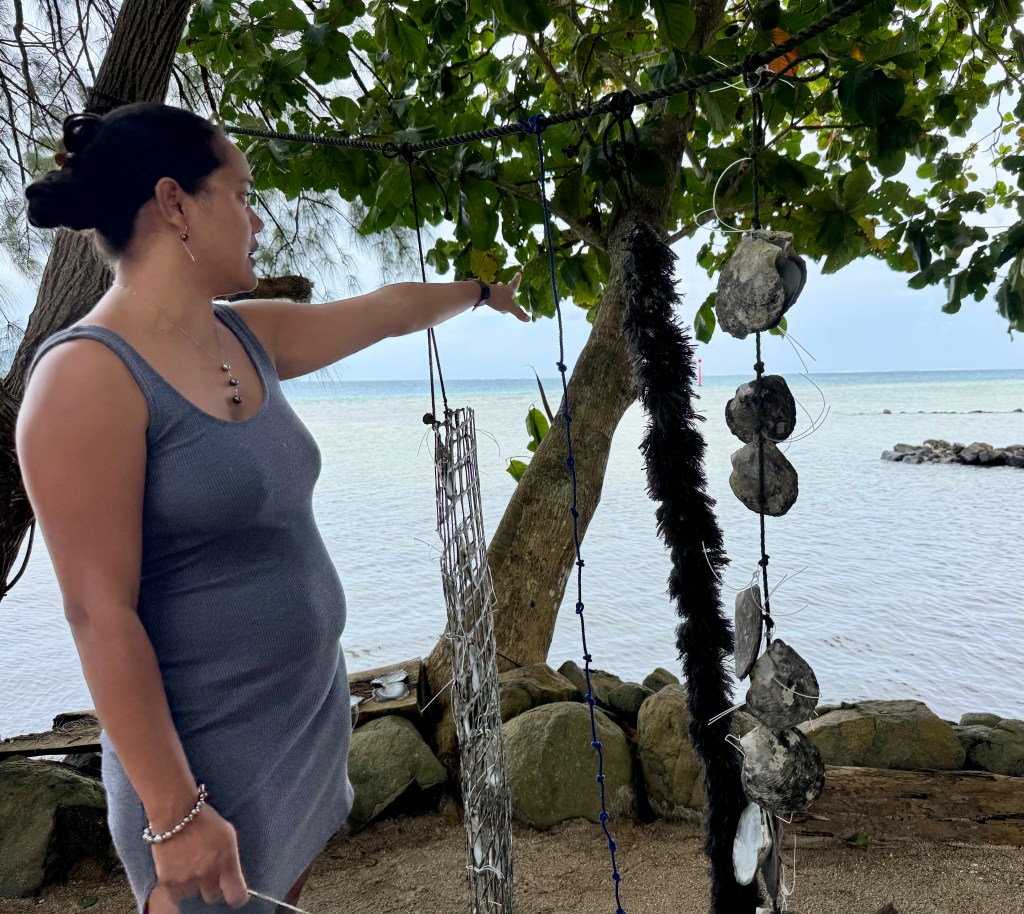
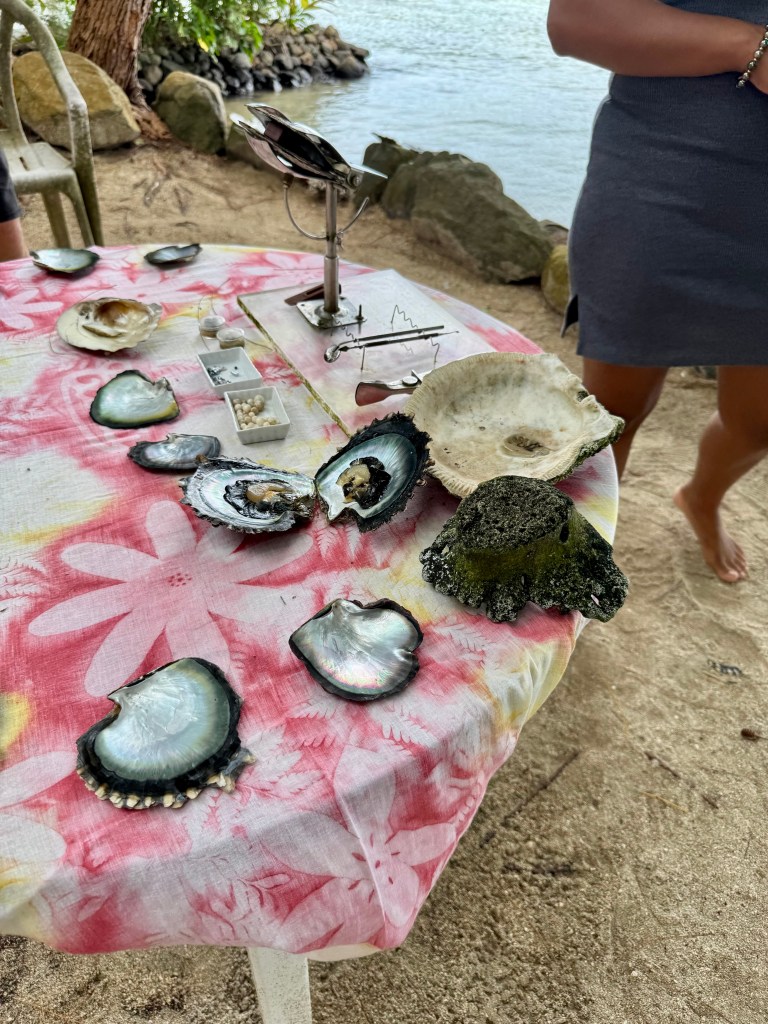
Our guide talked about their unique process of harvesting pearls. It was an interesting tour and we were all impressed by her knowledge and passion. The pearls were exquisite.
The next morning, July 12th, we left for Bora Bora.
 SV Quid Sea - Sailing with Tracy and Cindy
Pictures are great! Love to read about your adventures!
LikeLike
Wow… amazing and beautiful stuff you’re experiencing, what a month of July you’ve had! Continuing to enjoy reading every bit of it, along with those photos.
Our oldest son is getting married on Friday night. Our family is growing….. 🙂
Looking forward to the next updates!
LikeLike
This is Peggy Sagers. Rockey and I are neighbors of Mark Ward. You’ve been kind enough to take us out on your sailboat a couple of times for the Christmas lights. I’ve been following your blog and I wanted to reach out and tell you how much I’m enjoying it and how much I’ve learned. Your pictures are wonderful; I feel like I’m living vicariously through you.Thank you for sharing your adventures and safe travels. Peggy
On Sun, Jul 27, 2025 at 10:37 PM SV Quid Sea – Sailing with Tracy and Cindy
LikeLike