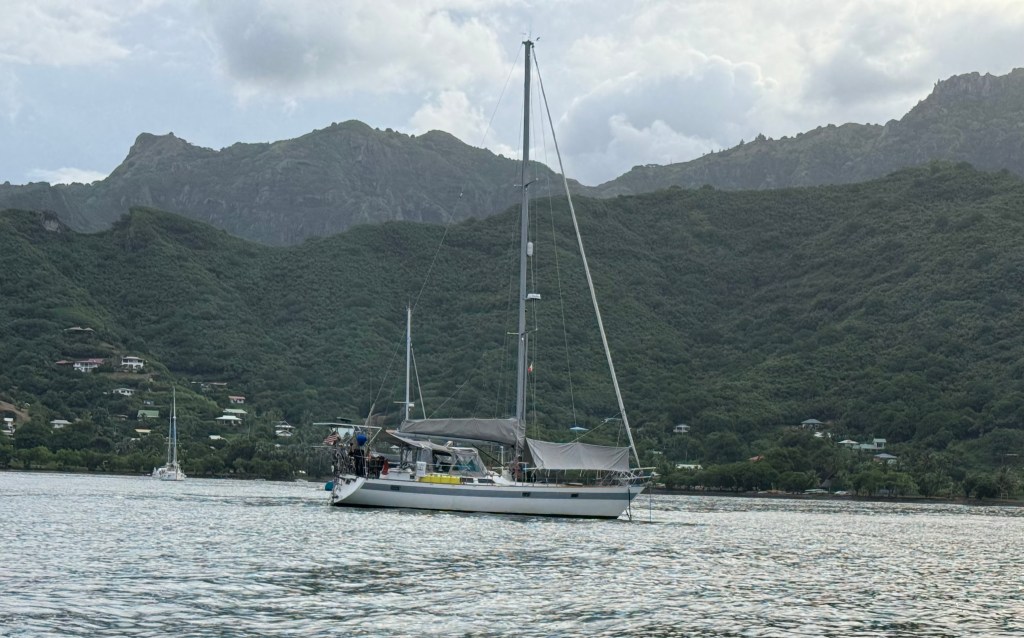
We left on Tuesday, May 6th at 1:00 in the afternoon for our passage from Hiva Oa to Nuku Hiva. We left later in the day to avoid arriving at night and were able to sail most of the way at various speeds depending on the wind. The engine was turned on for a couple of hours to make water. We set anchor in Nuku Hiva at 11:00 AM on May 7th.
Taioha’e Bay is much larger than Atuonan Bay in Hiva Oa and we were able to find a good spot and only had to move once because a neighboring boat thought we were too close. So being a good neighbor we agreed to move.

Nuku Hiva is the largest Island and the capital of the Marquesas Islands. The population is 3,025 as of the 2022 census. Residents are mostly Polynesian with a small proportion of Europeans, mostly from Metropolitan France.
The primary diet of people tends to be breadfruit, taro, manioc (a starchy root vegetable), coconut and many kinds of fruit, which grow in abundance. Goats, fish and, more rarely, pigs, are the main sources of meat but there is a growing amount of local beef available. Imported food is also available, including apples, grapes, celery, and even sliced bread from New Zealand. Considerable amounts of rice are also eaten. There is a large population of wild pigs on the island which are a cross between the Polynesia pigs brought by the first settlers from peninsular Southeast Asia and the wild boars brought by the Europeans.
Most of the the island’s population, as is the case in the Marquesas Islands, is Christian because of European colonization and the activity of both Roman Catholic and Protestant missionaries.
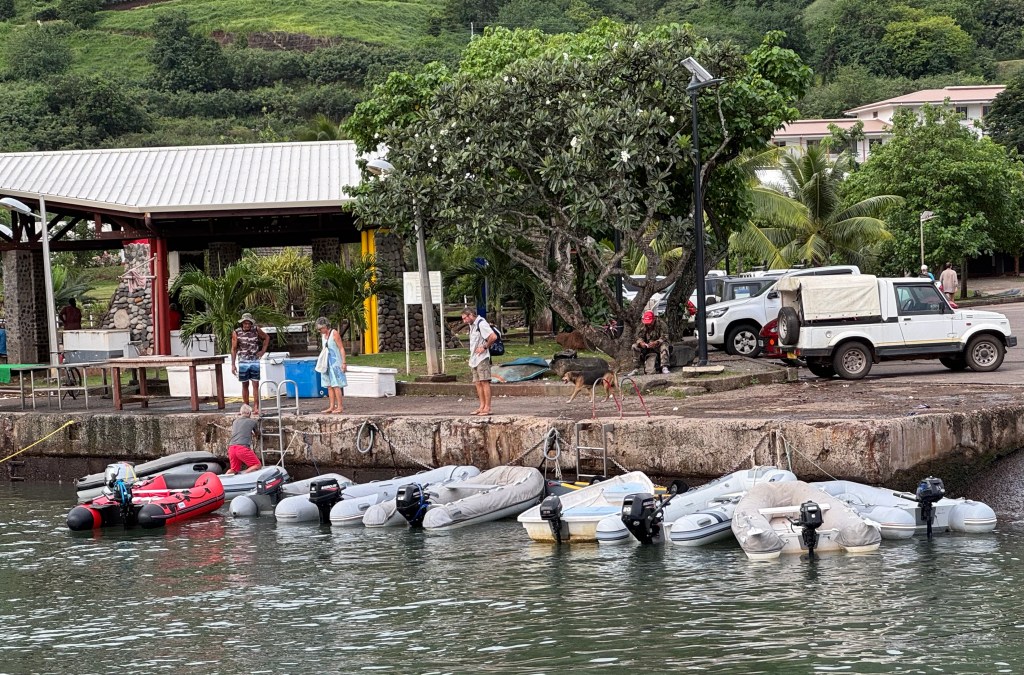
We explored town on our first day, which was easily done in an afternoon. We found 3 good grocery stores along with a fresh market in the town square area. Fresh fruits and vegetables are limited and if you find something of interest, don’t hesitate to buy it or someone else will. We found apples, pears, bananas, potatoes, cucumbers and green beans at the fresh market. Dinner was pizza out at a restaurant called Moana Nui. It was a bit different from what we’re used to, but still tasty. It’s hard to mess up pizza.
It rained continuously May 8th and 9th and we stayed on the boat to keep dry. We experienced quite a down pour and because we dinghy to shore and walk everywhere, there’s no escaping it. On the bright side, the boat got a good washing, and we were able to find all the leaks. The mast that runs through our dining table was the most annoying. We had to wrap towels around it to absorb the water and change them twice daily. This will be a project for Tracy to solve later. A couple of smaller leaks showed up but were easier to manage.
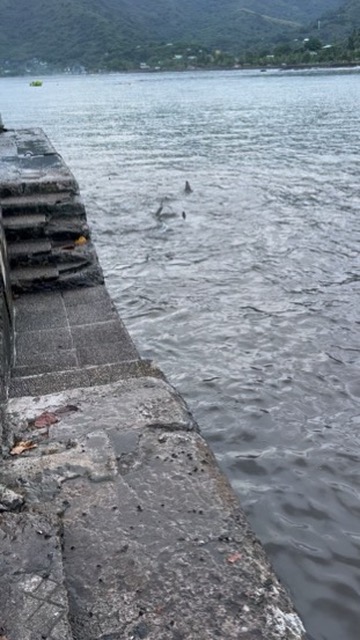
See video.
On Saturday, May 10th the sun returned, and we decided to rent a car for the day and drive around the Island. The car was a very small Renault and the person who rented us the car assured us that it would be able to get us up the curvy, mountainous roads. We were thrilled it had air conditioning and at one point we talked about sleeping in the car! Driving was an adventure and part of the time I had my eyes closed. Thankfully, Tracy was driving. It was recommended to drive to a town called Hatihe’u and then reverse course. This is about as far as you can go before the roads turn to dirt and we were told our car would not make it through the mud from all the rain.
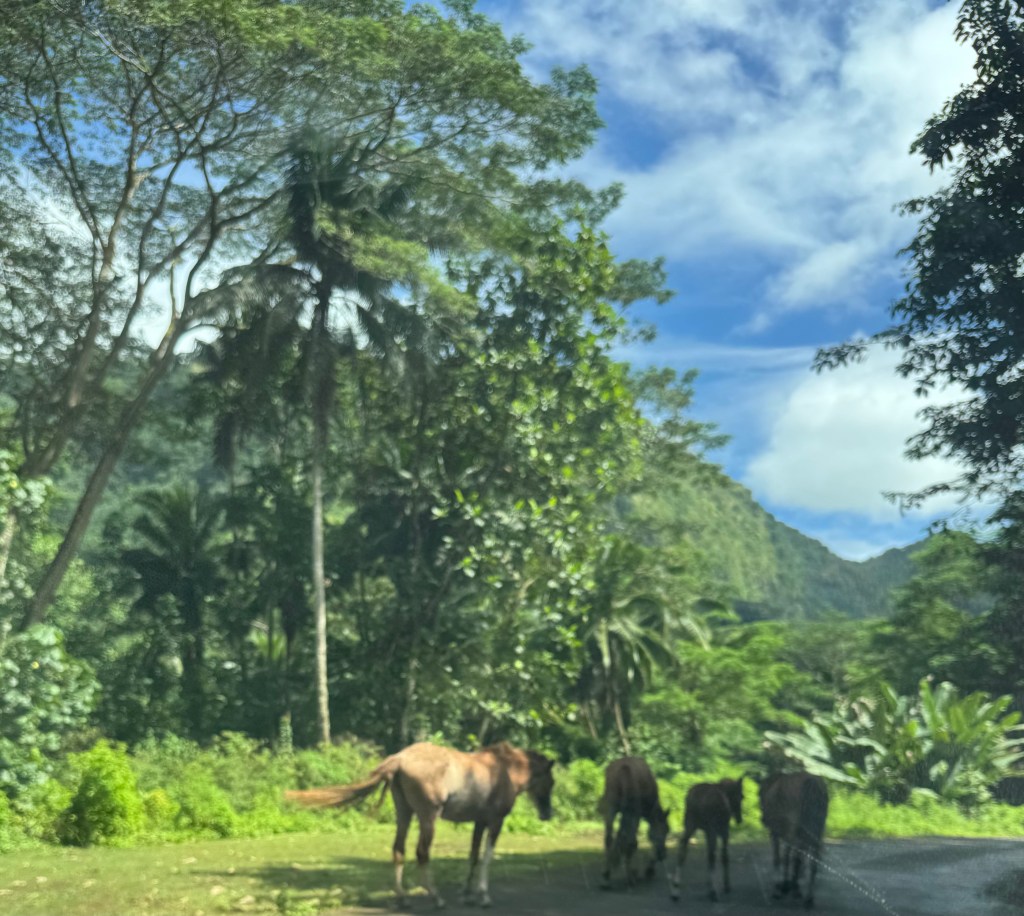
The countryside is very green and lush, and we saw numerous horses, goats, cows and pigs along the roadside. Most horses and cows were tied up along the side of the road. Everything else ran free and you had to keep a close look out for goats darting across the road. We learned horses were brought here from Chile in the 1800’s.

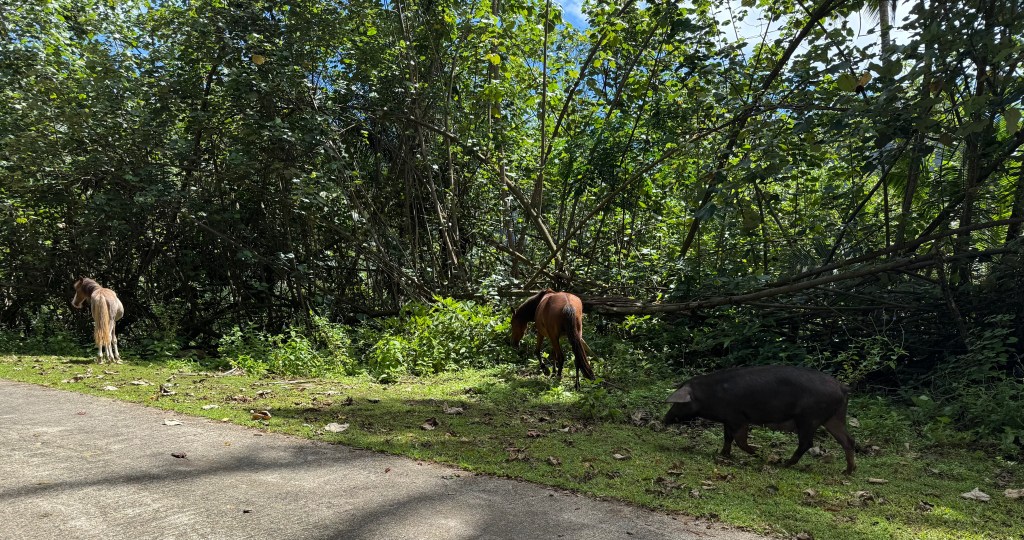
Once we found Hatihe’u we decided to have lunch. Most restaurants offered a grilled or fried fish dish, or goat, or boar with sides of starch like breadfruit, rice or potatoes. Often a small green salad was served as well. Average cost of dining out for 2 was about $50.00, including a beverage.
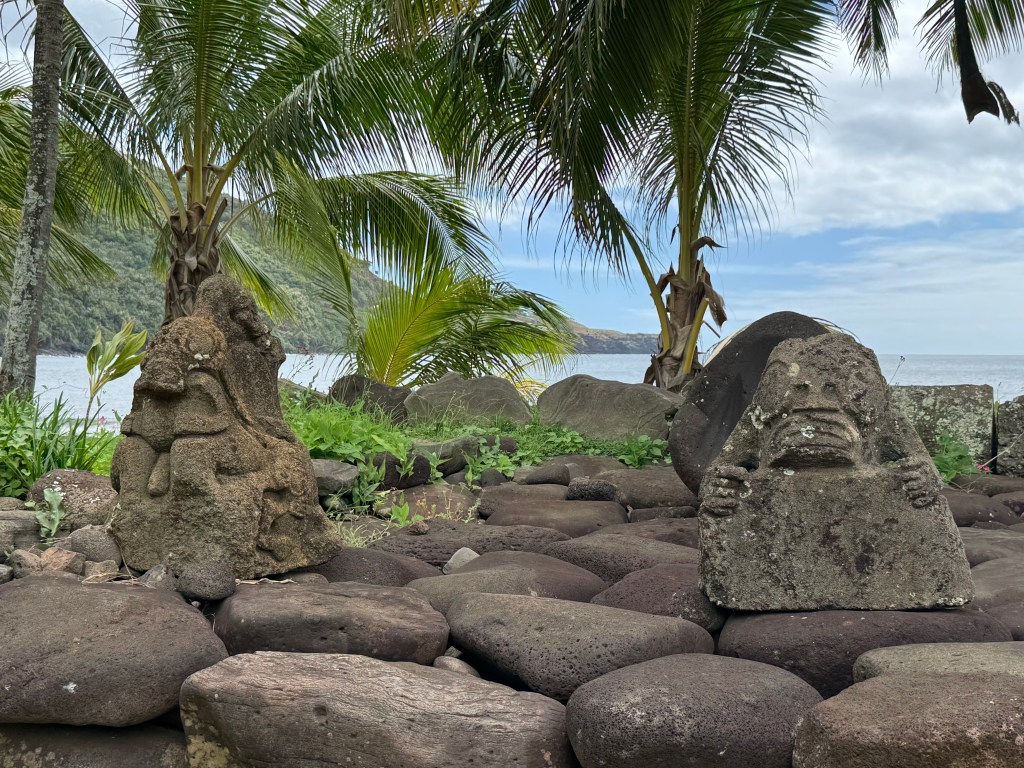
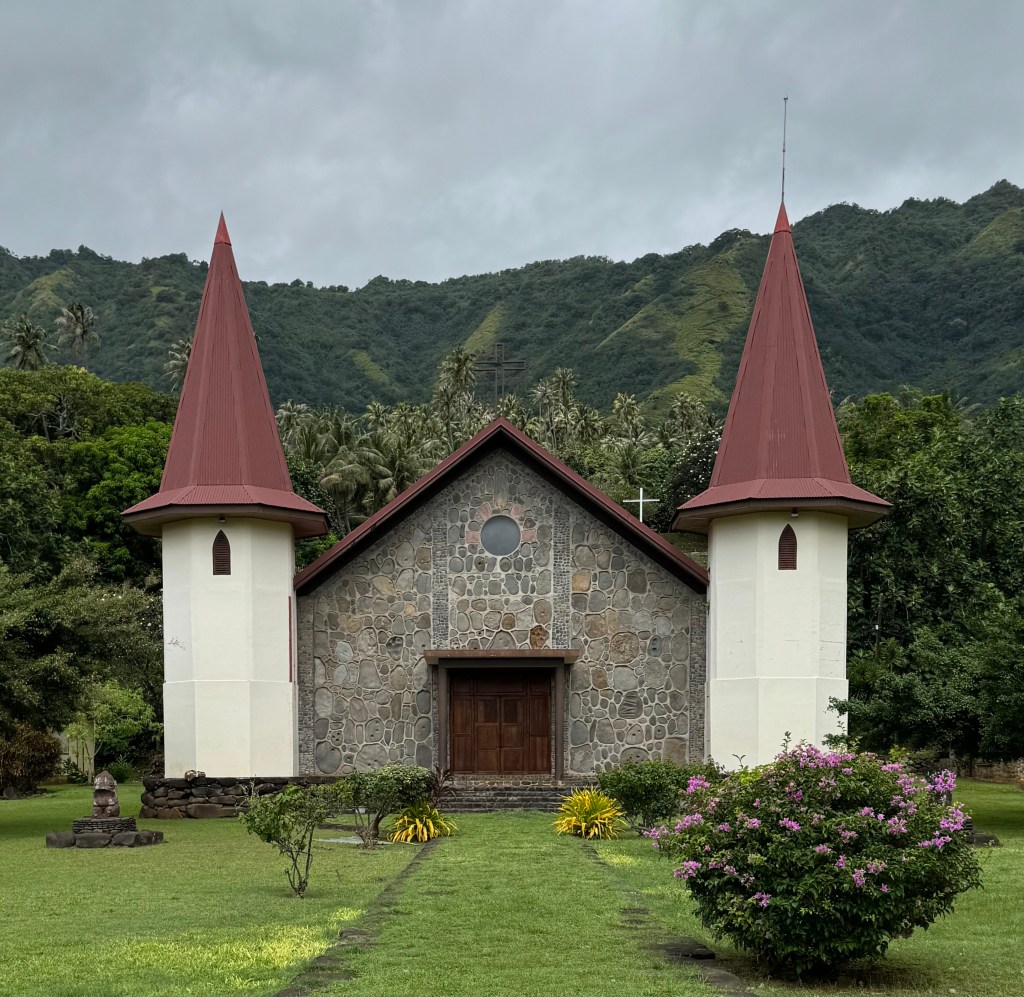
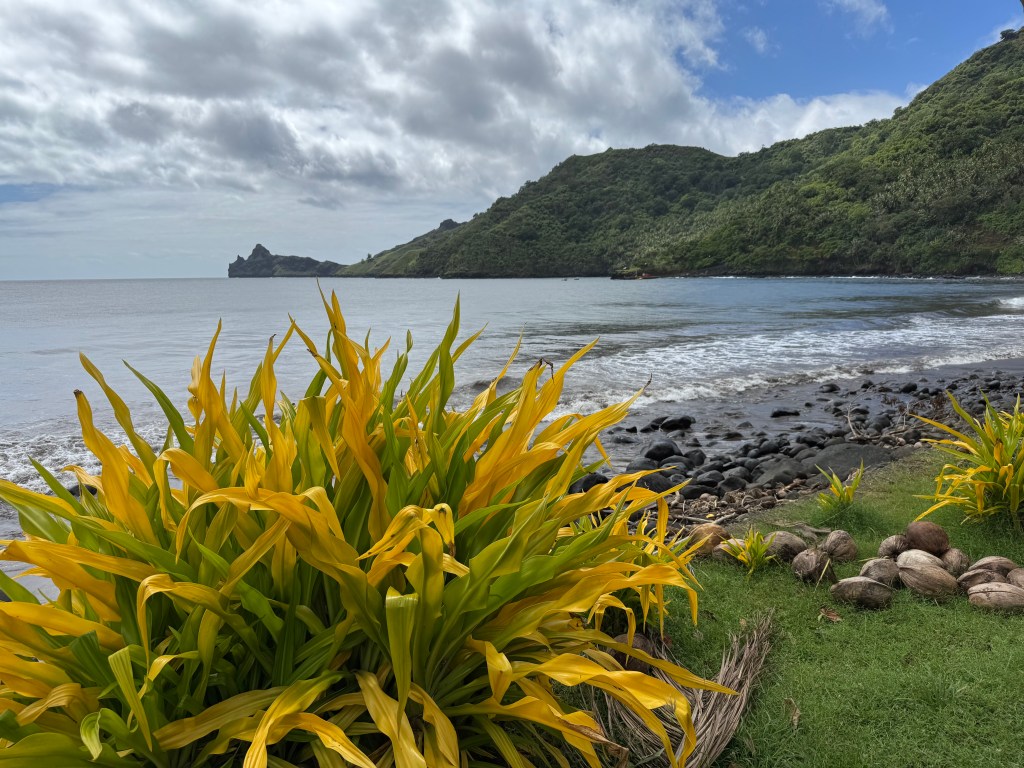
Tracy and I are in agreement that we didn’t enjoy this stopover as much as we anticipated. The continuous rain is the major reason but, the rolly anchorage was a strong second. We had to wait for a good weather window before we could leave. In talking to the locals, this much rain, this time of year is not normal. It did cool things off a bit, but the humidity hung on, making everything on the boat feel damp. Not fun times!
I also experienced some travel sickness and had to go to the doctor for antibiotics. It was probably something I ate or drank but will remain a mystery. My visit to the doctor was $25.00 and my 2 prescriptions were another $20.00. I am feeling much better as I’m writing this. I’m envious of Tracy with his ‘iron’ stomach.
After some discussion about our next destination, we decided to head south faster to find better weather. The chosen location is Fakarava, one of the Atolls in the Tuamotus. On the plus side, once we reach Fakarava we will be about a 48 hour sail to Tahiti which we are both excited to visit. On the down side, (for me only) it will take us 4 days to get there. Fortunately, Tracy lives for this part of the adventure. Overall, we are optimistic about this next trip and hopefully it includes less rain and good health!
 SV Quid Sea - Sailing with Tracy and Cindy
Good luck on the next stop, miss you guys!
LikeLiked by 1 person
Tracy and Cindy Thanks for keeping sharing your journey. I am glad the crew crossed the pacific safely. I hope you enjoy the French Polynesian. I wonder who was the poet for the pacific crossing leg of the journey? Have fun! Gang
>
LikeLike